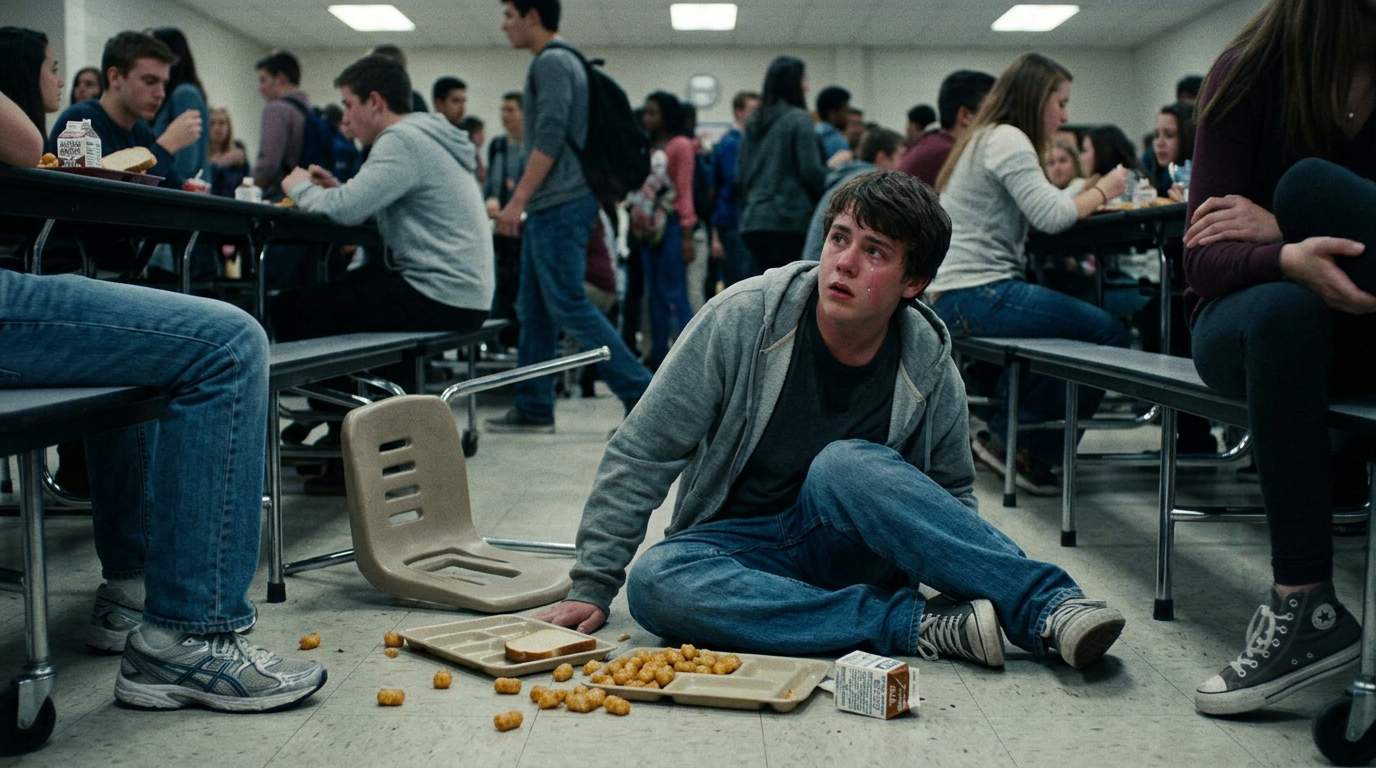
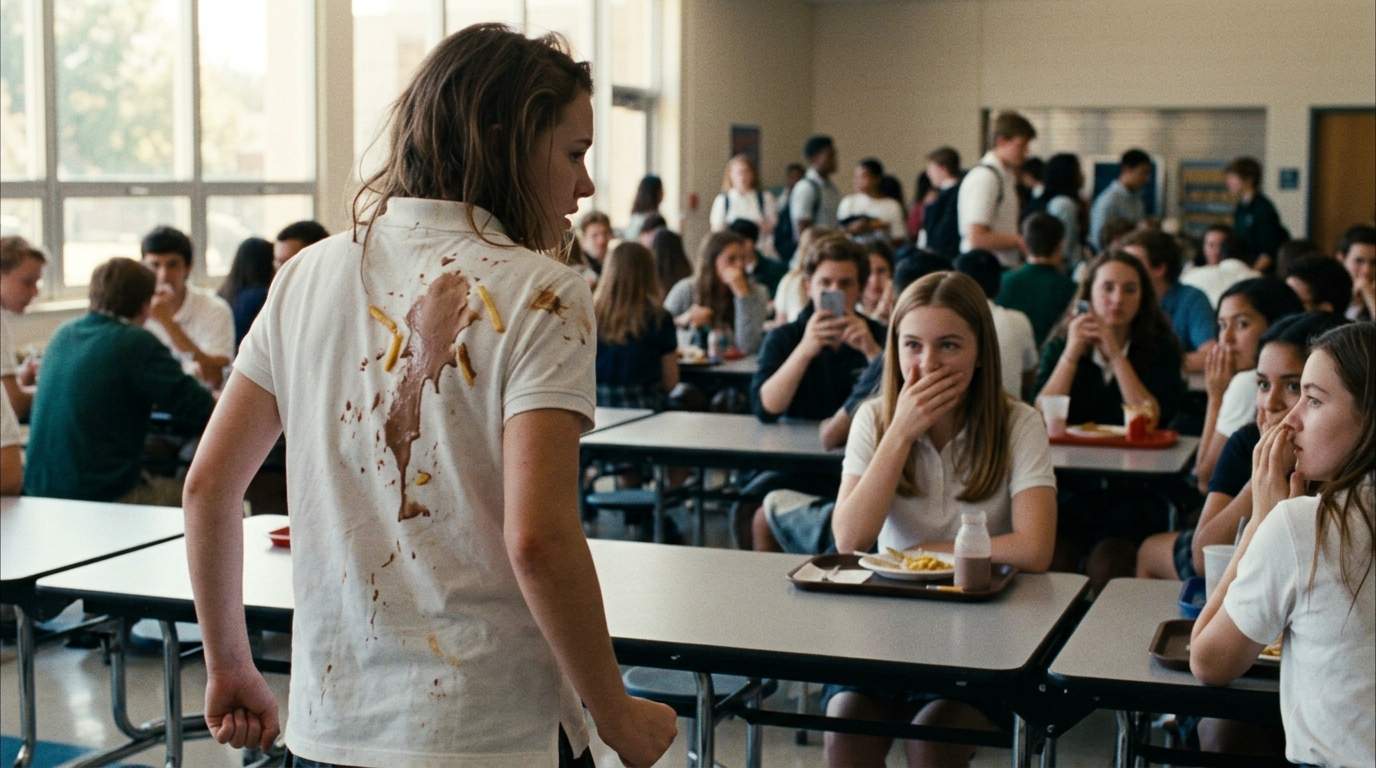
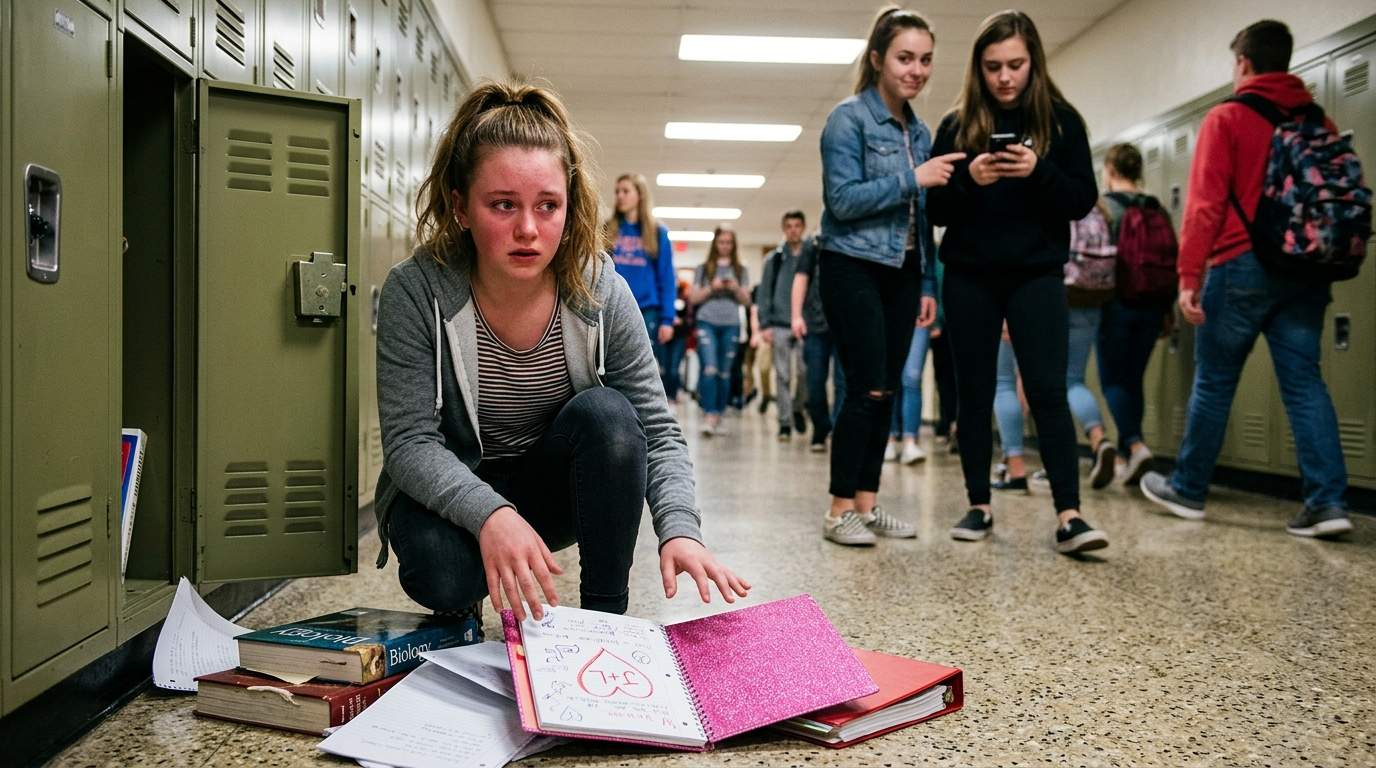
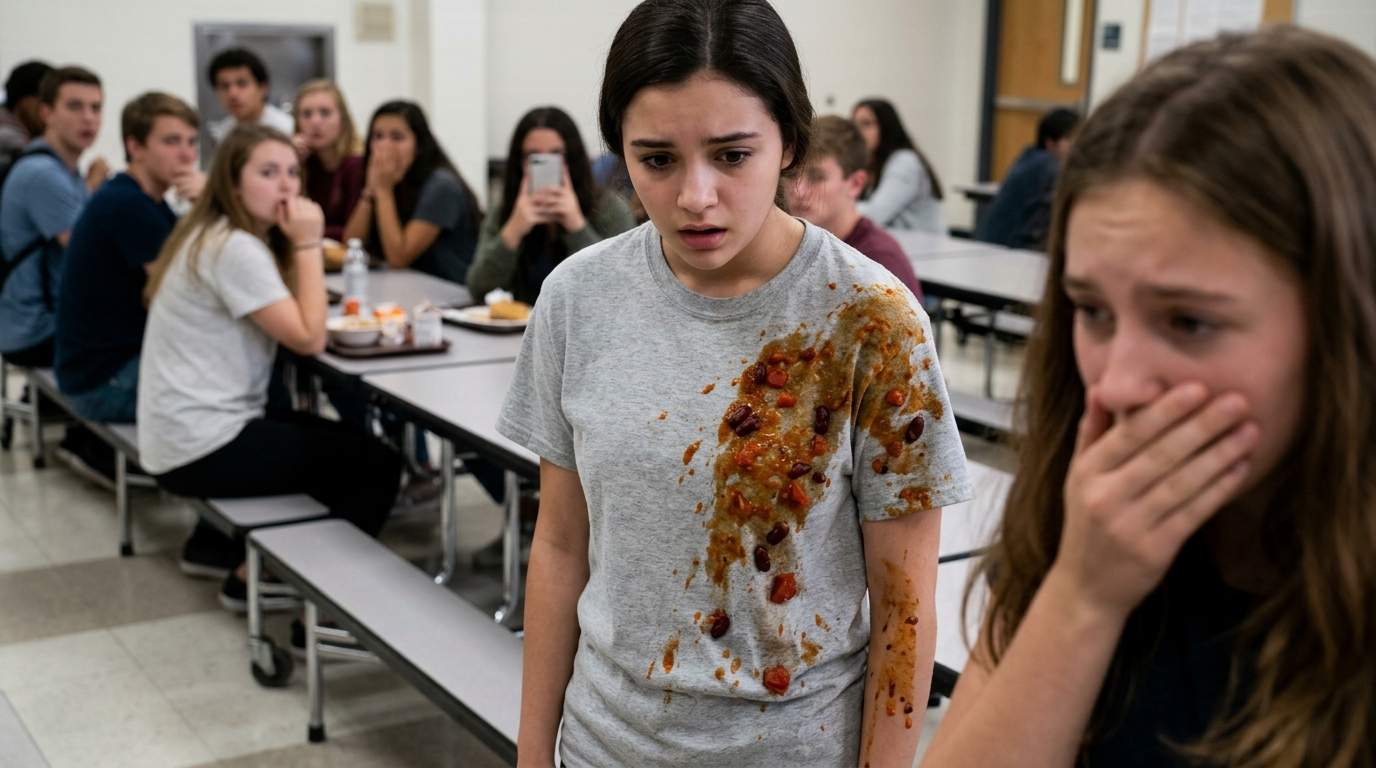
I remember the cafeteria always smelling faintly of stale fries and lemon-scented cleaner, a peculiar combination that clung to my clothes long after I'd left for the day. I was in my first year of high school, a lanky, self-conscious kid who often felt like an extra in everyone else's main plot, perpetually navigating the crowded hallways with my eyes fixed firmly on the ground. Lunchtime was a daily gauntlet, a social minefield where I tried to master the art of looking busy and independent while secretly yearning for a place, any place, at a table where I didn't feel completely invisible. I had a few acquaintances, kids I shared classes with, who would occasionally offer a vague nod in the hallway, but no real friends in the way the popular kids did, always surrounded by a laughing entourage. Mark and his group were the epitome of popular, a collection of athletes and the effortlessly cool, their table a vibrant, noisy hub in the middle of the cafeteria, perpetually teeming with energy. I wouldn't have dared approach their table on most days, preferring the quiet solitude of a corner seat near the windows, but today was different; my usual spot was taken, and I felt a faint, desperate pull towards a sliver of perceived belonging. I had seen an empty chair at the very end of their long table, almost hidden from their main conversation, and a tiny, foolish spark of hope ignited within me, suggesting that maybe, just maybe, I could sit there unnoticed. As I walked towards it, my tray of lukewarm tater tots and an unappetizing-looking sandwich clutched firmly in my hands, I felt a familiar tremor of anxiety begin in my stomach. The clatter of cutlery and the high-pitched shriek of laughter from a nearby table seemed to amplify my self-consciousness, making every step feel heavier, every movement more awkward. I glanced up quickly, catching Mark's eye for a fleeting moment, and he offered a casual, almost imperceptible nod, which I foolishly interpreted as a tacit invitation, a silent "come on over." His eyes, however, held a glint I couldn’t quite decipher, something that now, in retrospect, screams mischievous anticipation, but at that moment, I was too absorbed in my own hopeful narrative to notice. The chair itself looked sturdy enough, a standard-issue plastic seat that had probably seen a thousand lunches, and I mentally prepared my practiced move: quickly slide the tray onto the table, pull out the chair with one smooth motion, and sit down before anyone could truly register my presence. My hand reached out, my fingers brushing against the cool, smooth plastic of the chair's back, a fraction of a second before my weight committed to sitting. In that precise instant, just as my backside was hovering inches above where the seat should have been, the chair was yanked backward with a swift, powerful jerk, disappearing from underneath me entirely. The sensation was immediate and terrifying, a sudden, complete loss of equilibrium that sent a jolt of pure shock through my entire body, making my breath catch in my throat. My eyes widened in disbelief, and my arms shot out instinctually, grasping at nothing but the thin, unforgiving air, like a marionette whose strings had been abruptly severed. My feet slipped on the slick linoleum, offering no purchase, and for what felt like an eternity, I was suspended in a horrifying, slow-motion freefall, my brain struggling to process the impossible situation. The tray of food flew from my hands, a chaotic ballet of tater tots and sandwich halves scattering across the floor in a sad, messy arc, landing with pathetic splats and crumbles. Then came the impact: a harsh, unyielding thud as my tailbone and lower back slammed into the hard, unforgiving floor, sending a searing jolt of pain up my spine that made me involuntarily grunt. My backpack, still strapped to my shoulders, provided a tiny, insufficient cushion, but mostly it just twisted awkwardly, digging into my ribs as I lay sprawled, a pathetic heap, amidst the debris of my abandoned lunch. The sudden, unnatural quiet that followed the fall was punctuated only by the distinct clatter of the chair as it slid further away, its legs scraping a final, mocking sound across the floor. Then, as if a dam had broken, the quiet erupted into a wave of laughter, a cacophony of snorts, guffaws, and high-pitched giggles that seemed to echo off every surface in the vast, unforgiving space. I instinctively squeezed my eyes shut, wishing I could simply vanish, hoping that by closing them, I could erase the entire humiliating scene, but the sound of their amusement was impossible to ignore. When I finally dared to open my eyes, a single tear already tracing a hot path down my temple, I was met with a sea of faces, all turned towards me, some openly mocking, some struggling to contain their smiles, others merely observing with a detached curiosity. Mark was leaning back in his chair, his head thrown back in a fit of unrestrained laughter, his mouth wide open, a sound that pierced through my ears like a physical blow. His friend, Sarah, sitting next to him, had her hand clamped over her mouth, but her shoulders were shaking with suppressed mirth, her eyes sparkling with amusement. The cafeteria monitor, a kind but often overwhelmed woman named Mrs. Davison, was at the far end of the room, her back to the commotion, engaged in a conversation with a student, completely oblivious to my public degradation. No one, not a single person, offered a hand or a word of concern; the humiliation was absolute, stark, and utterly isolating. I felt a burning rage ignite deep within me, a furious heat that mingled with the shame, but it was quickly doused by the crushing weight of helplessness, the sheer impossibility of retaliating against so many. The floor felt impossibly cold beneath me, the scent of the spilled food a sickening reminder of my clumsy, failed attempt at social integration, and I longed for nothing more than to be anywhere but there, on display. My body began to tremble, a subtle, uncontrollable shiver that had nothing to do with the temperature, as the sheer injustice and cruelty of the moment washed over me in an overwhelming wave. I slowly, painfully, pushed myself up, scrambling to gather my dignity, or what little remained of it, along with the scattered remnants of my lunch. My back ached, a dull, persistent throb, but the pain of the fall was nothing compared to the searing, public humiliation, the feeling of being utterly exposed and ridiculed. I avoided everyone's gaze, my vision blurred by unshed tears, and stumbled away from the table, not daring to look back, the relentless echoes of their laughter pursuing me like a pack of hounds. That incident changed something profound within me, etching itself onto my very being, making me hyper-aware of every chair, every social gathering, every potential moment of public vulnerability. For weeks, I ate lunch in the library, a quiet sanctuary where the only sounds were rustling pages and hushed whispers, and the idea of sitting at a cafeteria table filled me with a cold dread. Even years later, the simple act of approaching an empty chair still triggers a subtle, instantaneous jolt of anxiety, a phantom sensation of falling, a primal fear of once again being caught off guard, unsupported, and brutally exposed to the world's indifferent gaze. The memory often surfaces unbidden, a flash of the linoleum floor, the grinning faces, the echo of laughter, reminding me of that precise moment when my sense of self fractured, leaving behind a permanent, quiet scar.