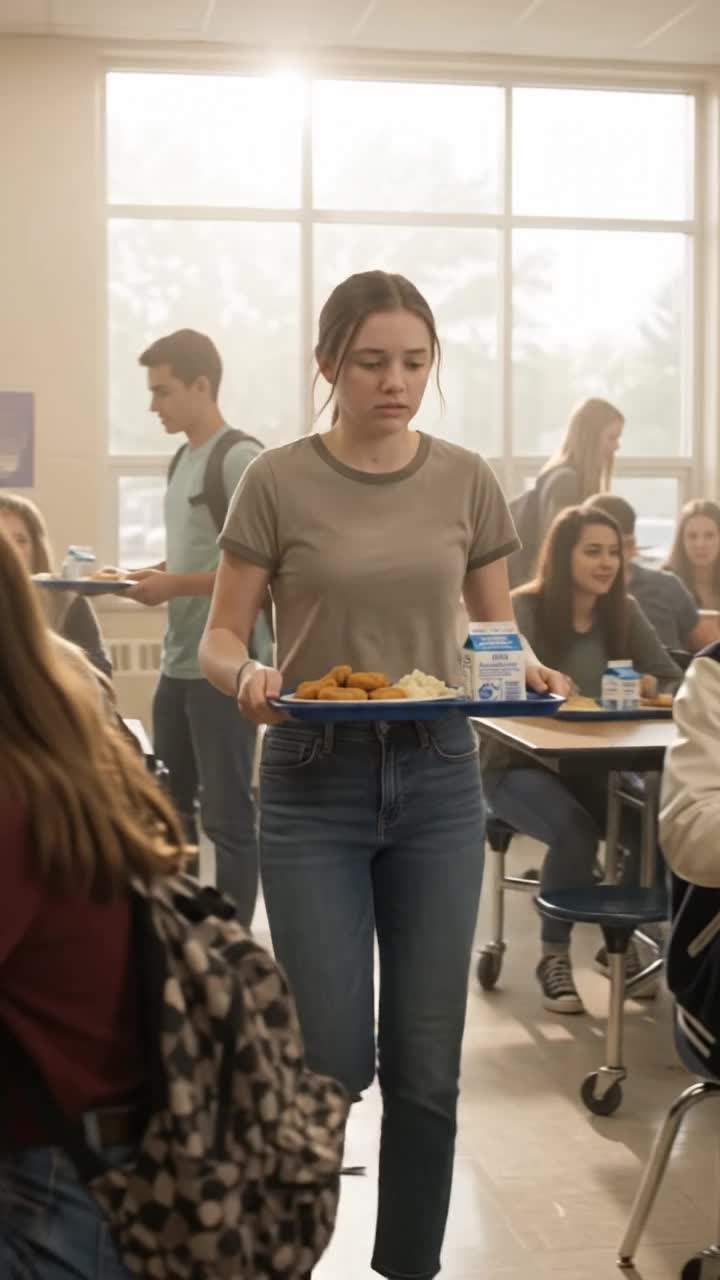
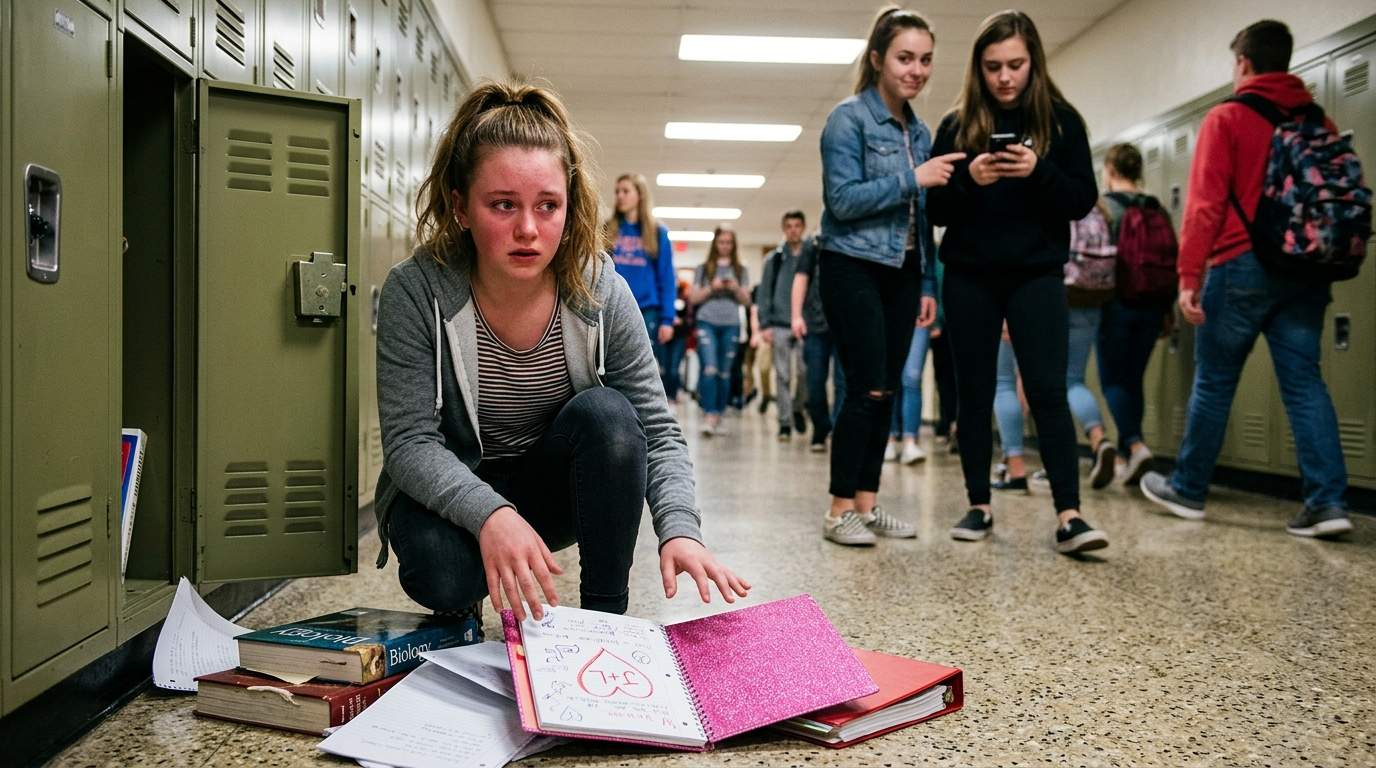
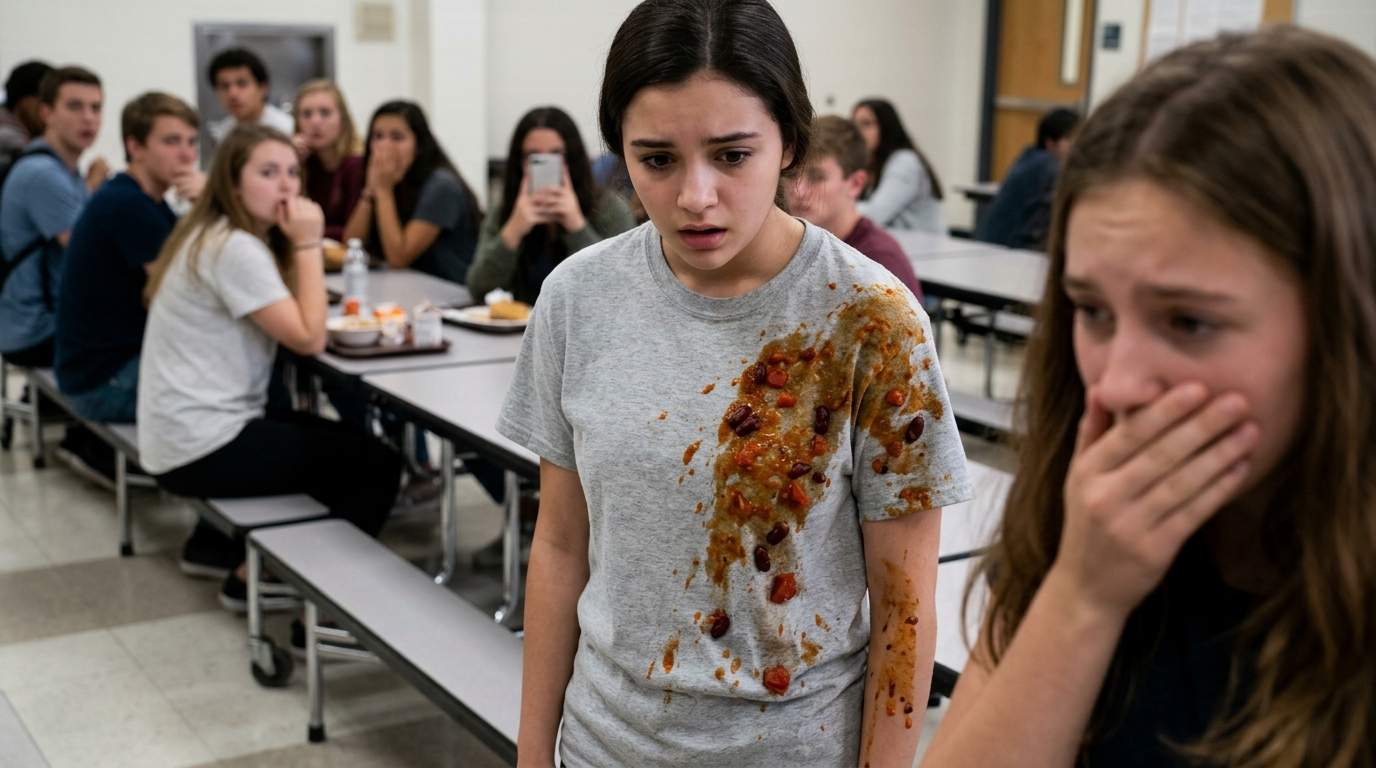
The high school cafeteria felt like a pressure cooker, loud and unpredictable, every lunchtime a gauntlet of social navigation.
I remember the smell of stale pizza and lukewarm milk, a scent that still brings a strange clench to my stomach even now.
Art class was my sanctuary, the only place where the clatter of school faded and my hands could translate thoughts into tangible forms.
This particular semester, I was consumed by a large-scale ceramic sculpture, an ambitious piece for the upcoming district competition.
It was a fantastical creature, part bird, part dragon, with intricate scales and delicate, outstretched wings, all made from patiently molded clay.
I was quiet, the kind of quiet that made teachers forget you were there and made popular kids look right through you.
My best friend, Sarah, was different, though; she was more outgoing, perched on the edge of the popular crowd but still fiercely loyal to me.
She urged me to carry my finished sculpture to the art room on the far side of the school, suggesting the cafeteria route as a shortcut before my next class.
"It'll be fine," she'd said that morning, her voice bright and reassuring, oblivious to my underlying apprehension about public display.
The sculpture was heavy, cradled carefully in a cardboard box, each fragile wing meticulously padded with bubble wrap and tissue paper.
I had worked on it for months, after school, during study hall, even skipping lunch breaks sometimes just to add another detail.
It was more than just an art project; it was a visible part of my inner world, a piece of myself I rarely shared.
Walking through the bustling hallways was always a challenge, a sea of bodies and loud conversations I tried to navigate unseen.
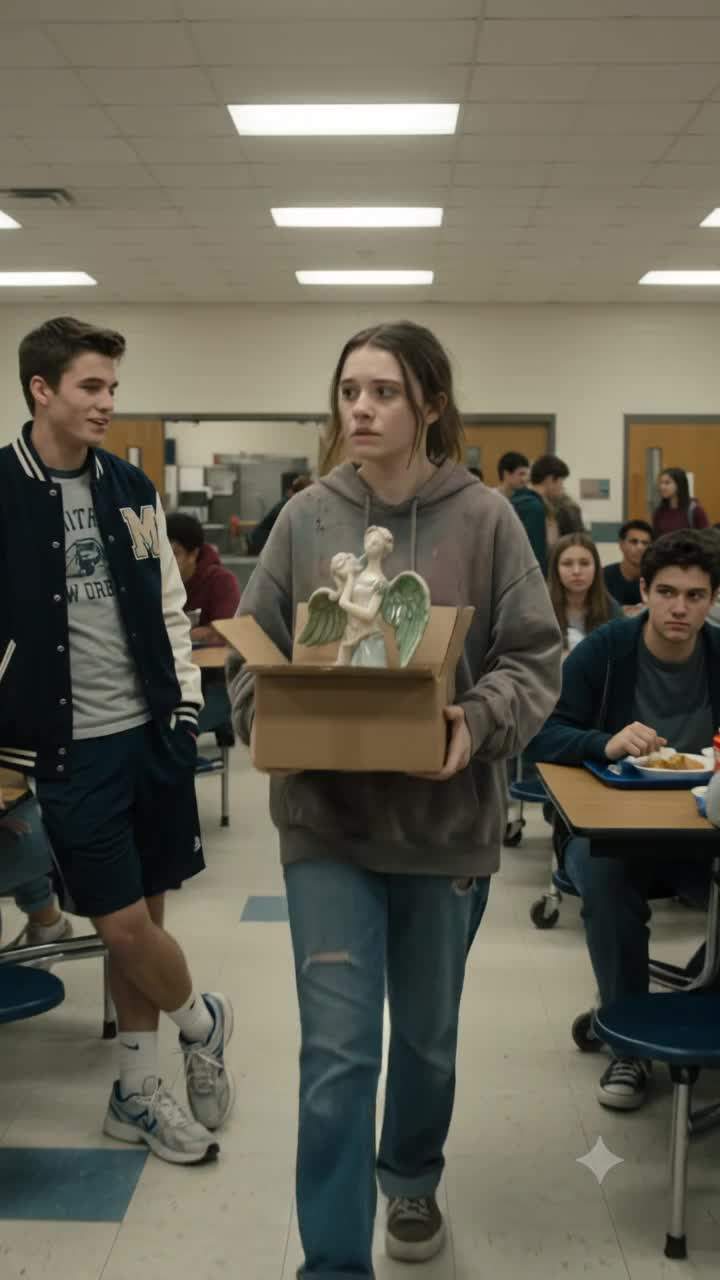
The cafeteria, however, was a different beast entirely, an open arena where every move felt scrutinized.
I hugged the box tightly, my knuckles white against the damp cardboard, a nervous flutter in my chest growing more intense with every step.
I spotted Sarah waving from her table, a mix of relief and renewed anxiety washing over me.
To get to her, I had to cross a particularly crowded section, a narrow path between two long tables of jocks and cheerleaders.
My eyes darted around, calculating the fastest, least conspicuous route, trying to become invisible.
Mark Jenkins was there, of course, sprawled in his chair, laughing loudly with his friends, his football jacket slung carelessly over the back.
He was a senior, known for his casual dominance and a tendency to treat the entire school as his personal playground.
I tried to squeeze past, my shoulder already brushing against another student's backpack, trying to shrink myself even smaller.
Then, without warning, Mark suddenly stood up, turning sideways to grab something from his friend, his arm swinging wide.
His elbow, hard and bony, slammed directly into the side of the cardboard box I was holding, a sickening thud echoing just for me.
The box spun, my grip instantly dissolving, the heavy weight of the ceramic pulling it downward, away from my desperate grasp.
Time stretched, distorted, as the sculpture lifted from the box, suspended impossibly for a fleeting half-second in the air.
Its delicate, glazed form twisted, catching the fluorescent cafeteria lights, a brief, beautiful, fatal dance.
My eyes followed its descent, helpless, a silent scream building in my throat that refused to escape.
The sound of its impact was louder than anything else in the entire room, a sharp, clean CRACK followed by the distinct SHATTER of ceramic.
It hit the linoleum floor with a force that sent fragments skittering across the smooth, shiny surface like tiny, dangerous ice skates.
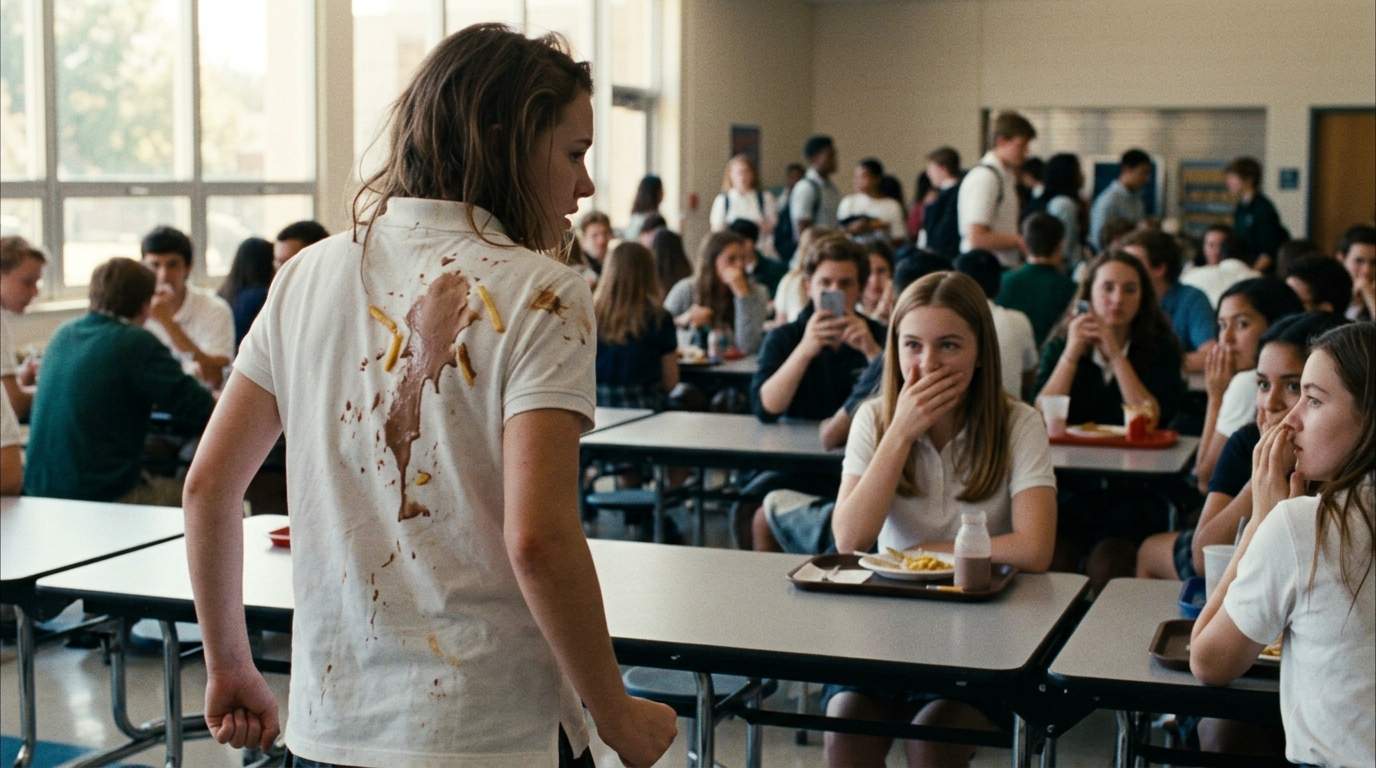
A hush fell over the immediate area, a sudden vacuum of sound, making every single clink and scrape elsewhere seem amplified.
The wings, the head, the intricate scales—all lay in dozens of broken pieces, a colorful mosaic of destruction.
A thin, bright green line of glaze paint, still wet from its final firing, bled slowly from one of the larger fragments, a small, vibrant wound.
Mark Jenkins turned, a lazy, unconcerned expression on his face as he surveyed the wreckage.
His eyes flicked from the broken pieces to my face, then back to the floor, as if assessing a spilled drink, not a destroyed dream.
"Oops," he mumbled, a half-smirk playing on his lips, devoid of any genuine remorse, before turning back to his friends.
His friends snickered, a low, collective sound that spread like wildfire, their eyes wide with amusement and a touch of schadenfreude.
Sarah, at her table, had gone utterly still, her face pale, her gaze fixed on the tablecloth, unable to meet my eyes.
No one moved to help, no one spoke up, the entire cafeteria now a silent audience to my unfolding tragedy.
My hands started shaking uncontrollably, a tremor that ran through my entire body, making my teeth chatter slightly.
I felt a rush of blood to my face, the heat of an excruciating blush spreading from my neck to the roots of my hair.