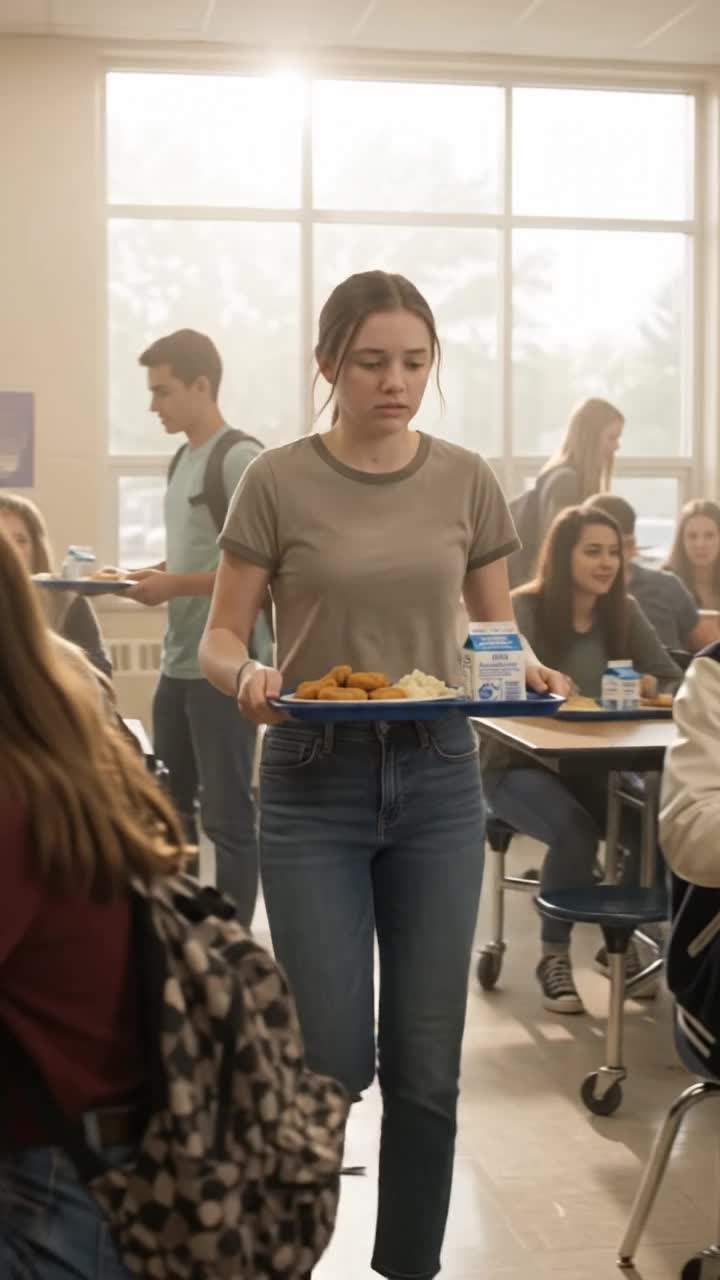
The school cafeteria on a Tuesday afternoon pulsed with its usual boisterous energy, a symphony of adolescent chatter and the ceaseless clatter of plastic trays and cutlery.
Chloe and I had been inseparable since kindergarten, a fact I had always considered one of the most stable constants in my life, like the sunrise or the school bell.
Lately, though, an almost imperceptible shift had occurred, a subtle coldness in her usually warm demeanor that left me constantly on edge, trying to pinpoint its source.
She had started hanging out more with Ashley and Tiffany, the kind of girls who wore designer clothes to school and whispered secrets behind cupped hands in the hallways.
Their laughter, always sharp and a little too loud, would sometimes trail off abruptly when I approached, leaving an awkward silence that felt heavier than usual.
Chloe would often make small, dismissive comments, disguised as jokes, about my slightly worn sneakers or my preference for reading over social media trends, remarks that stung more than I let on.
I remember one afternoon last week, sitting in history class, when I saw her pass a note to Ashley, and they both glanced at me, then quickly stifled giggles, a scene that made my stomach clench.
The previous morning, she had deliberately walked ahead of me on the way to first period, chatting animatedly with Tiffany, completely ignoring my attempts to join their conversation.
I felt like I was constantly chasing after her, metaphorically speaking, trying to reclaim the easy camaraderie we once shared, but she kept slipping just out of reach.
This slow drift felt like a quiet abandonment, a gradual erasure of our shared history, which made me feel increasingly insecure and isolated.
The idea that Chloe would ever intentionally hurt me, especially in such a public way, seemed completely unthinkable, utterly beyond the scope of our long-standing friendship.
I trusted her implicitly, despite these recent, unsettling shifts, believing that our bond was stronger than any fleeting high school drama.
Our English teacher, Mr. Harrison, a man perpetually lost in the classics, never seemed to notice the subtle power dynamics or social skirmishes unfolding beneath his nose.
He once told me, after I tried to discreetly mention Chloe’s sudden distance, that "friendships ebb and flow, dear, like the tides," a platitude that offered absolutely no comfort.
The school counselors, Mrs. Davies, always seemed too busy with "more serious" issues, like truancy or academic probation, to deal with what I perceived as my friend problem.
This made me feel like my feelings were invalid, like I was overreacting to something trivial that everyone else considered normal.
So, I kept my growing anxieties mostly to myself, internalizing the quiet hurt and the gnawing uncertainty about my place in Chloe's world.
That morning, Chloe had even complimented my new white t-shirt, a gift from my aunt, saying it looked really good on me, which, in retrospect, felt like a cruel setup.
We had walked into the cafeteria together, or at least, in close proximity, a familiar routine that briefly lulled me into a false sense of normalcy.
The line for hot lunch was exceptionally long that day, snaking around several tables, which meant more eyes, more witnesses, to whatever was about to unfold.
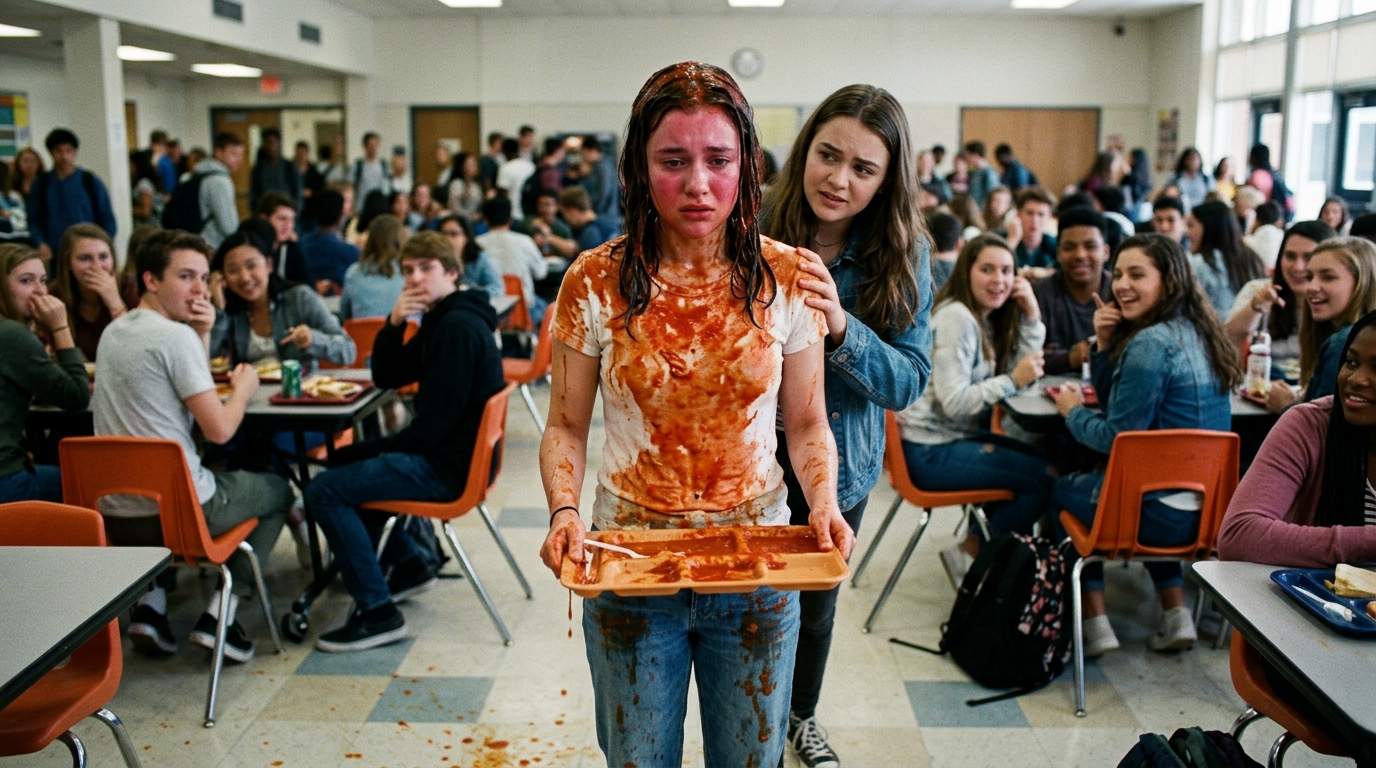
I just wanted to get my food and find a quiet corner, hoping for a moment of peace to dissect the day's fresh batch of Chloe-induced anxieties.
I remember focusing intently on my bright orange tray, trying to balance its contents, especially the dangerously full bowl of steaming tomato soup, as the line shuffled forward.
Chloe was just behind me, her presence a familiar warmth, though I couldn't quite see her as my gaze was fixed on the shifting queue ahead and the cashier's station.
The air was thick with the scent of fried chicken and processed cheese, a comforting yet overwhelming aroma that permeated every corner of the vast room.
My hand gripped the tray's edges tightly, my knuckles turning white with the effort to keep everything perfectly level, knowing one wrong move could spell disaster.
Suddenly, a firm, undeniable pressure registered against my right elbow, a precise, calculated jolt that came from directly behind and to my right.
It wasn't a brush, not a jostle from a crowded space; it was a distinct, short shove, delivered with just enough force to disrupt my precarious balance.
My body lurched forward, an involuntary spasm, and the tray, responding to the sudden movement, tilted violently, sending its contents into a chaotic ballet.
The heavy, ceramic soup bowl, now airborne for a fraction of a second, seemed to hover in defiance of gravity, before gravity inevitably reclaimed it.
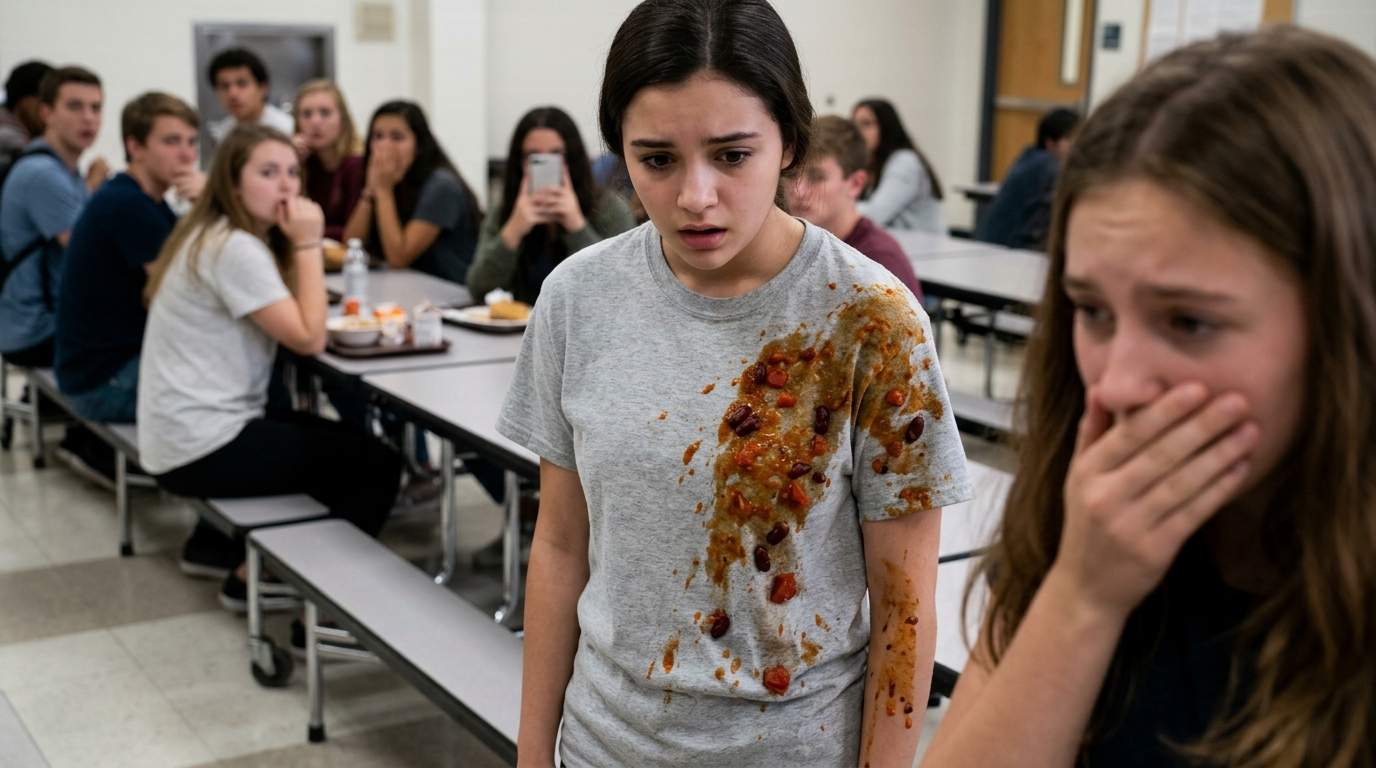
A thick, fiery-red wave of tomato soup surged over the rim, cascading down in a horrifyingly beautiful arc, its trajectory undeniably aimed for my chest.
"Oh, watch out!" Chloe’s voice, sharp and surprisingly loud, cut through the momentary silence that seemed to fall around me, a sudden spotlight on my impending doom.
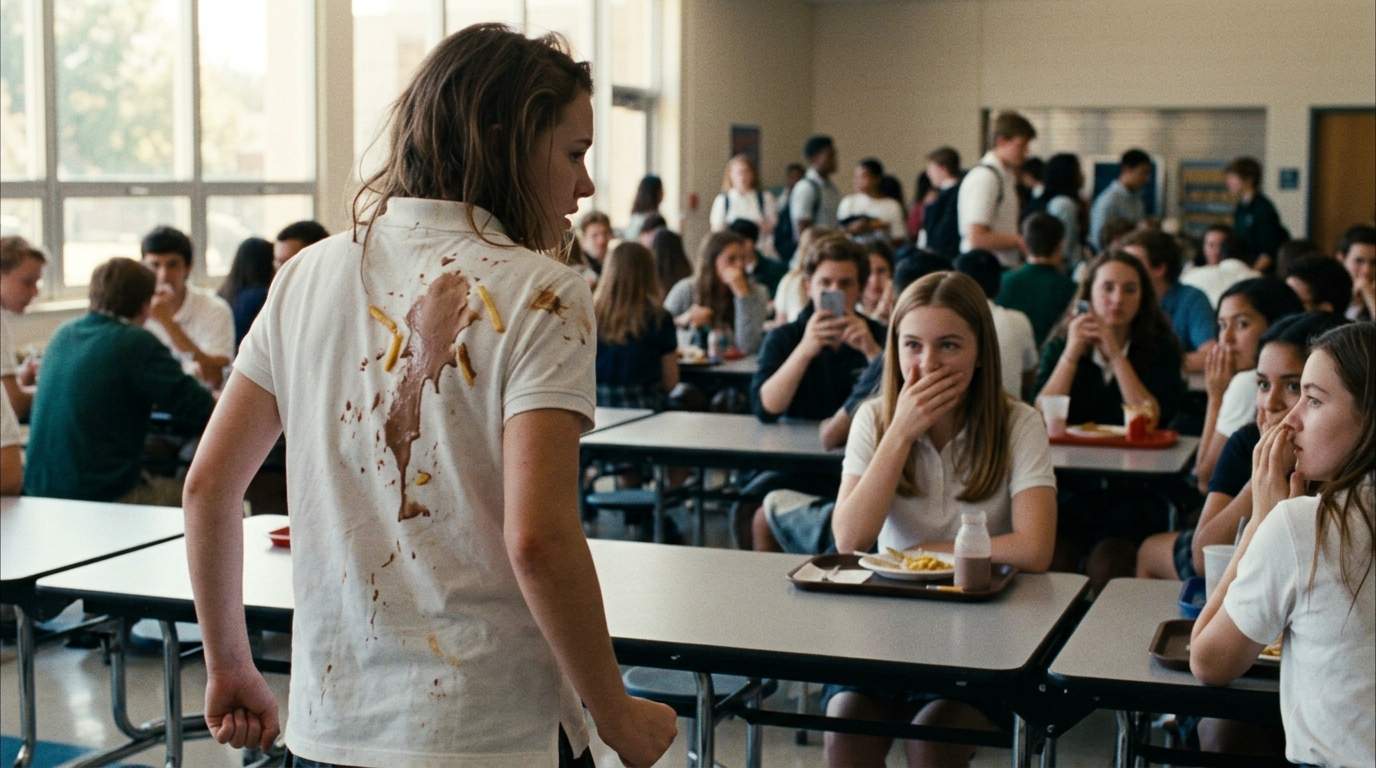
The hot liquid splashed with surprising force, saturating the pristine white fabric of my new t-shirt in an instant, the warmth quickly turning into a stinging heat.
It spread rapidly, a crimson Rorschach test blooming across my chest and abdomen, then soaking through to my skin, an unwelcome, burning embrace.
My mouth fell open slightly, a silent gasp escaping, as my arms instinctively tightened their grip on the now-empty tray, holding it out like a shield.
The other items on the tray—my soggy sandwich, the squashed cookie, the overturned carton of milk—clattered to the floor with a pathetic symphony of dull thuds.
The sound of the spill, a surprisingly loud splash and subsequent splat, seemed to echo in the sudden vacuum of noise that enveloped our section of the line.
A few students directly in front of me had instinctively flinched away, their eyes wide with startled disbelief, their faces a mixture of concern and nascent amusement.
Chloe was suddenly right beside me again, her expression a perfect mask of wide-eyed concern, her hand reaching out as if to steady me, but never actually touching.
"Are you seriously okay? That looks bad!" she exclaimed, her voice still carrying, drawing more attention, making me feel even more acutely exposed.
Her eyes, though, held a flicker, a momentary gleam of something I couldn't quite identify, something cold and almost satisfied, that sent a shiver down my spine.
The smell of hot, sweet tomato, now mingled with the faint metallic tang of embarrassment, filled my senses, making my stomach churn unpleasantly.
I could feel the warm, thick liquid slowly oozing down my skin, a constant, unpleasant reminder of what had just happened, clinging to every fiber of my being.
The cafeteria supervisor, Ms. Jenkins, usually eagle-eyed, was engrossed in a detailed conversation with a lunch lady, her back resolutely turned to the unfolding disaster.
A few snickers began to bubble up from further down the line, quickly stifled, but still audible enough to send a fresh wave of humiliation washing over me.
My mind was a chaotic swirl of disbelief and a dawning, terrible understanding, grappling with the undeniable sensation of that deliberate push.
The first ripple of laughter, a high-pitched, girlish snicker, came from Ashley, who stood a few feet away, her hand half-covering her mouth, eyes gleaming with malicious amusement.
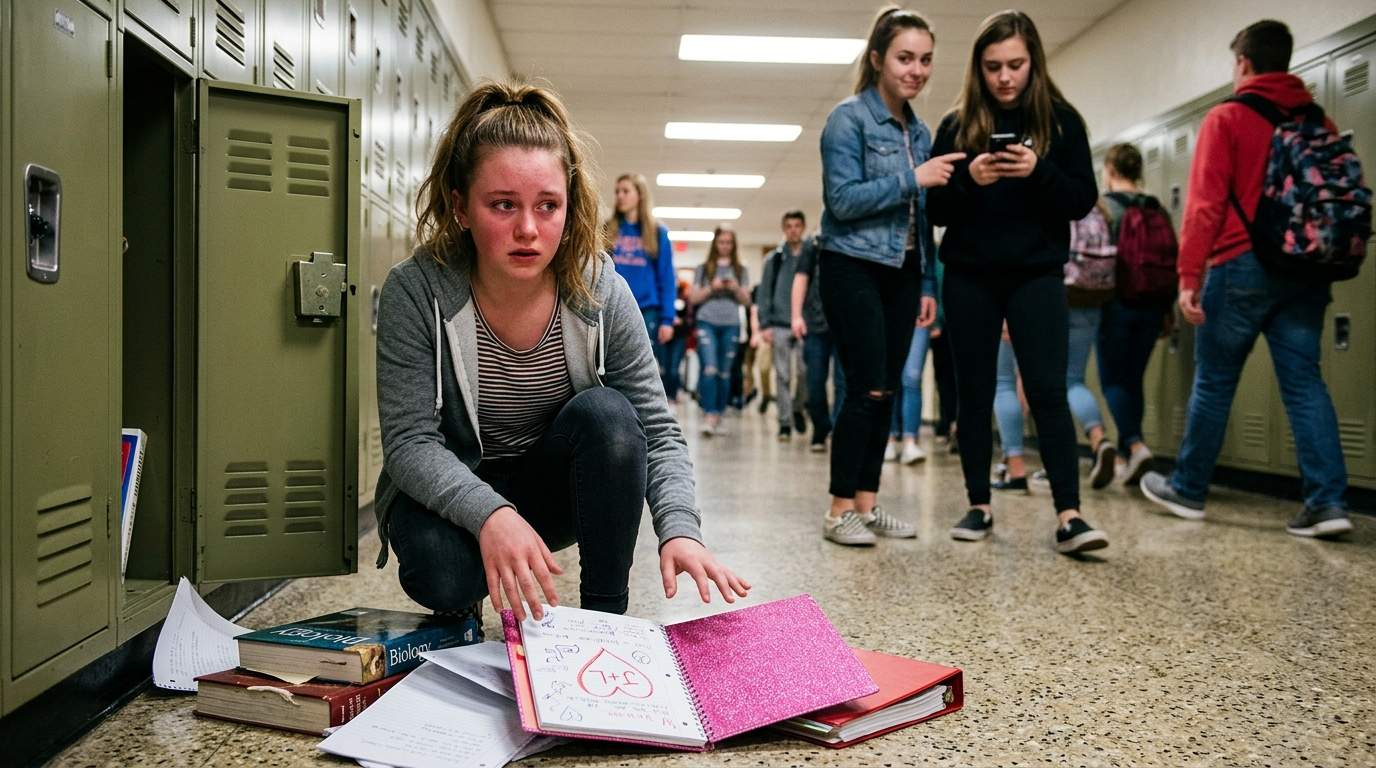
Another student nearby quickly pulled out his phone, holding it discreetly but conspicuously, aiming it in my direction, probably capturing my pathetic, soup-drenched state.
Whispers spread like wildfire, a sibilant, insidious wave moving through the cafeteria, their content undeniably about me, about the mess I had become.
My eyes darted to other friends, Sarah and Mark, who stood frozen, their faces a mixture of shock and awkwardness, their gazes fixed on the floor or the ceiling, anywhere but me.
They didn’t offer to help, didn’t step forward, didn’t even make eye contact, choosing instead to become part of the passive, judging audience.
Chloe, still feigning concern, offered another half-hearted "Gosh, that's such a shame," her voice laced with an almost imperceptible hint of satisfaction, a chilling undertone.
Ms. Jenkins, the cafeteria supervisor, remained oblivious, her loud conversation about weekend plans still dominating the small space near the kitchen entrance.
The public nature of the incident, unfolding in the most crowded and public space in the school, amplified every shred of my embarrassment to an unbearable degree.
I felt like a specimen under a microscope, every detail of my humiliation laid bare for hundreds of scrutinizing eyes, each whisper a fresh sting.
The silence of my friends felt like a deeper betrayal than Chloe’s actions, a confirmation of my sudden, profound isolation in this sea of onlookers.
The warmth of the soup had long turned to a sticky, clammy cold, clinging to my skin, a constant, physical reminder of my disgrace.
My cheeks burned furiously, a raw, painful flush that felt like it radiated heat, a physical manifestation of my internal shame.
No one moved to clean the mess, no one offered me a napkin, no one even asked if I needed to go to the nurse; I was utterly alone in that moment.
It was as if I had become invisible and yet simultaneously the most visible person in the entire school.
The sheer public humiliation was a punch to the gut, stealing my breath and making my vision swim with hot, unshed tears.