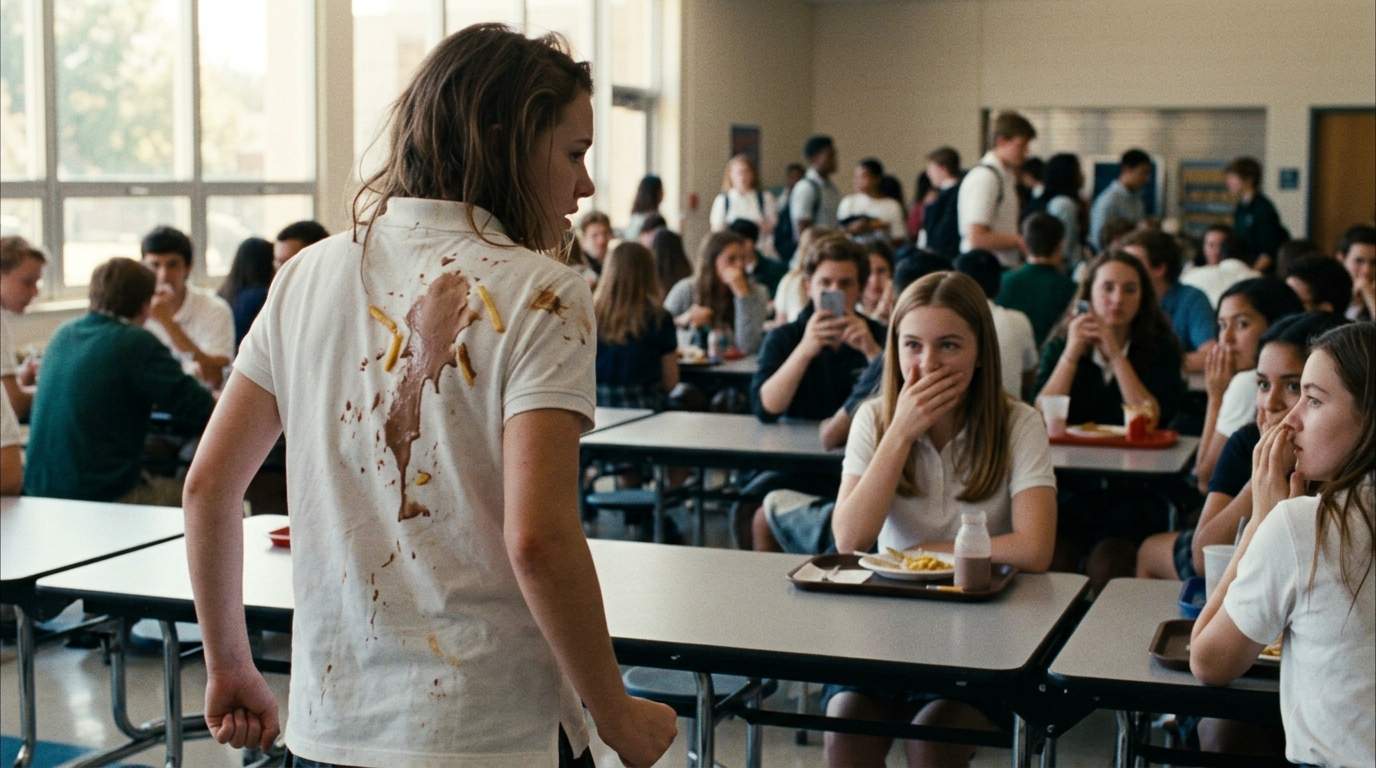
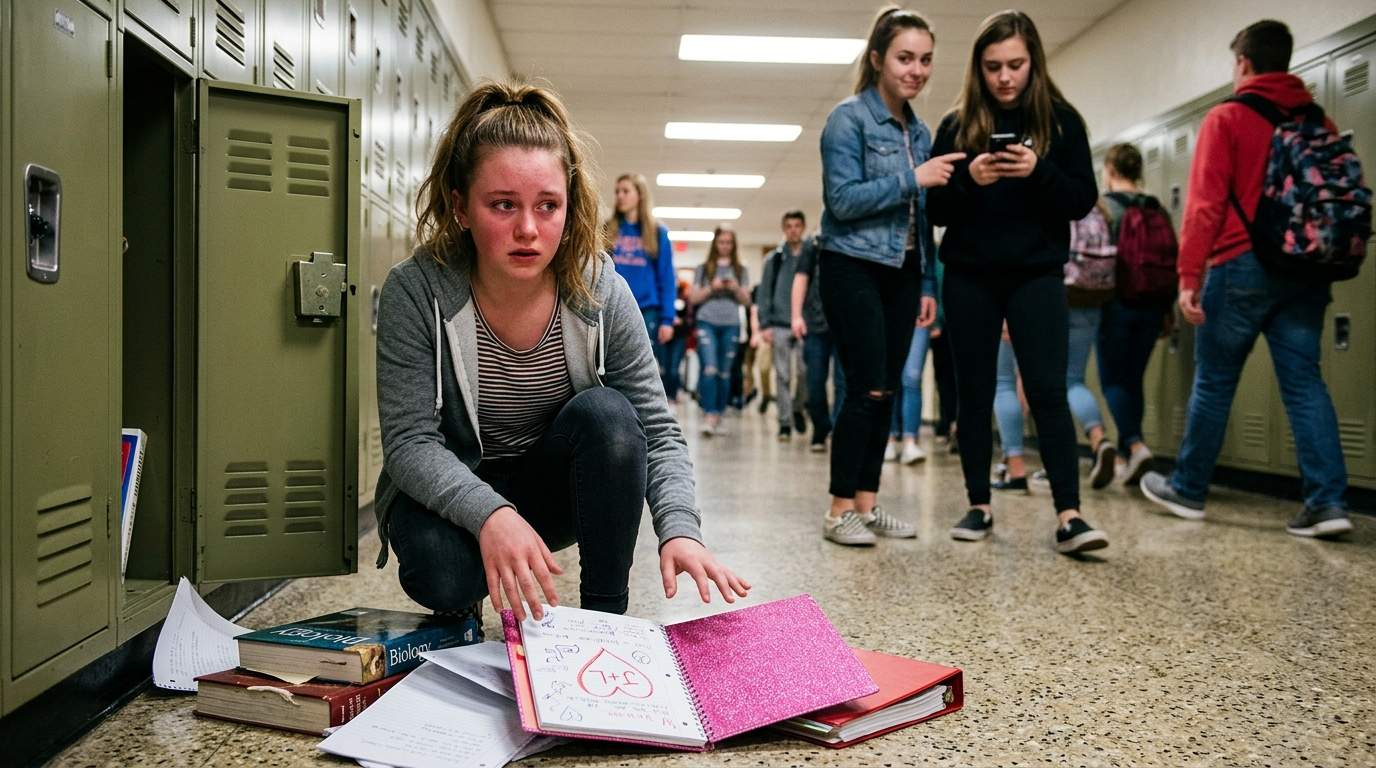
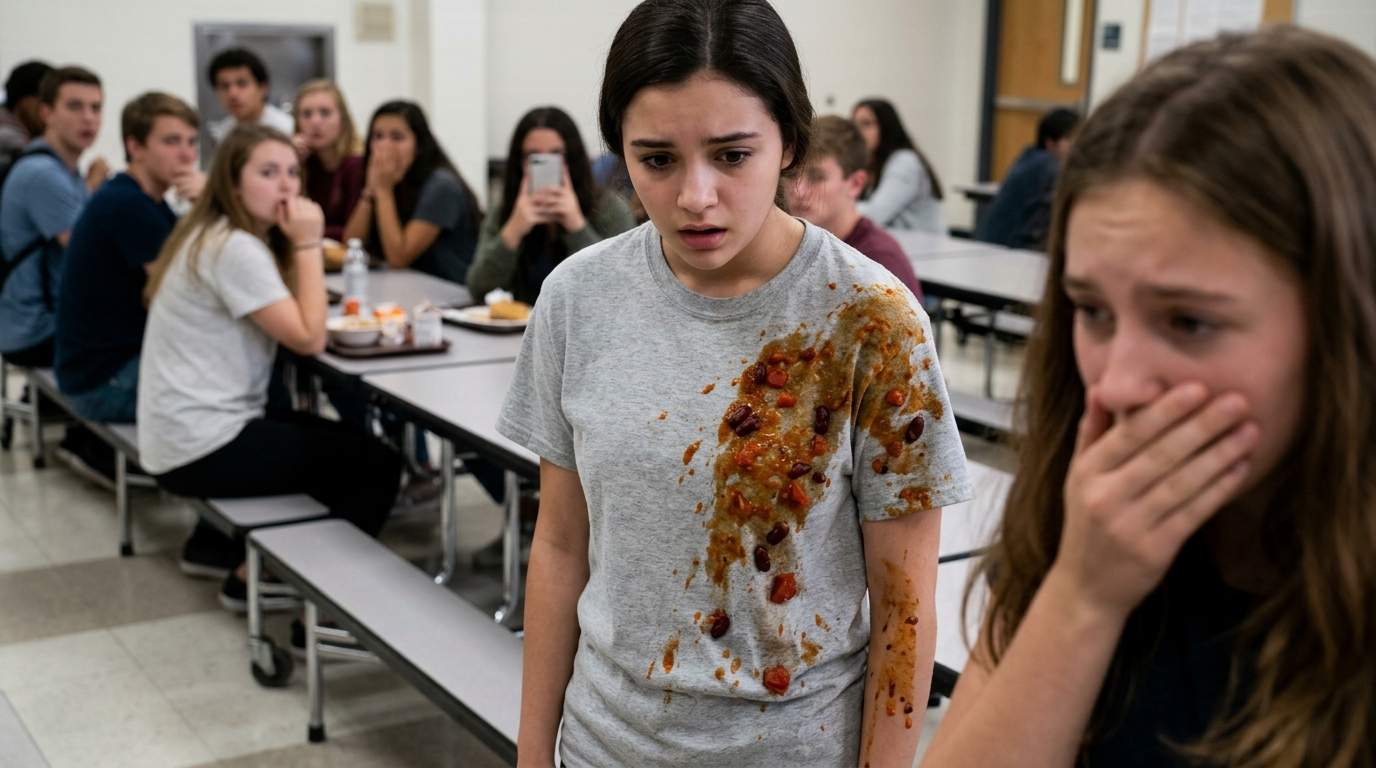
In Mrs. Henderson’s biology class, the fluorescent lights always buzzed faintly, a sound that amplified my nerves when it was my turn to present.
I’d always been the quiet type, the one who preferred the safe anonymity of the back row.
Public speaking was my personal Everest, and today, I was supposed to conquer a presentation on cellular respiration.
My project was good, I knew the material inside out, but the thought of standing alone at the front of the room made my palms sweat.
There was this group, led by Mark, who always seemed to find me an easy target for their subtle jabs.
It wasn't outright bullying, never a punch or a direct insult, but more like a constant, low-level hum of exclusion and snide remarks.
They’d whisper and snicker when I walked by, or make comments about my clothes being "too serious" or my answers being "nerdy."
Mrs. Henderson, our biology teacher, was a brilliant scientist but utterly blind to the social ecosystem of her classroom.
She saw a neat, organized room, diligent students, and dismissed any murmurs as typical teenage chatter.
A week before the presentation, Mark had "accidentally" knocked my textbook off my desk, making me scramble to pick up the pages.
He’d just shrugged, "Oops, clumsy me," and his friends had chuckled.
It was these little things that made me dread facing him during my presentation.
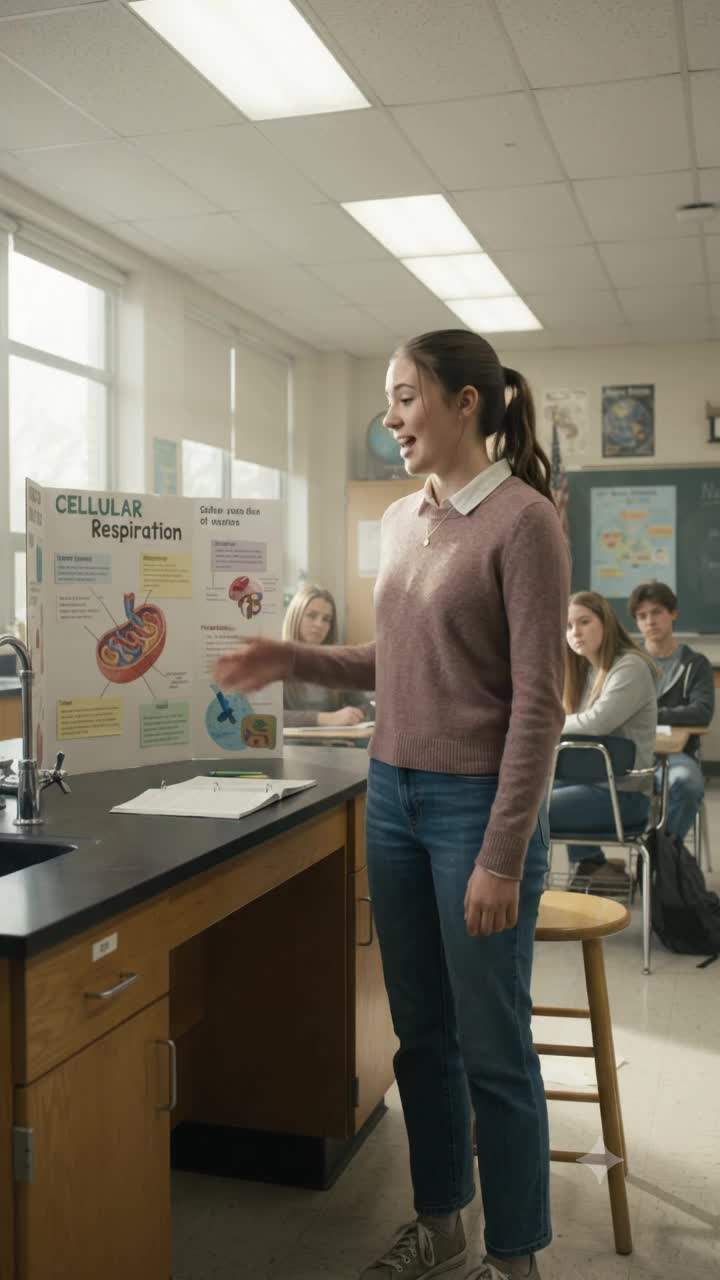
Today, he was in the front row, sprawled in his chair, his eyes glinting with an unnerving amusement that made my stomach clench.
I walked to the front, clutching my note cards, feeling every single eye in the room on me.
My poster board was set up perfectly on the easel, a vibrant diagram of mitochondria and ATP.
I took a deep breath, adjusted my posture, and started speaking, my voice a little shaky at first.
“Good morning, everyone,” I began, my gaze sweeping across the room, carefully avoiding Mark’s corner.
I found my rhythm quickly, the comfort of knowing my facts taking over the initial stage fright.
I gestured to the diagrams, explaining the complex processes with a confidence I rarely showed.
There was a small wooden stool beside the lab bench, meant for demonstrations, and I planned to sit for the explanation part.
I reached the point where I needed to transition, to sit down and elaborate on the chemical equations.
I took a subtle step back, my hand instinctively reaching for the edge of the stool to pull it closer.
I felt the cool, smooth wood against my fingertips, my weight beginning to shift.
Just as my body committed to the motion of sitting, a distinct, scraping sound echoed on the linoleum floor.
It was a small, quick movement, barely perceptible, but unmistakable.
The stool, which I had just been about to rely on, was no longer directly behind me.
It had been subtly, deliberately, pulled several inches backwards, just enough to be out of reach.
My mind registered the movement an instant too late, a sickening lurch as my balance failed completely.
My feet tangled beneath me, a clumsy, undignified mess of limbs.
I didn't fall completely to the floor, but I stumbled awkwardly, catching myself with an undignified squawk, my arms flailing wildly.
My meticulously arranged note cards flew from my grasp, scattering across the sticky classroom floor like panicked birds taking flight.
The small, plastic beaker I was holding, meant to demonstrate a chemical reaction, clattered to the ground, thankfully empty.
A few stifled giggles erupted from the back of the room, quickly hushed by Mrs. Henderson’s sharp, annoyed gaze.
But her annoyance was directed at the interruption, not at the obvious source.
The damage, for me, was already done, a permanent brand of humiliation searing itself into my memory.