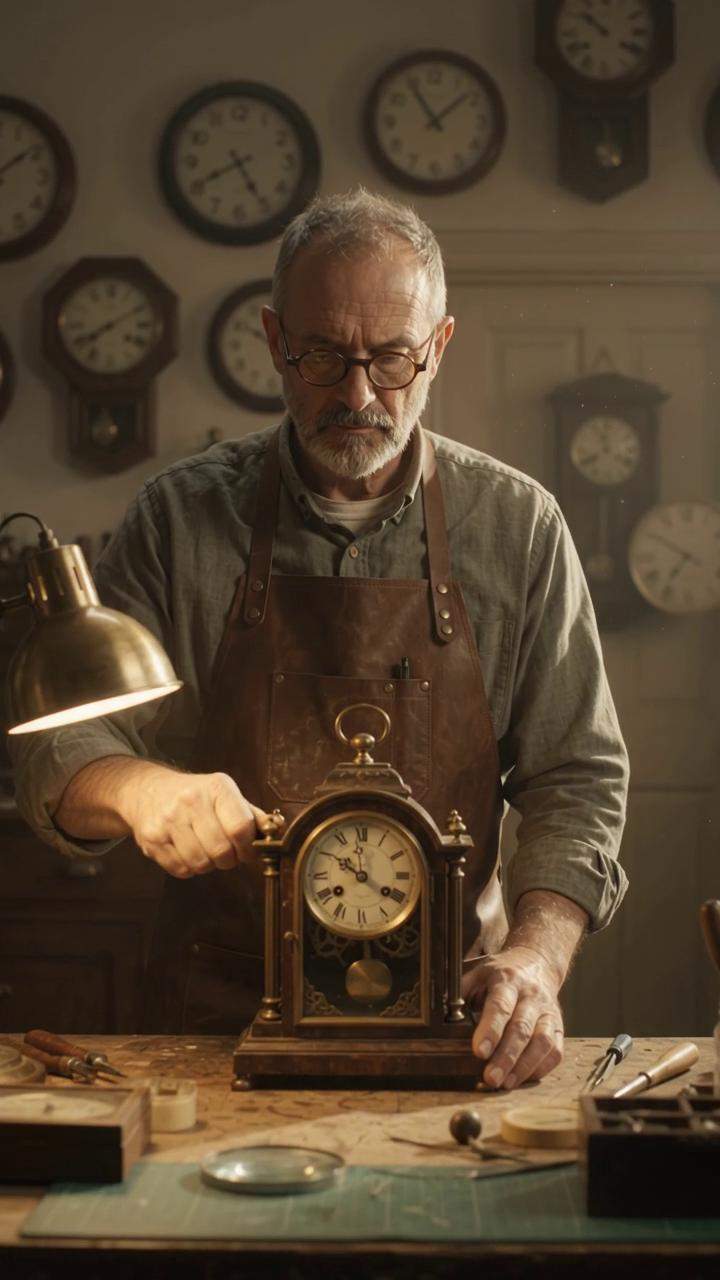
The attic used to be my sanctuary, a dust-filled time capsule brimming with my family’s past. Every summer, I’d escape the heat of the city and spend weeks at my grandparents’ old house, tucked away in the quiet, tree-lined suburbs. When Grandma passed last year, leaving the house to my mother, it fell to me, the self-proclaimed family historian, to sort through decades of accumulated memories. Each antique trunk, every faded photograph album, held a piece of our story, a comfort, a familiar embrace. I loved that house, and I especially loved my Uncle Robert.
Uncle Robert was the bedrock of our community. Everyone knew him, everyone admired him. He wasn't just a successful businessman; he was a benevolent figure, a charismatic leader whose speeches at town hall meetings always rallied spirits, whose philanthropic efforts kept the local shelters running, whose very presence seemed to exude integrity. He had that rare ability to make you feel seen, valued, important. To me, he was more than an uncle; he was a second father, a mentor, a hero. His smile could light up a room, and his words often carried the weight of wisdom. When he spoke of the tragic warehouse fire that had claimed old Mr. Henderson's life fifteen years ago – an incident that had rocked our small town – his eyes would always hold a faraway sadness, a shared communal grief. It was an accident, they said, a faulty electrical system. The town grieved, then rallied, led by Uncle Robert, to rebuild what was lost. His leadership during that time cemented his legendary status.
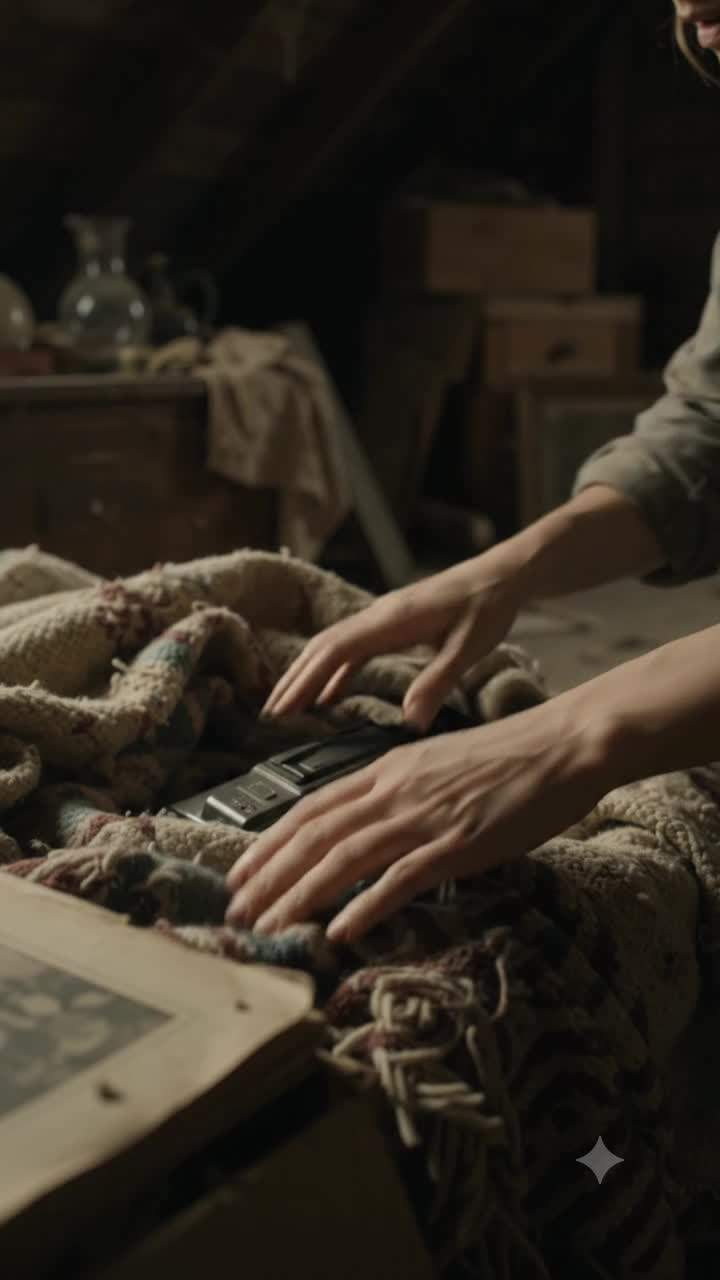
I was sifting through an old wooden chest, filled with what looked like forgotten electronics from the late 90s and early 2000s – old cell phones, walkie-talkies, and a dusty, surprisingly heavy camcorder. It felt ancient in my hands, a relic from a bygone era of clunky technology. A wave of nostalgia washed over me. I remembered Dad trying to capture every family holiday on one of these, his booming voice narrating as he clumsily zoomed in on our awkward teenage faces. This one, however, wasn't Dad's. It had a different brand, a slightly more professional look. My curiosity piqued. What forgotten memories might be hidden within?
I found its power cord tangled with other cables and plugged it into the small, portable TV I’d brought up for background noise. The screen flickered, a cascade of white noise momentarily blinding me, then abruptly cleared. And there he was.
The face that filled the small, grainy screen was instantly recognizable, yet utterly alien. It was Uncle Robert, but not the Uncle Robert I knew, not the stoic, composed figure who always knew the right thing to say. This man was a ghost of himself, his eyes bloodshot and swollen, deep purple bags beneath them. His usually impeccable hair was disheveled, falling across a forehead deeply furrowed with anguish. Tears streamed down his cheeks, carving clean paths through the grime that seemed to coat his face. His lips trembled uncontrollably, as if struggling to form words, or perhaps to hold back a torrent of them.
My heart began to pound a frantic rhythm against my ribs. What was this? A prank? A bad joke? No, the raw agony etched on his face was too real, too profound to be anything but genuine. He took a shuddering breath, a sound that seemed to tear through the quiet of the attic, and then he spoke, his voice barely a whisper, thick with despair and self-loathing.
“I… I did it.” His voice cracked, filled with a guttural, primal pain that sent a chill down my spine, a cold premonition gripping my very soul. My eyes widened, fixed on the screen, my entire body tensing. He wasn’t looking at the camera, but past it, into some unseen abyss, his gaze hauntingly vacant. “The warehouse fire…” He paused, a sob catching in his throat, and then, his words hit me like a physical blow, stripping the air from my lungs. “It wasn’t an accident. I was there. I… I set it.”
The world tilted. The dusty attic, the familiar comfort of the past, everything dissolved into a chaotic swirl of disbelief and horror. My hands flew to my mouth, a desperate attempt to stifle the gasp that threatened to escape. The abrupt, heavy bass explosion of the camcorder’s recording, perhaps a slight distortion in the old tape, seemed to punctuate his confession with a final, chilling emphasis, mirroring the shattering of my reality. The camcorder, suddenly feeling like a venomous snake in my grip, slipped from my fingers. It hit the worn wooden floor with a soft, sickening thud, the screen flashing Robert’s frozen, distraught face for a split second before going dark, leaving behind a chilling silence that screamed louder than any noise.
I stumbled backward, tripping over an old ottoman, landing hard on my knees. My gaze was fixed on the inert device, a black rectangle on the dusty floor, now a vessel of unspeakable truth. My breath hitched, a ragged sound in my own ears. My hero. My Uncle Robert. A liar. A criminal. A murderer. The respected pillar of our community had confessed to a crime, a tragic "accident" that had claimed a life and scarred our town, was a deliberate act of arson.
The air in the attic, usually comforting, now felt suffocating. I scrambled away from the camcorder, pushing myself against the wall, as if the device itself might contaminate me. My mind raced, grappling with the impossible, the unthinkable. Uncle Robert? The man who championed justice and community spirit? The man who had organized countless fundraisers for the Henderson family, speaking eloquently about the fragility of life and the strength of communal support in the face of tragedy?
I remembered the fire like it was yesterday. The orange glow against the night sky, the acrid smell of smoke permeating everything, the collective gasp of the town as the news spread about Mr. Henderson. He had been a kind, quiet man, a widower who spent his days meticulously restoring antique furniture in his warehouse, always with a soft smile and a gentle word. His death had been a profound loss. And now… this.