The Golden Podium
The air crackled with anticipation inside the glittering Dolby Theatre.
E.g. :The Day My Backpack Spilled My Secret in the Hallway
- 1、The Golden Podium
- 2、A Flickering Revelation
- 3、The Ghost in the Machine
- 4、A Devil's Bargain
- 5、Beneath the Spotlight's Glare
- 6、The Architect of Exposure
- 7、Fallout and Fragments
- 8、The Unseen Writer's Legacy
Cameras flashed, capturing every designer gown and tailored tuxedo.
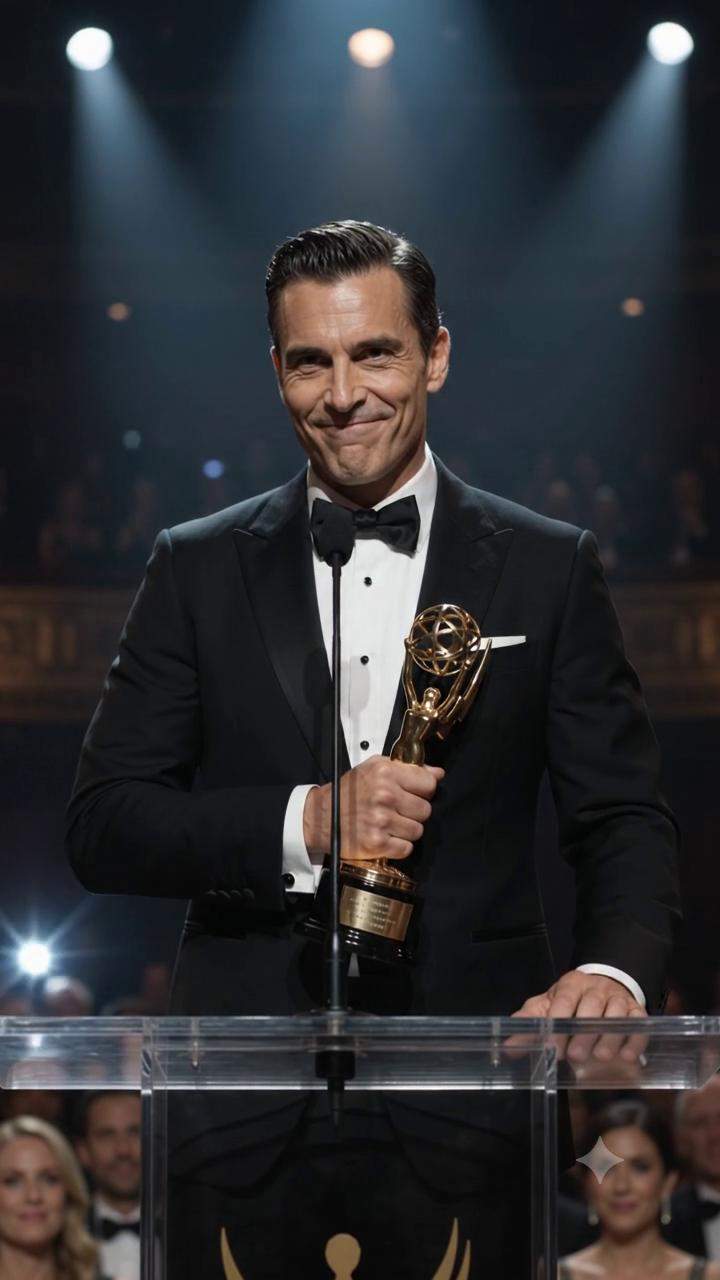
Adrian Vance, a name synonymous with cinematic opulence and a notoriously sharp tongue, strode confidently to the podium.
He clutched the golden trophy for Best Original Screenplay, his film "Eclipse" already a critical darling of the awards season.
A triumphant, almost smug, smile played on his lips as he gazed out at the adoring, celebrity-filled audience.
"This is more than just a film," he began, his voice resonating with carefully rehearsed passion.
"Every single word, every emotional beat, every nuance of 'Eclipse' was poured from my very soul."
He paused, letting the applause wash over him, a master conductor basking in his orchestra's symphony.
Adrian had always been a showman, a craftsman of narratives both on and off the screen.
His public persona was meticulously cultivated, a blend of artistic genius and self-assured arrogance.
But tonight, there was a subtle tremor beneath the polished facade, a barely perceptible tension in his jawline.
"It was a journey of introspection," he continued, gesturing with the trophy.
"A deeply personal exploration of loss and redemption, a story that demanded to be told through my unique vision."
He glanced up at the giant teleprompter, cueing his next line.
A Flickering Revelation
That's when it happened.
The massive screen, normally a silent guide for speakers, flickered.
A glitch.
Not a minor text error, but a sudden, jarring intrusion.
The elegant script of his speech vanished, replaced by an entirely different interface.
A live bank transfer notification dominated the screen.
"Transaction Complete," it blared in digital green.
"Recipient: Adrian Vance. Amount: $500,000.00. From: Cassandra Hayes."
A collective murmur rippled through the front rows.
But the real shock came with the email preview directly beneath the bank transfer.
"Subject: Regarding 'Eclipse' script credits - ensure Vance takes full public ownership. The original creator cannot be linked."
The words hung in the air, illuminated for the entire world to see.
Silence descended upon the theatre, heavier than any orchestral crescendo.
The murmurs died down, replaced by stunned gasps.
Advertisement
Adrian Vance, mid-sentence, his hand still gripping the trophy, froze.
His triumphant smile shattered, replaced by a mask of pure, unadulterated horror.
His eyes darted from the teleprompter to the audience, then back again, wide with a dawning, sickening realization.
The camera zoomed in, capturing every ripple of shame and panic that contorted his once-confident features.
The Ghost in the Machine
Adrian Vance's career hadn't always been a gilded path.
After a string of critically panned blockbusters and commercial flops, his star had begun to dim.
He was seen as a director past his prime, too reliant on spectacle, lacking genuine emotional depth.
His younger sister, Lena Vance, was a different story entirely.
Lena possessed a raw, untamed brilliance, a literary prodigy who penned breathtaking narratives.
But Lena was also volatile, prone to public meltdowns, and had battled severe mental health issues and substance abuse for years.
Hollywood, in its unforgiving way, had effectively blacklisted her years ago.
Her name on a project was considered box office poison, a liability too great for any studio to risk.
One rainy afternoon, sifting through a stack of Lena's forgotten manuscripts, Adrian stumbled upon "Starlight."
It was an incandescent, deeply personal screenplay, a poignant tale of resilience and cosmic wonder.
He recognized its undeniable genius immediately.
More importantly, he saw his salvation.
A Devil's Bargain
Adrian took Lena's script, carefully omitting her name, to Cassandra Hayes, the notoriously ruthless head of Olympus Pictures.
Cassandra, a woman who valued profit above all else, read "Starlight" and saw its potential for a major awards push.
She loved the story, but her enthusiasm quickly soured when Adrian hesitantly brought up Lena's name as the true author.
"Adrian, you know the deal with Lena," Cassandra stated flatly, her voice devoid of sympathy.
"Her name is a non-starter. It would sink our entire campaign, turn this into a tabloid circus."
She leaned forward, her gaze piercing.
"But your name, Adrian, attached to a script of this caliber? That's a comeback story. That's Oscar gold."
Cassandra laid out her terms: Adrian would take full, exclusive, public credit for the screenplay.
The script would be renamed "Eclipse" to fit his established brand of grand, sweeping narratives.
In exchange, he would receive a staggering sum, paid in installments, ensuring his loyalty and silence.
Adrian wrestled with the decision.
Ambition gnawed at him, whispering promises of reclaimed glory and critical acclaim.
Guilt, a familiar but unwelcome companion, stirred in his conscience.
He justified it to himself, and eventually to a weary Lena, as a "path back."
He promised her private compensation, a cut of his earnings, and a chance for her story to finally be told, even if uncredited.
Lena, desperate for her work to see the light of day after years in the wilderness, agreed with a heavy heart.
A seed of bitter resentment, however, took root deep within her.
Beneath the Spotlight's Glare
"Eclipse" became a sensation.
Critics lauded Adrian's "unexpected depth" and "mature storytelling."
The film garnered nominations, awards, and immense box office success.
Adrian, once again at the pinnacle of Hollywood, played his part perfectly.
He gave interviews waxing poetic about his "soul-searching journey" and the "intimate connection" he felt to every word.
Each word, however, tasted like ash in his mouth.
He saw Lena sometimes, fleeting glimpses from a distance.
Advertisement
Her eyes, once bright with artistic fire, were now shadowed by a quiet pain.
She was watching her masterpiece, her true self, being celebrated under another's name.
The irony, the hypocrisy of it all, became an unbearable weight for her.
She saw Adrian, her brother, basking in the stolen spotlight.
She saw Cassandra Hayes, the architect of the deception, smiling from the producer's chair.
The industry, she realized, was a machine, grinding down truth for the sake of its own glittering illusion.
The Architect of Exposure
Lena had never truly forgiven Adrian, or the industry, for what they had done.
The "private compensation" felt like a pittance, a blood money payment for her stolen voice.
She knew Adrian was scheduled to receive his final installment of the half-million-dollar payment the very day of the awards.
She also knew his speech would be laden with hollow pronouncements of creative integrity.
Working through a network of disgruntled former industry insiders and tech-savvy activists she'd met during her darker years, Lena orchestrated the hack.
It wasn't about revenge, not entirely.
It was about exposure.
It was about reclaiming a sliver of her identity, shattering the meticulously crafted illusion.
The email snippet, carefully timed to appear with the transfer, was a subtle jab at Cassandra, a reminder of the studio's cruel imperative: "The original creator cannot be linked."
Lena knew that Adrian would be humiliated, his career potentially ruined.
But she believed the truth, however painful, had to emerge from the shadows.
She watched the live broadcast from a small, anonymous apartment, her heart pounding.
When Adrian's face contorted in horror, a mix of triumph and profound sadness washed over her.
Fallout and Fragments
Chaos erupted in the Dolby Theatre.
Security rushed the stage, quickly ushering a trembling Adrian Vance away, trophy still clutched in his hand.
Journalists scrambled, their phones already buzzing with the breaking news.
The awards ceremony descended into a media frenzy.
Cassandra Hayes, her face a mask of incandescent fury, was seen whispering furiously into a phone, her eyes darting towards Adrian's retreating figure.
The next few days would see Hollywood tear itself apart.
"Script Theft Scandal Rocks Oscars!" screamed headlines.
Social media exploded with speculation, condemnation, and calls for accountability.
Adrian Vance's career, meticulously rebuilt on a foundation of lies, crumbled in an instant.
His reputation was in tatters, his "masterpiece" forever tainted by the public revelation.
Lena Vance, the true author of "Eclipse," remained in the shadows, her identity still officially unconfirmed by the studio.
But the industry whispered her name.
A quiet recognition, a grudging respect, began to surface among those who knew the truth.
The film "Eclipse" itself underwent a profound re-evaluation.
Its poignant themes of loss and redemption suddenly took on a new, unsettling resonance, a testament to the unseen suffering behind its creation.
The Unseen Writer's Legacy
Lena's future remained uncertain.
Would Hollywood ever truly accept her, even with her genius now inadvertently exposed?
Could she ever forgive Adrian, or he, her?
The scandal was a stark reminder of the ruthless underbelly of the entertainment world.
It showcased the lengths to which ambition could drive individuals and institutions.
It also highlighted the enduring, often unseen, struggle for integrity and recognition in a business built on dazzling illusions.
The question lingered: how many other "masterpieces," how many other acclaimed artists, hid similar dark secrets beneath the glittering surface of fame?