The morning had started with a sense of rare, unearned confidence.
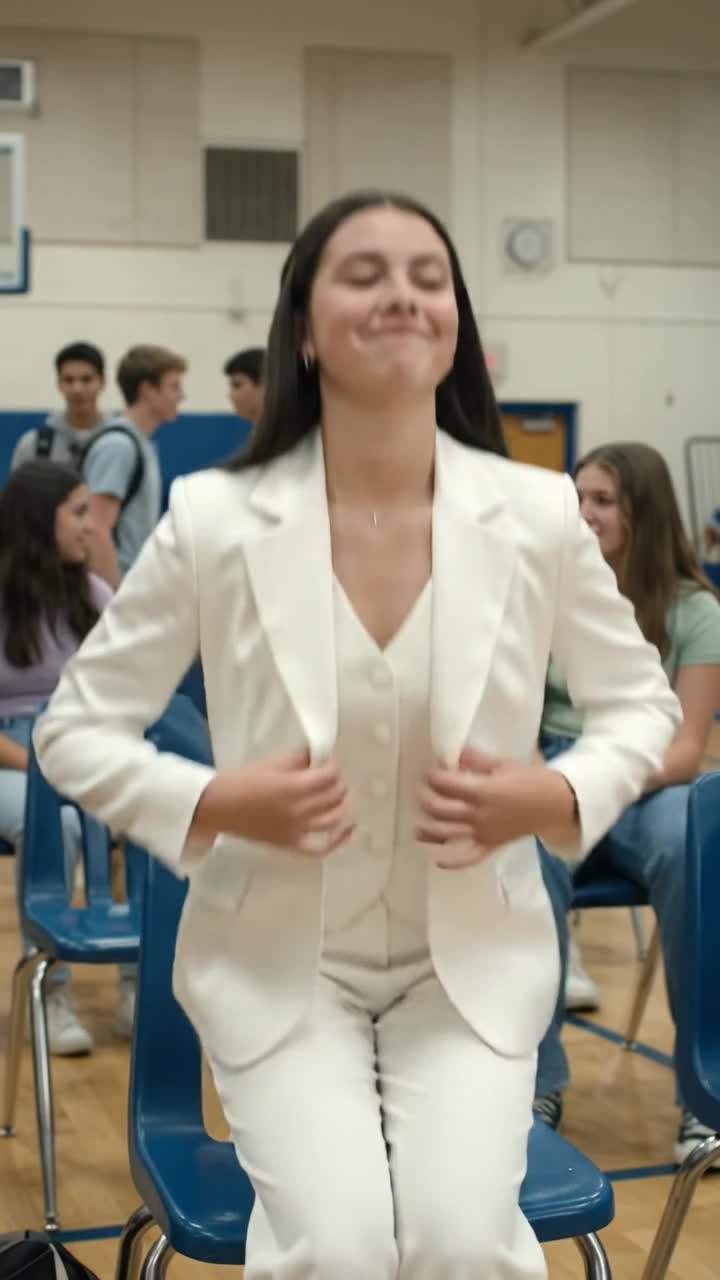
I had spent twenty minutes in front of the mirror adjusting the lapels of my mother's white blazer.
It was a tailored piece from the late eighties, with sharp shoulders and a crispness that made me feel older than seventeen.
In a school where everyone wore the same grey hoodies and leggings, I felt like a focal point of sophistication.
I walked through the front doors of Westview High feeling like I finally had a shield against the usual invisibility of my existence.
The first three periods passed in a blur of subtle glances and a few genuine compliments from teachers.
By the time the afternoon pep rally was announced, the humidity in the building had risen significantly.
We were all funneled into the gymnasium, a cavernous space that amplified every shout and footstep.
The noise was a physical weight, vibrating through the bleachers as students scrambled for their habitual territories.
I usually stayed near the exit, tucked away in the shadows where the light from the overhead fixtures didn't reach.
But today was different because I was wearing the jacket.
Sarah Miller was the undisputed center of the social solar system at Westview.
She sat in the middle of the floor chairs, surrounded by people who acted like her personal guards.
When she caught my eye and gestured to the empty seat next to her, I didn't stop to think about why it was empty.
I didn't think about the fact that Sarah hadn't spoken a word to me since middle school.
I only thought about the validation of being summoned to the center of the room.
I walked down the aisle with my head held high, the white fabric of the blazer catching the fluorescent lights.
As I sat down, the plastic of the chair felt unexpectedly soft and yielding.
Then came the coldness.
It was a sharp, biting chill that seeped through the blazer and my leggings in less than a second.
I felt the moisture spread upward toward my lower back and downward toward my knees.
The smell hit me next—the chemical, acrid scent of industrial ink.
I looked at Sarah, hoping to see confusion, but her eyes were bright with a cruel, anticipatory joy.
She didn't wait for me to process the sensation before she made her move.
She stood up and pointed, her voice hitting a high, theatrical pitch that cut through the noise of the band.
"Is that... is that ink all over you?" she shouted.
The person sitting to my left leaned away as if I were contagious.
I felt a desperate urge to stay seated, to meld into the chair and disappear into the plastic.
But Sarah reached down and gripped my forearm with surprising strength.
Advertisement
She pulled me upward, and the sound of the fabric peeling away from the ink-covered seat was like a wet slap.
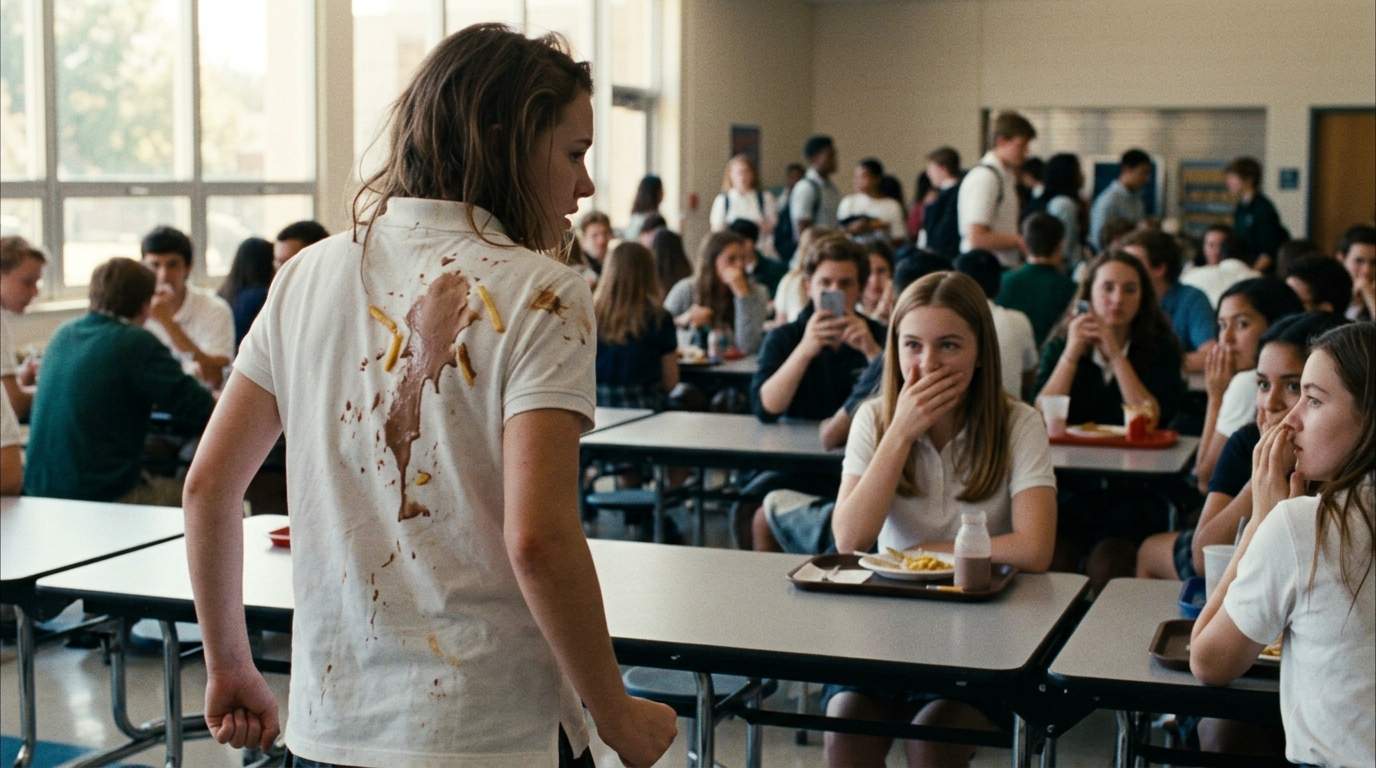
I stood there, exposed, as the realization of the silhouette on my back became public property.
A deep, vibrant blue stain covered the entire seat of the white blazer, shaped like a jagged, mocking Rorschach test.
I could feel the ink beginning to dry, tightening the fabric against my skin.
The silence that followed Sarah’s shout was momentary, replaced quickly by the sound of a hundred digital shutters clicking.
Phones were raised in a synchronized movement, a forest of lenses capturing my disgrace from every angle.
I turned my head and saw my own reflection in a girl's phone screen in the front row.
I looked small, cornered, and absurd in a ruined luxury garment that I could never afford to replace.
The principal continued to speak about "community" and "respect" from the podium, his voice droning on, oblivious to the assassination happening ten feet away.
I looked at Sarah, searching for a shred of the girl I used to be friends with in third grade.
She just smiled and tucked a strand of hair behind her ear, leaning back into her seat as if she had just finished a satisfying meal.
My legs felt heavy, like I was wading through deep water as I began to back away.
I didn't run, because running would have made the video even better for their Instagram stories.
I walked with a stiff, robotic gait toward the heavy double doors at the back of the gym.
Every step I took felt like I was dragging the weight of the entire school's laughter behind me.
The ink had started to drip onto the backs of my white sneakers, leaving a trail of blue dots on the polished wood floor.
I reached the doors and pushed them open, the sudden quiet of the hallway feeling like a physical blow.
I didn't go to the office, and I didn't go to the bathroom to try and wash it out.
I knew that ink like that didn't come out; it was permanent, just like the memory of the sound the chair made.
I walked straight out the front doors of the school and into the parking lot.
The sun was too bright, making the white of the blazer's sleeves look blindingly pure compared to the mess on my back.
I sat on the curb behind a row of yellow buses and waited for the world to stop spinning.
I took the blazer off and laid it on the asphalt, watching as the blue stain seemed to grow even in the open air.
That jacket had been my mother's pride, a symbol of a time when she felt powerful and beautiful.
I had taken that power and let a girl like Sarah turn it into a punchline.
I realized then that the clothes didn't provide a shield; they only provided a bigger target.
I stayed there until the final bell rang and the first wave of students began to flood out of the building.
I saw them looking at their phones, showing each other the slow-motion replays of me being pulled from the chair.
I didn't hide my face when they passed.
There was a strange, hollow calm that came with having the worst thing possible happen in the most public way.
The stain on my back would eventually fade from the internet's memory, replaced by the next week's scandal.
But the feeling of the cold, wet ink against my skin would stay with me for years.
It changed the way I walked into rooms and the way I looked at people who offered me a seat.
I never wore white again for the rest of high school.
I didn't need to, because the blue was already etched into the way I saw the world.