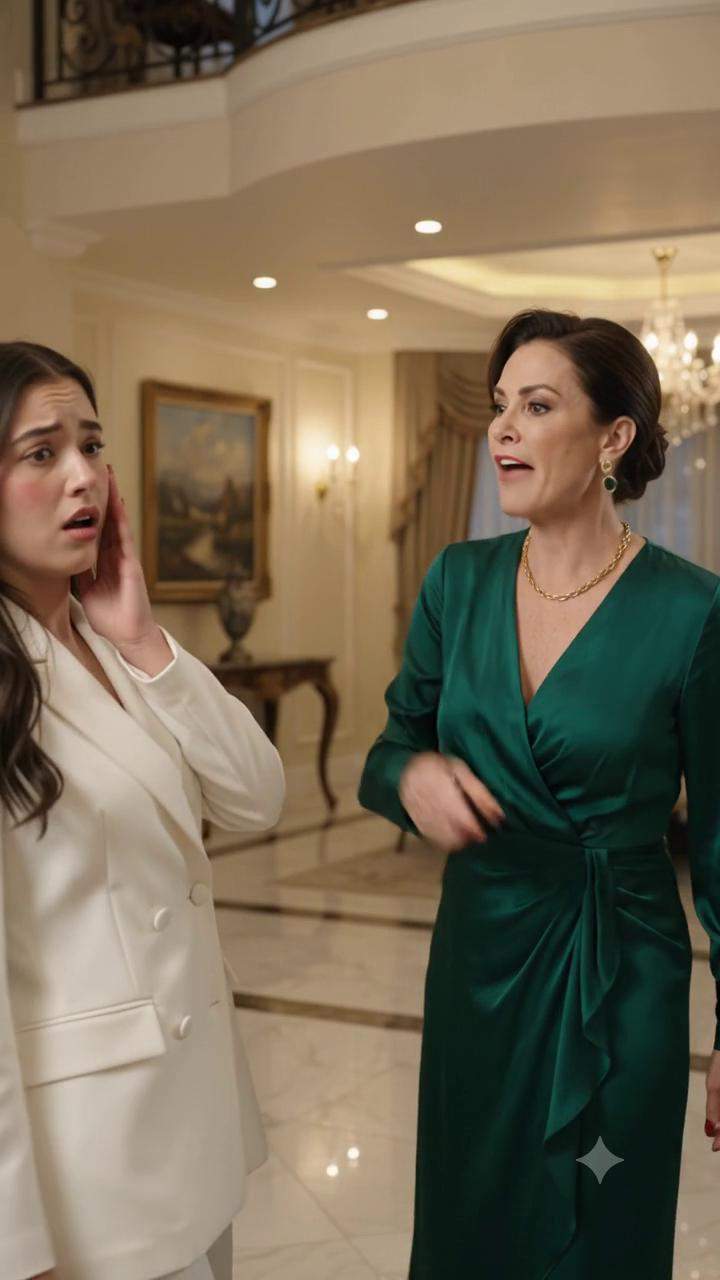
I had spent three years in the shadow of a man who couldn't even format a basic spreadsheet without my help.
Mark was the kind of manager who managed up, spending his days playing golf with the executives while I drowned in a sea of data and deadlines.
He called himself a visionary, but the only thing he ever envisioned was how to take credit for my late nights and missed holidays.
When the Senior Vice President position opened up, I knew it was my only chance to finally break through the glass ceiling that Mark had reinforced with his own incompetence.
The project was called the Aurora Initiative, a complete overhaul of our logistics network that I had designed from the ground up over six grueling months.
I had barely slept, fueled by black coffee and the naive hope that my work would finally speak for itself.
Two nights ago, the reality of Mark’s parasitic nature hit a new, pathetic low.
It was two o'clock in the morning when my phone buzzed incessantly on my nightstand, the caller ID flashing his name like a warning siren.
I answered, thinking there was a genuine company emergency, but instead, I heard the slurred, panicked voice of a man who had realized he was out of his depth.
He was at a bar, the background noise of clinking glasses and loud music punctuating his frantic breaths as he realized he had to present the Aurora Initiative to the CEO the next day.
Mark didn't have a single slide ready because he didn't understand the core mechanics of the algorithm I had developed.
He started by demanding I send him my notes, but when I told him the files were encrypted on my office desktop, he broke down into a state of total desperation.
He begged me, his voice cracking with a mixture of entitlement and terror, promising me a raise he couldn't authorize and a respect he would never give.
I listened in silence as he whimpered into the speaker, and that was the moment I decided I was finished being his ghostwriter.
I didn't say much, just enough to keep him talking, while my finger hovered over the record button on my secondary device.
The next morning, the boardroom felt like a courtroom where the verdict had already been decided in favor of the guilty.
Mr. Sterling, our CEO, sat at the head of the mahogany table, his silver hair catching the morning light like a crown of cold steel.
Mark stood at the front of the room, looking remarkably polished for a man who had been sobbing into a gin and tonic just hours earlier.
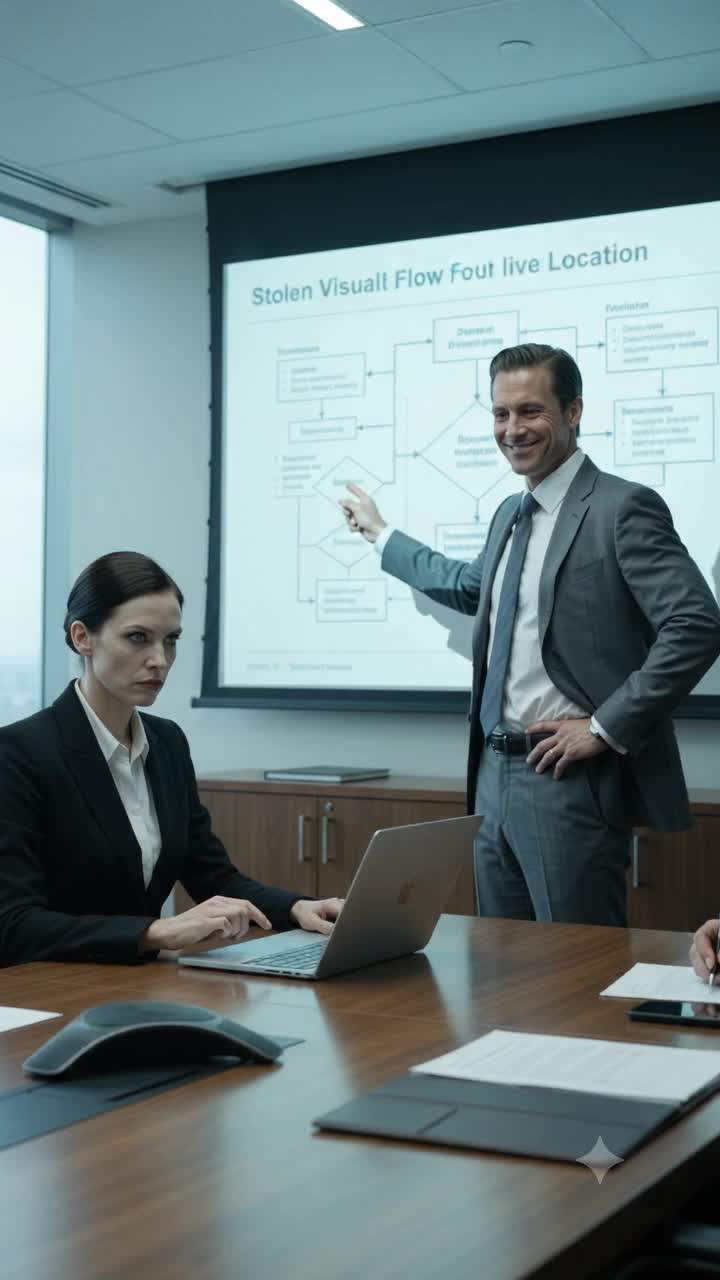
He clicked through my slides with a practiced smugness, using words like synergy and paradigm shift to mask the fact that he didn't know what the graphs actually represented.
Every time he said the word I, a small spark of cold fire ignited in the pit of my stomach.
He was halfway through the presentation, explaining the projected thirty-percent cost reduction as if he had calculated the figures himself, when I felt the weight of the USB drive in my pocket.
Mr. Sterling leaned forward, looking impressed, and asked a technical question about the scalability of the backend infrastructure.
Mark froze, a bead of sweat appearing at his hairline, and started to ramble about holistic integration.
I didn't wait for him to drown; I decided to push his head under the water myself.
I stood up, walked to the main console, and pressed the override button that froze the projector screen.
The room went silent, the kind of silence that precedes a car crash.
Mark turned to me, his face a mask of confusion that quickly morphed into a snarl of silent warning.
I didn't look at him; I looked directly at Mr. Sterling and told him that there was a piece of data missing from the presentation.
I plugged in my drive and opened the audio file, the volume set high enough to vibrate the glass water pitchers on the table.
Advertisement
The recording started with Mark’s unmistakable voice, loud and pathetic, pleading with me to save his career because he was too stupid to understand the project.
For ten seconds, the only sound in the room was the digital ghost of Mark’s integrity evaporating in front of the most powerful people in the company.
Mark’s face went from pale to a deep, bruised purple as he realized exactly what was happening.
He lunged for the laptop, his hands clawing at the air like a drowning animal, his professional facade completely shattered.
His fingers were inches away from the keyboard when a hand as solid as a mountain range blocked his path.
Mr. Sterling didn't even look at him; he just extended his arm, his grip on Mark’s wrist firm enough to make the younger man wince.
Sit down, Mark, the CEO said, his voice low and vibrating with a terrifying calm.
Mark tried to protest, his voice coming out in a high-pitched squeak, but the look in Mr. Sterling’s eyes silenced him instantly.
I stood there, my heart hammering against my ribs, watching the man who had bullied me for years collapse back into his chair.
The rest of the meeting was a blur of high-level technical questions that I answered with a precision that left no doubt about who the true architect of the Aurora Initiative was.
Mr. Sterling didn't fire Mark in the room; he did something much worse by making him sit there while I tore his presentation apart and rebuilt it correctly.
When the doors finally opened, security was already waiting in the hallway, holding a cardboard box with Mark’s name scribbled on the side.
He didn't look at me as they led him away, his shoulders slumped and his expensive suit suddenly looking three sizes too big for him.
I stayed behind, alone in the room with the CEO, the silence now feeling like a heavy, comfortable blanket.
Mr. Sterling looked at the frozen image on the screen, then looked at me, a small, knowing smile touching his lips.
He told me that he had known Mark was a fraud for months, but he had been waiting to see if I had the spine to defend my own work.
It was a cold lesson in corporate survival, but as I looked down at the empty chair where my tormentor had sat, I realized I had passed the test.
He offered me the Senior VP position on the spot, along with a salary increase that made my previous demands look like pocket change.
I walked out of that building into the bright afternoon sun, feeling the weight of three years finally lifting off my shoulders.
I wasn't just a ghostwriter anymore; I was the one holding the pen, and I intended to write a very different story for this company.
My phone buzzed again as I reached my car, a text from an unknown number that I knew was Mark, full of insults and desperate threats.
I didn't even read it to the end before hitting the delete button.
Some people spend their whole lives trying to build a throne out of other people's bricks.
But they always forget that the person who knows how to build the throne also knows exactly which brick to pull to make the whole thing come crashing down.
I started my engine and drove away, leaving the wreckage of Mark’s career in my rearview mirror, where it belonged.
The office would be different tomorrow, and for the first time in my life, I wasn't afraid of the climb.