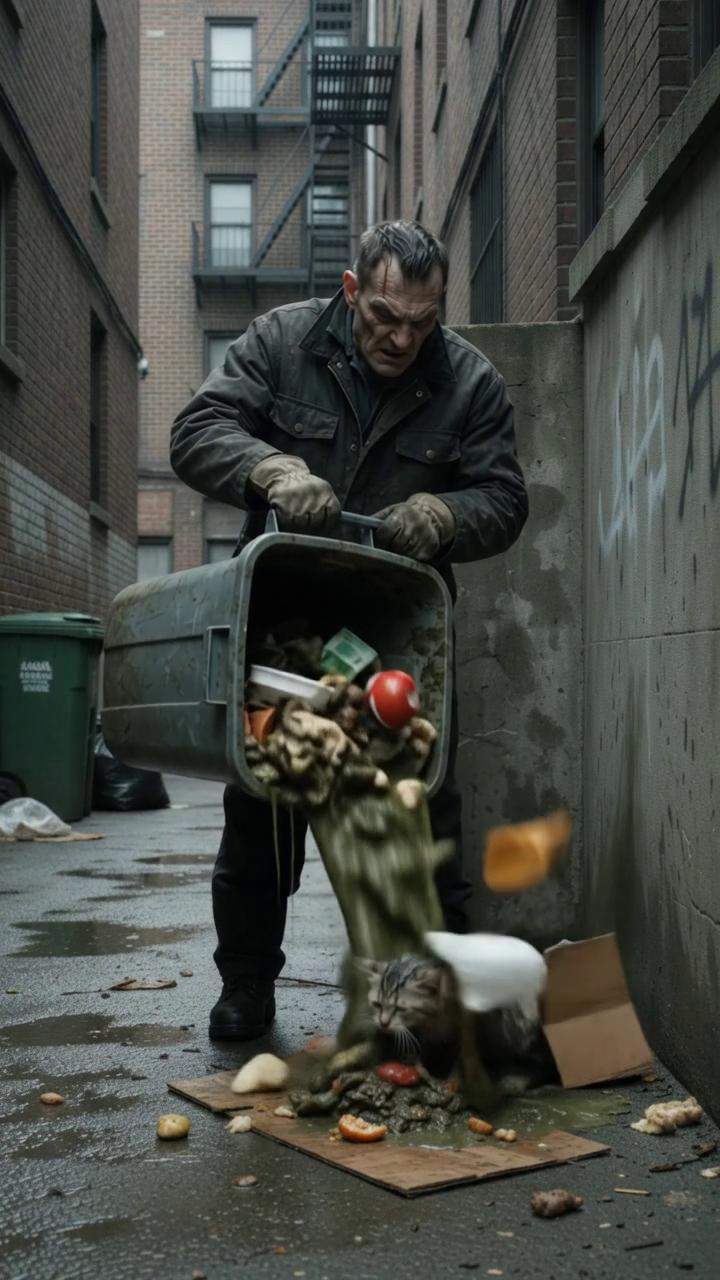
My name is Chris, and I work in product development at Nexus Solutions, a tech giant known more for its cutthroat ambition than its camaraderie. Most days, the office felt like a well-oiled machine, each cog meticulously designed to serve the singular vision of our CEO, Mr. Sterling. Sterling, a man whose name was synonymous with innovation and ruthless efficiency, was a legend within these walls, almost a myth. He rarely interacted with anyone below senior management, a distant, imposing figure on the 50th floor. We all moved in his orbit, hoping to catch a glimpse of favor, terrified of his wrath.
Alex, a colleague and friend in my department, was one of those diligent cogs. He wasn’t a flashy guy; he just put his head down and worked, his desk usually the last one occupied in the evenings. Alex had a quiet integrity about him, a stubborn streak that I admired but sometimes worried about in our corporate jungle. He had a young family, two kids he adored, and a mortgage that kept him tethered to his relentless work schedule. He'd often talk about the delicate balance of making it home in time for dinner or school pickups, a challenge in the endless grind.
The day it happened, Alex was already on a tight schedule. We had a major project launch looming, and stress levels were through the roof. He’d stayed late, as usual, trying to tie up loose ends before rushing out to pick up his daughter from daycare. He had a specific parking spot, close to the exit, a small luxury in our crowded corporate lot. That afternoon, as he recounted to me later, he was already cutting it close, mentally calculating the quickest route home through rush hour traffic.
He got to his car, fumbling with his keys, when he saw it. A gleaming, black Bentley Bentayga, a monstrously expensive SUV, was parked at a bizarre angle, completely blocking the only exit lane out of his section of the garage. It wasn't just slightly impeding; it was a full, arrogant obstruction. Anyone trying to leave would have to wait. Alex, a stickler for rules and deeply conscious of time, felt a surge of familiar corporate frustration. It was the kind of petty disrespect that chipped away at you, a reminder of who had power and who didn't.
He waited for a minute, then two, hoping the driver would appear. He honked his horn, a short, polite tap at first, then a longer, more insistent blare. Nothing. The car sat there, impenetrable, a monument to someone's self-importance. Alex checked his watch; panic started to set in. He couldn't be late for his daughter again. His patience, already frayed by the week's deadlines, snapped. This wasn't just an inconvenience; it was a deliberate disregard for everyone else.
With a sigh of exasperation, he got out of his modest sedan, slamming the door a little harder than necessary. He strode towards the Bentley, a determined set to his jaw. He reached the driver's side window and rapped sharply on the tinted glass, expecting some junior executive or an entitled visitor. The window slid down, slowly, with an almost theatrical grace, revealing a face I knew all too well from company wide emails and the occasional stage presentation: Mr. Sterling himself.
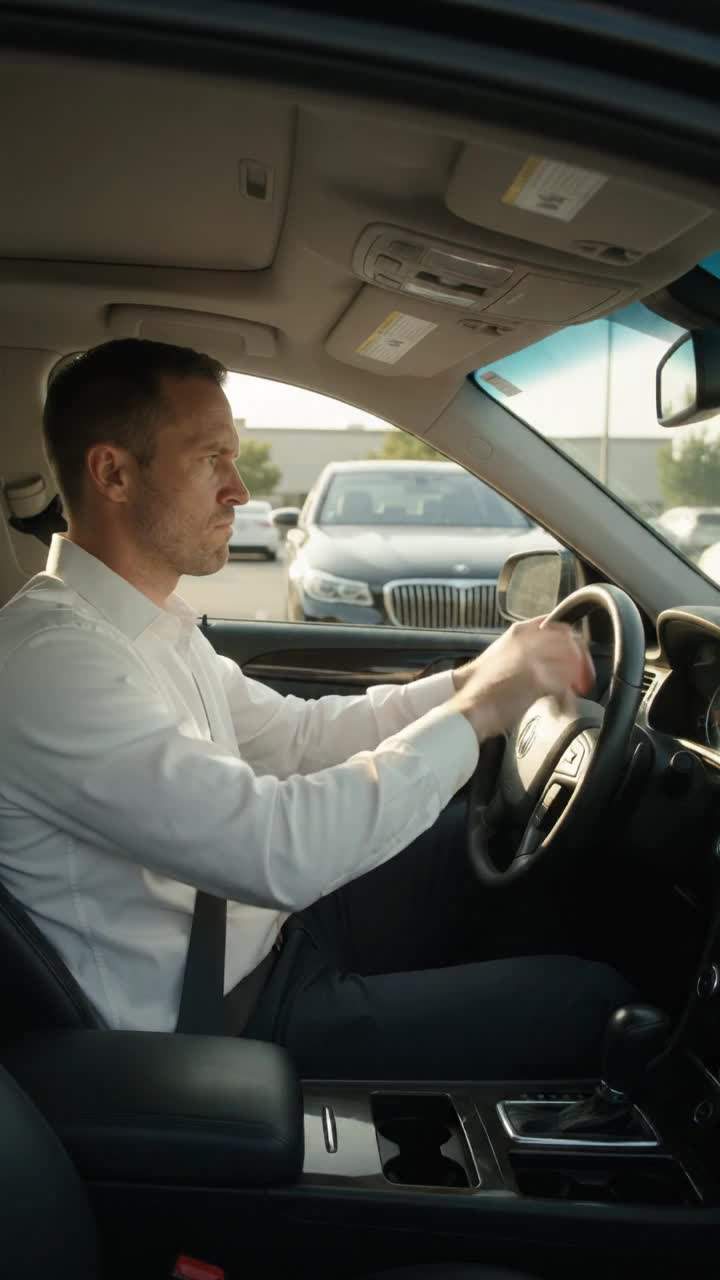
For a moment, Alex froze. He told me his mind went blank, a cold wave washing over him. The CEO. The man who held all our fates in his hands. Sterling, without even bothering to make eye contact, merely glanced at Alex through his expensive sunglasses, a look of profound irritation on his face. "What do you want?" Sterling barked, his voice accustomed to instant obedience, "I'm busy." Alex said it felt like a punch to the gut, the sheer arrogance of it. The man wasn't just blocking him; he was dismissing him as an irrelevant annoyance.
But then, something shifted inside Alex. Maybe it was the urgency of his daughter's daycare, maybe it was a cumulative rage against years of feeling overlooked, or maybe it was just that innate stubbornness. This wasn't just about a parking spot anymore. This was about principle, about common decency, about the right to simply leave work and go home. In that instant, Alex pulled out his phone. He dialed 911. He briefly explained the situation to the operator, giving the location and the nature of the obstruction, his voice steady despite his pounding heart.
Then, he looked Mr. Sterling straight in the eye, his voice betraying a hint of suppressed fury, but firm. "You're blocking the exit, sir," Alex said, enunciating each word. As if on cue, a faint, distant siren began to wail, growing louder. Sterling's dismissive gaze hardened, then flickered with a mixture of annoyance and dawning recognition as he finally registered Alex's face, a mere subordinate daring to challenge him. He looked from Alex to the approaching siren, a vein visibly pulsing in his temple.
The police arrived swiftly, two officers, calm and professional. Sterling, his face now a mask of barely contained rage, tried to pull rank, to dismiss the situation as a trivial misunderstanding. "Do you know who I am?" he demanded, his voice low and dangerous. But the officers, unimpressed by the luxury car or the CEO's bluster, insisted on addressing the clear traffic violation. Alex, maintaining a composure I wouldn't have thought him capable of, calmly explained that he had been blocked for over ten minutes and had urgent childcare commitments. He showed them his phone log, proof of his call.
Under the officers' polite but firm insistence, Sterling, seething, was forced to move his Bentley. As he slowly pulled away, he shot Alex a venomous glare, muttering something under his breath about consequences. Alex just stood there, watching him go, a strange mix of fear and exhilaration coursing through him. He'd done it. He'd stood up to the most powerful man in the company, and he hadn't backed down. He eventually made it to daycare, only slightly late, his daughter oblivious to the corporate battle her father had just fought.
The next day, the office was abuzz. News travels faster than fiber optics in our company. Whispers followed Alex down the hallways. Some colleagues gave him furtive, admiring glances, a silent thumbs-up. Others avoided his gaze, clearly worried for his future. I felt a surge of pride, but also a knot of dread. This was Sterling we were talking about. He wasn't known for forgetting slights.
Sure enough, a few hours later, Alex was summoned to HR, then directly to Sterling’s towering corner office. I paced nervously by my desk, my phone on silent, waiting for any news. We all expected the worst: a swift, public dismissal, a message sent to anyone else who dared to defy. The silence from Sterling’s office was deafening.
When Alex finally emerged, hours later, he looked drained, but also… different. There was a lightness in his step, a quiet triumph in his eyes that confused me. I cornered him in the breakroom, a dozen questions bubbling. He sat down, took a deep breath, and told me everything.
Sterling, Alex explained, had indeed been furious. He’d launched into a blistering tirade about insubordination, disrespect, and corporate image. Alex had braced himself for the axe. But then, Sterling had paused, staring intently at Alex. "You know, Alex," he'd said, his voice surprisingly calm, "most people would have just waited, or gone home quietly. Most people would have folded the moment they saw it was me." Alex had said nothing, just met Sterling’s gaze.
"I don't need yes-men, Alex," Sterling had continued, leaning forward. "I need people with conviction. People who aren't afraid to stand their ground, even when it's inconvenient. Even when it's against me." My jaw dropped as Alex recounted the next part. Sterling hadn't fired him. Instead, he’d assigned Alex to lead the new, highly confidential 'Project Chimera,' a venture so cutting-edge and high-profile that it usually went to a senior director. It was a massive promotion, a leap up several rungs of the corporate ladder, accompanied by a hefty raise.
"Consider this a test, Alex," Sterling had concluded, a glint in his eye. "A test of your conviction. But don't think for a second I'm going to make it easy for you. And don't cross me again on principle alone. Principles are expensive."
I was stunned. It was a Sterling move, cold and calculated, yet unexpectedly recognizing something in Alex. It wasn't forgiveness, not exactly, but a begrudging respect for integrity, twisted into an opportunity. Alex, the quiet cog, had become a player, albeit a highly scrutinized one. His life, and the dynamics of our office, had irrevocably changed because of a blocked parking spot and a moment of defiant courage. It was a stark reminder that sometimes, even in the most rigid of hierarchies, standing up for what's right can carve out an unexpected, precarious path to success.