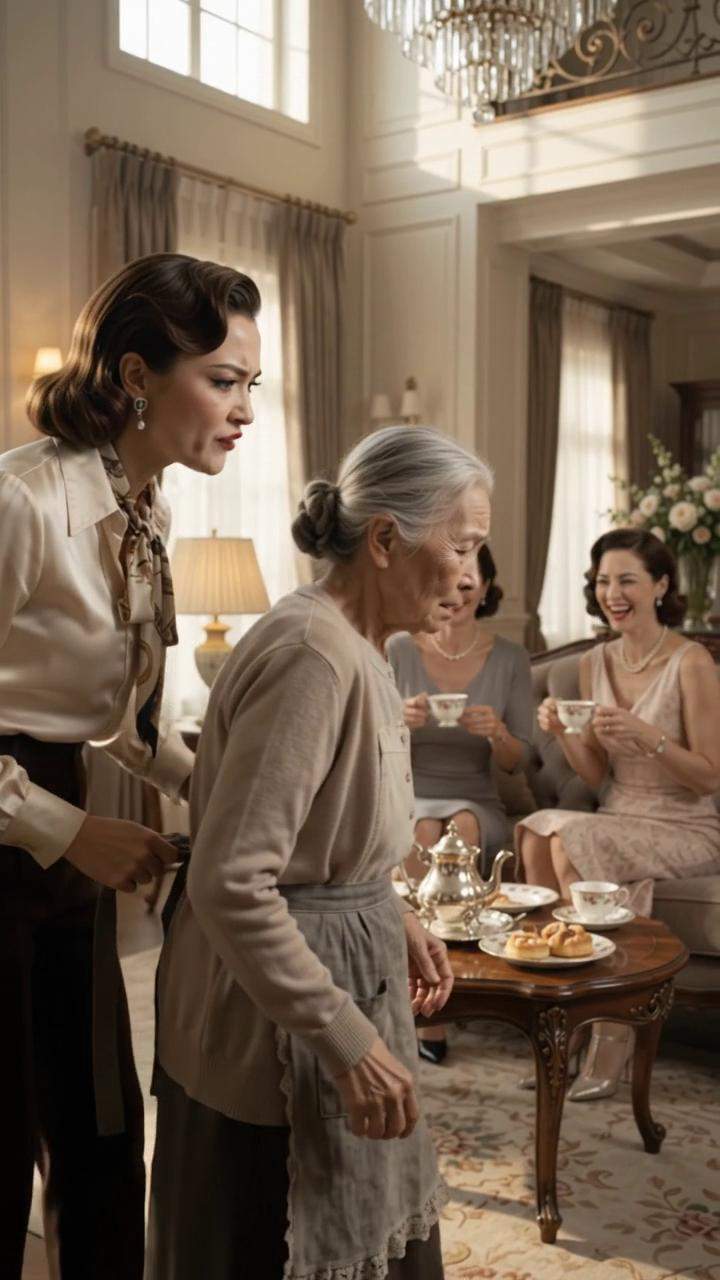
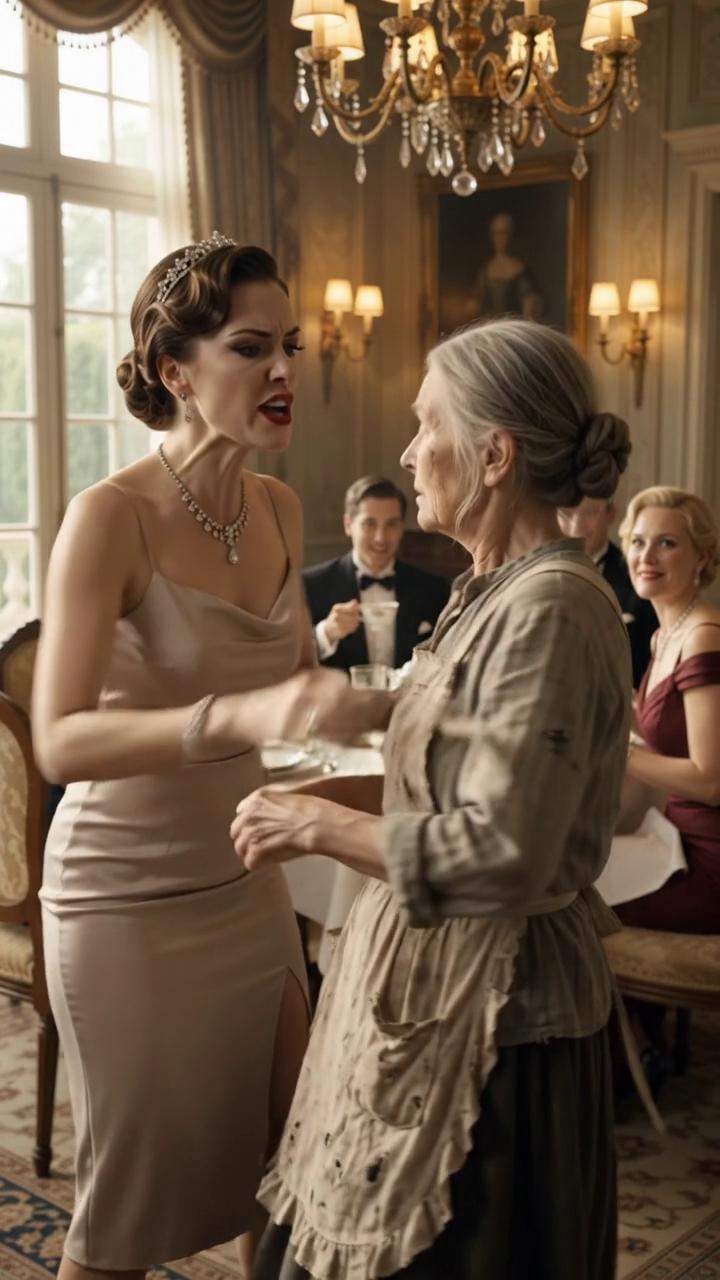
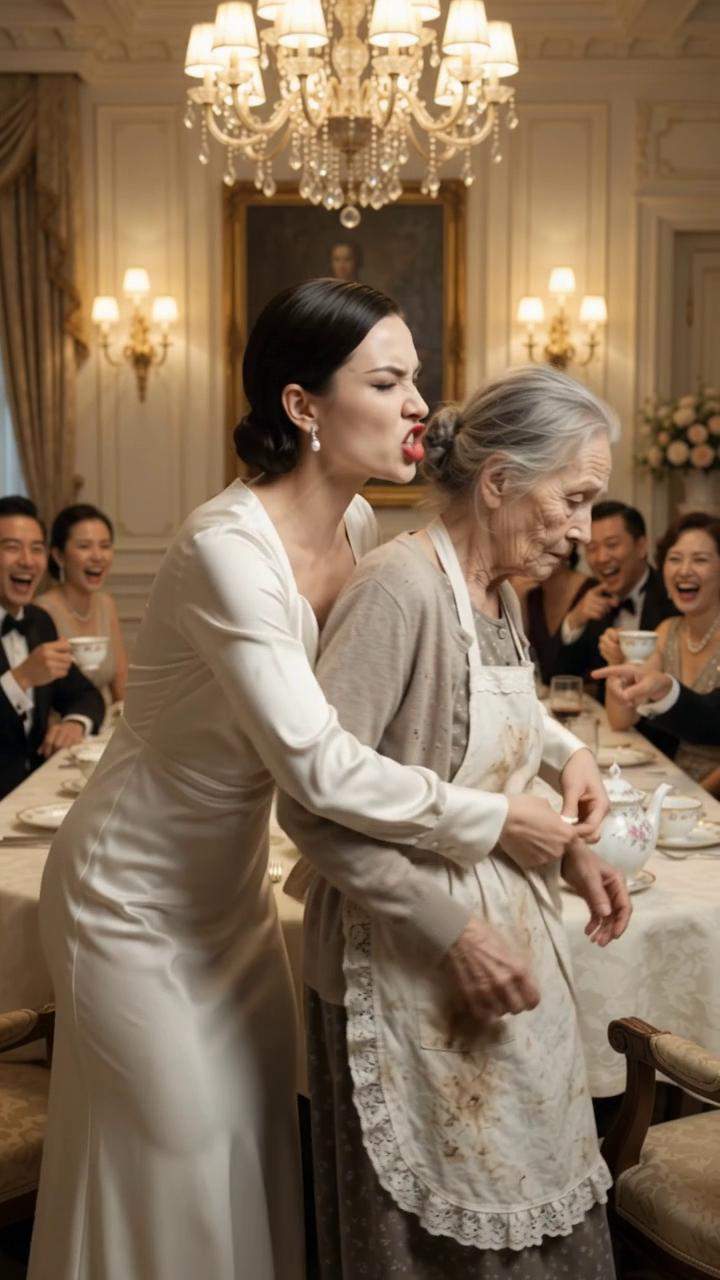
The clinking of silverware and hushed conversations at The Sterling were always a symphony of privilege, a world I moved through unseen, or so I thought.
Every night, I donned the crisp black uniform, a uniform that, to many, symbolized a fixed station in life.
But for me, it was a temporary costume, a disguise worn in the theater of my ambition.
My name is Liam, and for the past two years, I’d been a waiter at one of the city’s most exclusive restaurants.
I wasn’t just earning a living; I was observing, learning, absorbing every detail of high-end service, every nuance of discerning palates.
It was my informal culinary business school, paid for by aching feet and late nights.
Before The Sterling, there had been countless failures, small diners that crumbled, partnerships that dissolved, and dreams that felt perpetually out of reach.
My family, immigrants with a deep love for food but no capital, had instilled in me the belief that good food brought people together, a belief I carried even as I polished champagne flutes for others.
They had always wanted to open a restaurant, a dream that faded with each passing year, becoming a quiet, unspoken legacy I felt compelled to uphold.
That’s why I named my future venture "The Legacy Collection," a network of restaurants that would blend refined dining with authentic, soulful cooking, a tribute to the unfulfilled dreams of my parents.
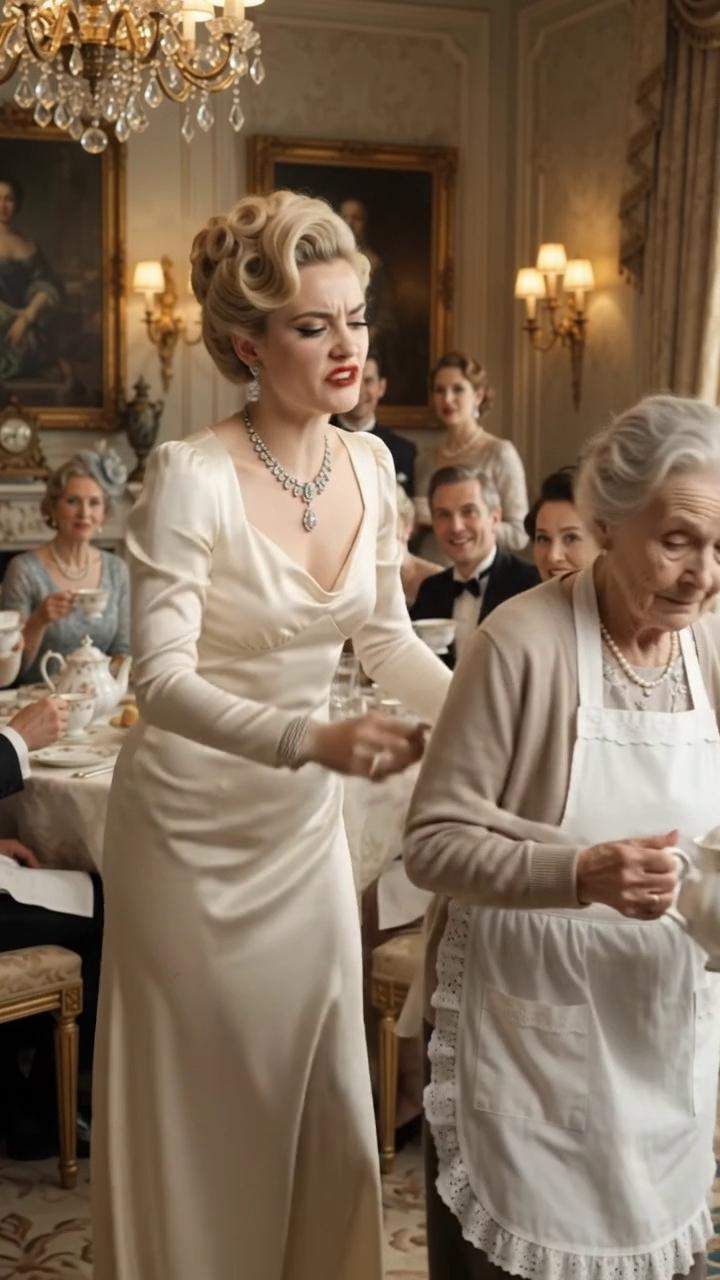
Margaret Davies, however, was everything my parents were not: born into wealth, possessing an intimidating aura, and wielding her status like a finely sharpened knife.
She was a regular at The Sterling, a woman whose mere presence could make seasoned staff members flinch.
Her critiques were legendary, her disdain for anyone she perceived as "beneath" her palpable.
She had a way of looking through you, rather than at you, as if you were merely an extension of the pristine tablecloth.
I had served her countless times, enduring her passive-aggressive remarks about slow service or overly simple plating.
Tonight, however, felt different.
She had been particularly demanding, sending back a perfectly cooked steak twice and complaining about the vintage of her wine, despite having ordered it herself.
I maintained my composure, a skill I had meticulously honed over the years, a shield against the casual cruelties of the privileged.
But then, as I cleared her untouched dessert plate, she leaned forward, her eyes, usually cold, now glittering with a malicious amusement.
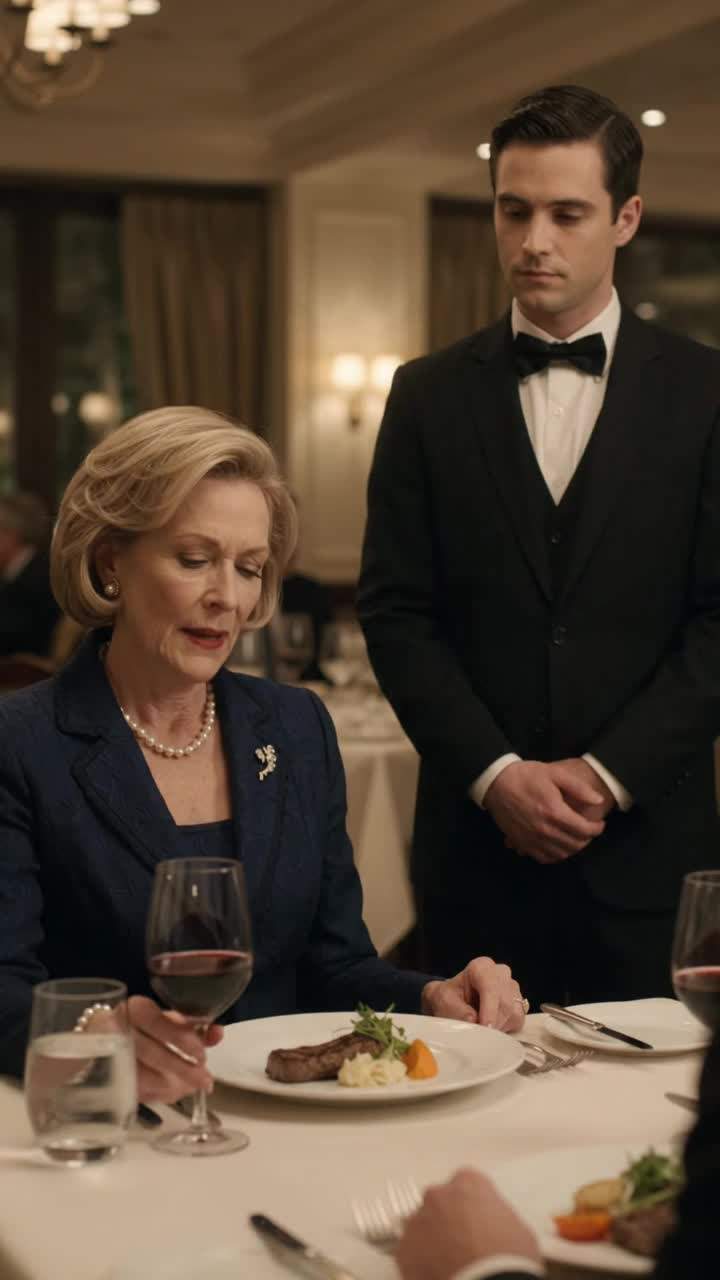
Her voice, usually a well-modulated purr, dropped to a harsh whisper that still carried across the half-empty dining room.
"You know, dear," she began, her gaze sweeping over my uniform, then back to my face with a sneer, "some people are just meant to serve. Born poor, die poor, right?"
The words hit me, a dull thud against the armor of my professionalism.
It wasn't just an insult; it was a declaration, a fundamental belief in a rigid social hierarchy that consigned people like me to perpetual servitude.
For a fleeting second, the old frustrations, the memories of every closed door and every dismissive glance, flared within me.
But then, a profound sense of calm settled over me.
Her words, intended to wound, instead ignited a quiet, burning resolve.
I looked directly into her eyes, no longer deferential, but with a gaze that held years of silent struggle and burgeoning triumph.
My smile, I knew, was barely perceptible, a private moment of vindication.
"Perhaps," I replied, my voice steady, betraying no hint of the storm brewing within.
Advertisement
I reached into the inner pocket of my jacket, my fingers brushing against the crisp cardstock I had been carrying for this very moment, for any moment, it might become relevant.
It felt incredibly heavy, yet exhilaratingly light.
"But some of us," I continued, extending the small, elegant card towards her across the gleaming white tablecloth, "we build."
Her expression shifted from smug superiority to mild curiosity, then to confusion as her manicured hand hesitantly took the card from my outstretched fingers.
Her eyes scanned the glossy surface, her brow furrowing slightly.
The elegant script on the card, the carefully chosen logo – it was all there.
The silence in the dining room seemed to deepen, amplifying the rustle of the card in her hand.
Then, her gaze fixed on the name, her mouth falling slightly open.
Her eyes darted from the card to my face, then back again, her carefully constructed facade of indifference crumbling before my very eyes.
Her voice, usually so imperious, was now a mere gasp, trembling with disbelief and a dawning comprehension that was almost comical in its suddenness.
"My God…" she whispered, the words barely audible, her perfect coiffure seeming to wilt slightly.
"'The Legacy Collection'?"
Her head snapped up, her eyes wide, searching mine for an explanation, for a sign that this was some elaborate prank.
I simply offered a polite, almost imperceptible nod, a small, knowing smile playing on my lips.
I bowed slightly, a gesture of respect that now felt more like a formal dismissal.
"We look forward to welcoming you to our new flagship location next month, Mrs. Davies," I said, my voice soft but firm, a final, definitive period to our conversation.
I turned and walked away, leaving her stunned, the business card still clutched in her hand.
The whispers began almost immediately among the few diners who had witnessed the exchange.
My colleagues, who had seen Margaret's usual tyranny, looked at me with a mixture of awe and bewilderment.
My shift was almost over, but I felt a freedom I hadn’t known in years.
I gave my notice that night.
The Sterling had served its purpose; I had learned all I could, and more importantly, I had proved to myself, and to one particularly cruel woman, that destiny wasn’t born, it was built.
"The Legacy Collection" opened its doors a month later, a beautiful, vibrant space that celebrated both innovative cuisine and the timeless comfort of good food.
It was everything I had dreamed of and more, a testament to resilience and hard work.
Margaret Davies never came to my restaurant.
But a few months later, I heard through the grapevine that her usual table at The Sterling often sat empty, and her sharp-tongued criticisms had, for some reason, grown noticeably milder.
Perhaps, just perhaps, she had learned that true legacy isn't inherited, but earned, one quiet, determined step at a time.