My father, Elias Sterling, was a titan.
He built an empire from nothing, a name synonymous with ruthless ambition and unparalleled success in the corporate world.
But in his final years, that titan became a frail, shadow of his former self, confined to the sprawling estate he once commanded.
His mind, once a steel trap, had begun to fray at the edges, succumbing to the relentless advance of Alzheimer's.
It was during this vulnerable period that my older sister, Eleanor, truly began to shine, or so it seemed to everyone else.
She stepped into the role of his primary caregiver, managing his finances, his appointments, his entire life, with an efficiency that bordered on obsession.
I, Daniel, the youngest, along with our middle sister, Clara, felt increasingly sidelined.
Eleanor, always the favored one, the firstborn, had always possessed a certain manipulative charm.
Now, it was honed to a razor's edge.
She would tell us Dad was resting, too tired for visitors, or that he was having a "bad day" and wouldn't recognize us.
My calls went unanswered for days, then weeks.
When I did manage to get through, Dad's voice on the rare occasions he spoke to me, sounded distant, almost afraid.
I tried to push back, to insist on more frequent visits, even suggested a professional caregiver to ease Eleanor's burden.
She would smile, her eyes cold, and dismiss my concerns as overprotectiveness, reminding me that she knew Dad best.
"He prefers familiar faces, Daniel," she would coo, "You just wouldn't understand his specific needs now."
Clara, more practical and less confrontational than me, eventually accepted Eleanor’s narrative.
"She's doing her best," Clara would say, "It's a lot to handle."
But a gnawing unease persisted in my gut, a feeling that something far more sinister was unfolding behind the locked gates of the Sterling estate.
I saw the way Eleanor’s personal fortune seemed to swell, the new luxury cars, the designer clothes, all while Dad’s public appearances dwindled to nothing.
His death, when it came, was sudden, attributed to "complications of old age and advanced dementia."
A quiet funeral, sparsely attended by close family and a few old business associates, felt more like a formality than a true mourning.
Eleanor, draped in exquisite black, played the grieving daughter perfectly, accepting condolences with a stoic grace.
Then came the day of the will reading.
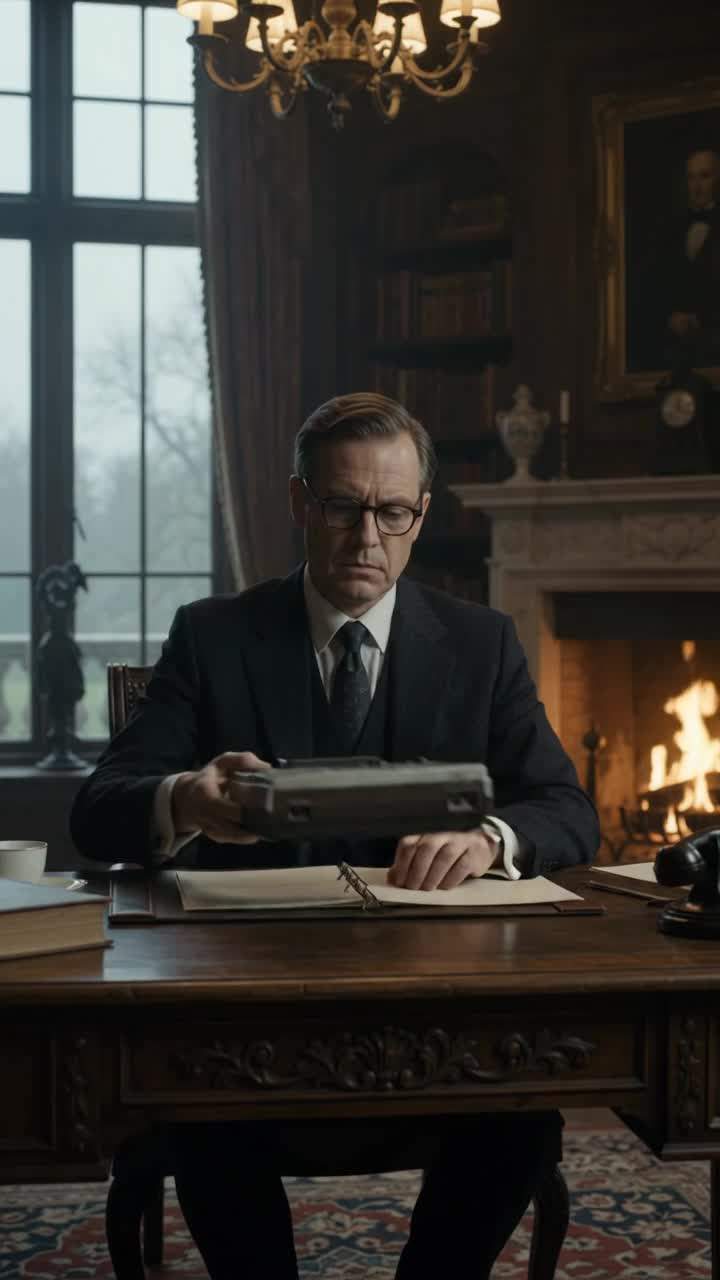
The atmosphere in Dad’s opulent study, usually reserved for his most important business dealings, was thick with unspoken tension.
Rain lashed against the tall leaded windows, mirroring the heavy mood inside.
Eleanor sat perfectly poised, a faint, almost imperceptible smirk playing on her lips, a subtle expectation in her eyes.
Clara fidgeted nervously, clutching her handbag.
A few other distant relatives, always eager for a scrap from Dad's table, sat quietly, observing.
Mr. Davies, Dad’s long-time attorney, a man whose stern demeanor hid a sharp mind, cleared his throat.
Advertisement
He adjusted his spectacles and surveyed the room, his gaze lingering for a moment on Eleanor.
"Before we proceed with the final distribution," Mr. Davies began, his voice devoid of emotion, "my client, Mr. Sterling, insisted on one last piece of evidence."
A ripple of murmurs went through the room.
Eleanor’s eyes narrowed slightly, her expression shifting from confidence to a flicker of suspicion.
Mr. Davies reached into his worn leather briefcase and, with deliberate slowness, retrieved an old, almost antique, audio cassette recorder.
He placed it gently on the polished mahogany table, its plastic casing stark against the rich wood.
A tiny, almost imperceptible whirring sound filled the silence as he pressed the 'Play' button.
My heart began to pound a frantic rhythm against my ribs.
A faint hiss, then a voice, Dad’s voice, weak and raspy, filled the room.
"Please, Eleanor… just a little water. I’m so thirsty…"
The words hung in the air, a ghost from the past, chilling us all to the bone.
Eleanor’s perfectly composed face crumbled.
Her complexion turned an ashen white, her meticulously painted lips began to tremble uncontrollably.
Then, another voice, clear and sharp, slicing through the recording like a shard of ice.
It was Eleanor's.
"Stop your whining, old man. You get what you deserve."
A collective gasp echoed through the room.
My own breath caught in my throat, a wave of nausea washing over me as the horrifying truth began to sink in.
Eleanor, her eyes wide with a mixture of terror and rage, sprang to her feet, knocking her chair backward with a loud crash.
"No!" she shrieked, her voice high-pitched and frantic.
"Turn it off! This is a lie! A malicious fabrication!"
Mr. Davies remained unmoved, his gaze unwavering as he pressed a button to pause the recording, the sudden silence deafening.
He then produced a thick file from his briefcase.
"This is just the beginning," he stated, his voice now imbued with a chilling gravity.
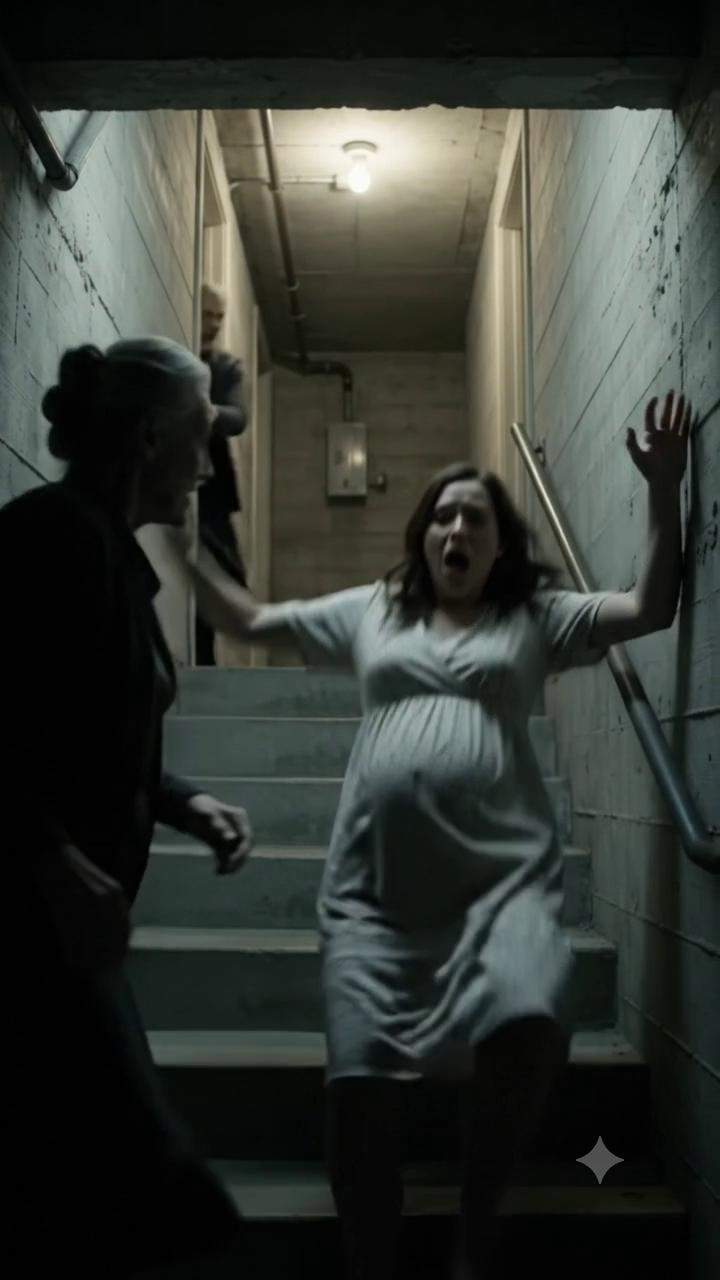
"Mr. Sterling, suspecting foul play and feeling increasingly isolated, had discreetly installed audio and video recording devices in his private quarters for the last six months of his life."
He continued, "The full recordings, which span hundreds of hours, detail a pattern of systematic emotional, psychological, and physical abuse, neglect, and financial exploitation by Ms. Eleanor Sterling."
He summarized, with a grim determination, the countless instances captured on tape: Dad being denied his medication, his meals, even basic comfort, all at Eleanor's command.
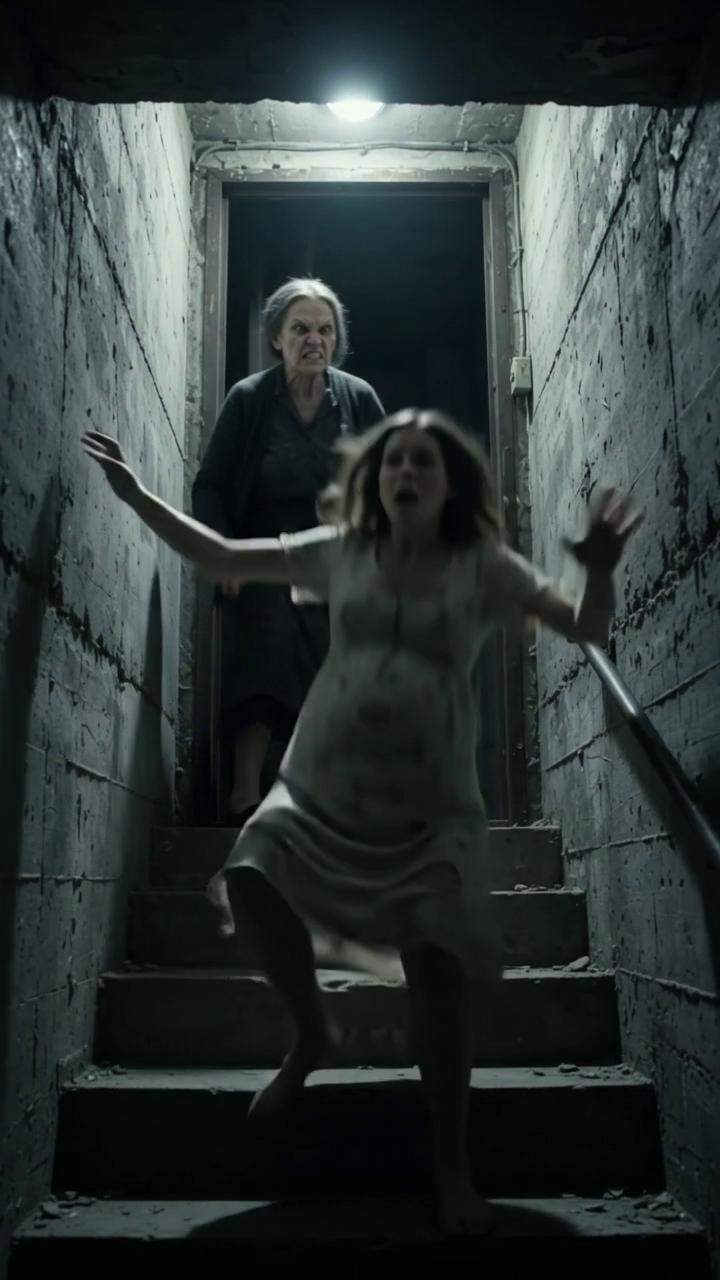
The recordings revealed her screaming at him, belittling him, physically restraining him when he tried to contact us or leave his room.
We heard her mocking his failing memory, laughing at his pain, discussing how to funnel his assets into her own offshore accounts.
Clara openly wept, her face buried in her hands.
The other relatives looked on in horror, their whispers turning into angry accusations.
I felt a surge of incandescent rage, cold and absolute, at Eleanor, but also a crushing guilt for not having fought harder for Dad, for having let her wall him off.
Eleanor, now completely unhinged, began to sob uncontrollably, her denials morphing into threats against Mr. Davies, then against me and Clara.
She lunged towards the table, attempting to smash the recorder, but Mr. Davies, anticipating her move, had already secured it.
He calmly informed her that the police had been alerted and were already on their way, summoned moments before the will reading began.
The will itself was a masterpiece of Dad's meticulous planning and quiet vengeance.
Eleanor was explicitly disinherited from the vast majority of his fortune, receiving only a small, tightly controlled stipend for her basic needs.
The bulk of his estate, including the majority of his company shares, was divided between Clara and me, with a significant portion allocated to a newly established foundation dedicated to elder abuse prevention.
Dad had included a poignant, final letter, read aloud by Mr. Davies after Eleanor was taken away by the arriving officers.
In it, he confessed his deep regret for not intervening sooner, for allowing Eleanor's true nature to flourish under the guise of care.
Advertisement
He apologized for the pain he knew we would feel from this revelation, but stated it was essential for the truth to come to light, not just for justice, but for our healing.
He trusted us, Clara and me, to carry on his legacy with integrity, and to protect the vulnerable.
The room, once filled with tension, was now heavy with sorrow and the aftermath of a seismic betrayal.
Eleanor faced a slew of charges, her carefully constructed facade utterly shattered for the entire world to see.
The scandal rocked the family and the corporate world, a stark reminder that even the most powerful men can be vulnerable.
Clara and I inherited not just a fortune, but a profound responsibility.
We spent months grappling with the trauma, the shame, and the complicated grief for a father who had suffered in silence.
The recordings became public record, a testament to his suffering and his ultimate triumph over his abuser.
I still carry the weight of what happened, the echoes of Dad’s weak pleas and Eleanor’s cruel retorts.
But there is also a fragile sense of peace, knowing that Dad, even in his diminished state, found a way to expose the darkness and ensure justice was served.
It was a devastating inheritance, yet it came with the invaluable gift of truth.