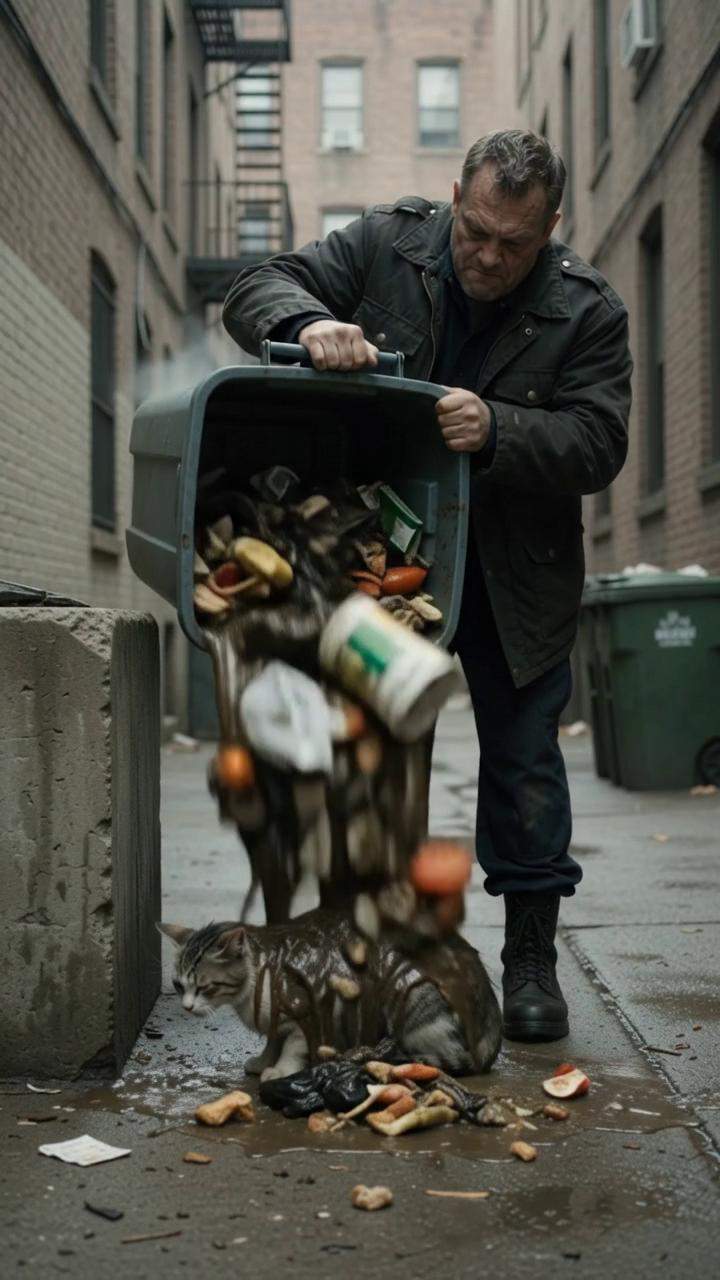
Our street used to be a quiet haven, the kind of place where kids rode bikes freely and neighbors chatted over fences.
That was before Mark moved in, three houses down from mine.
He brought with him a subtle, insidious kind of chaos.
It wasn't loud parties or obvious disturbances at first, but a creeping sense of unease.
Mark was a man in his early thirties, with a perpetually dissatisfied look on his face, as if the world owed him something it constantly withheld.
He had a knack for making people feel small, for passive-aggressive gestures that left you wondering if you'd imagined the slight.
David, my neighbor directly across the street, was the antithesis of Mark.
He was in his late fifties, a retired history professor, whose garden was as meticulously curated as his knowledge of ancient civilizations.
David possessed an almost unnerving calm, a quiet dignity that commanded respect without ever seeking it.
For months, the unspoken tension between Mark and David had been building.
It started with minor things: Mark would park his beat-up sedan a little too close to David's pristine silver SUV, leaving barely enough room to open the driver's side door.
Then came the lawn clippings, always "accidentally" blown onto David's freshly swept driveway.
One afternoon, David’s prize-winning rose bushes, meticulously pruned, suddenly had several branches snapped clean off.
No one saw anything, of course, but everyone in our small cul-de-sac had their suspicions.
Mark denied everything with a sneer, claiming he wouldn't "waste his time on old man's plants."
David, true to form, simply sighed, picked up the broken branches, and began the slow, patient process of nurturing his garden back to health.
But I saw a glint in his eye, a barely perceptible tightening around his lips, that told me he wasn't truly passive.
He was observant.
He was patient.
He was David.
The rest of us, myself included, largely just grumbled amongst ourselves.
What could we do?
Mark was slippery, always leaving just enough doubt, always finding a loophole.
Calling the police felt excessive for a scratched car or broken roses, yet the cumulative effect was corrosive to our neighborhood's peace.
We all secretly wished someone would just put Mark in his place.
Little did we know, David was not only wishing but meticulously planning.
I remember that evening vividly, the air thick with the promise of a coming storm, the sky a bruise of purple and grey.
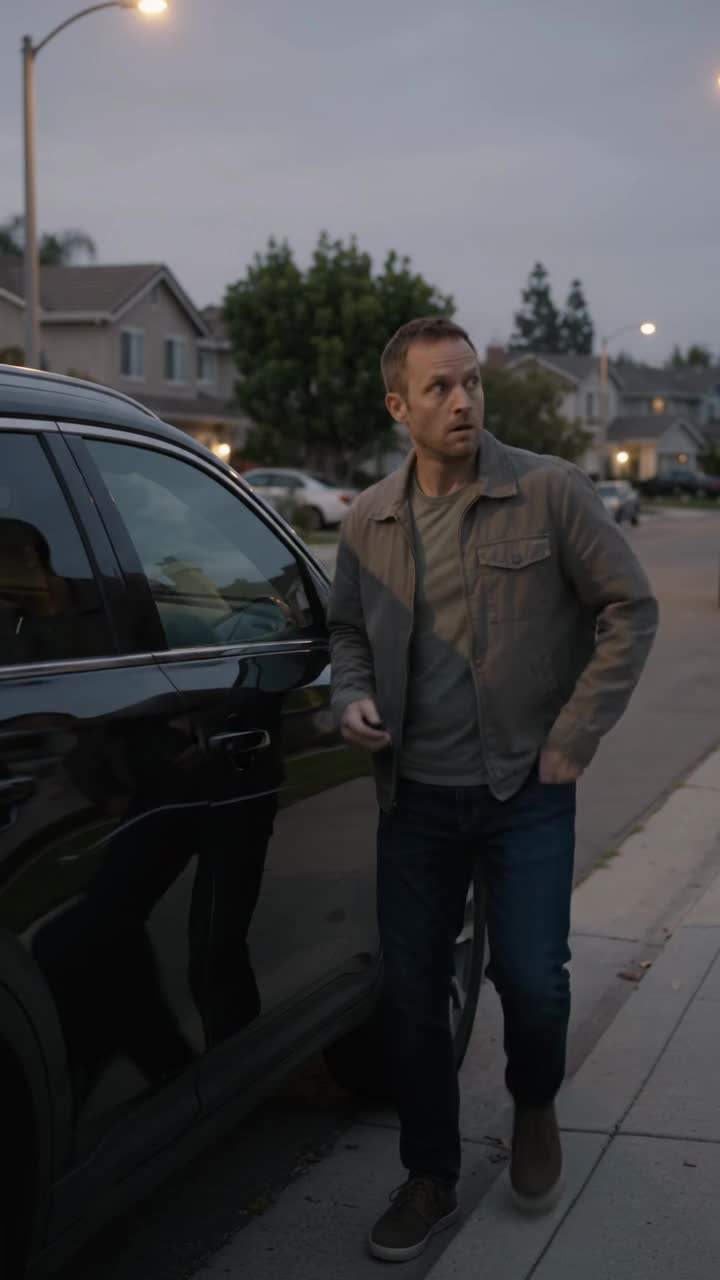
I was watering my front yard petunias, enjoying the cooling breeze after a hot day.
David’s silver SUV gleamed under the twilight, parked neatly at the curb.
Advertisement
Mark pulled up in his car, parked a few feet behind David's, and got out.
He walked past David’s SUV, keys jingling casually in his hand.
My stomach churned, a familiar dread bubbling up.
He stopped, seemingly to adjust something in his pocket.
Then, with a quick, furtive glance around, Mark’s hand went down.
His car key, held with deliberate force, dragged a long, jagged line along David's driver’s side door.
The sickening sound of metal grinding against metal cut through the quiet evening.
It was loud enough for me to hear it from my yard.
He did it with a practiced ease, a sort of casual malice that made my blood run cold.
A small, self-satisfied smirk played on his lips as he straightened up, quickly scanning the street one last time, confident he was unwatched.
He had no idea.
As Mark turned to walk back to his own car, ready to escape the scene of his latest petty crime, a calm, measured voice cut through the stillness.
"Morning, Mark. Nice artwork you're doing."
Mark froze, mid-step.
He spun around, his face draining of color as his eyes landed on David, who had emerged silently from behind his own vehicle, standing just a few feet away.
David’s expression was unsettlingly placid, almost serene, a stark contrast to Mark’s rapidly crumbling facade of bravado.
The smirk vanished from Mark's face, replaced by a mixture of shock and dawning horror.
He stammered, his hand still clenching the keys, which now seemed to betray him with their damning marks.
"David? What— I— I wasn't doing anything."
His voice was a pathetic whisper, devoid of its usual arrogant edge.
David didn't raise his voice, didn't accuse, didn't even seem angry.
He just walked slowly towards Mark, his gaze unwavering.
Mark's eyes darted wildly, seeking an escape, but there was none.
His keys slipped from his trembling fingers, clattering loudly on the asphalt, the sound echoing the shattering of his composure.
David reached inside his housecoat pocket.
He pulled out a thick stack of papers, secured with a rubber band, and held them out to Mark.
The documents were crisp, neatly organized, a tangible testament to years of careful record-keeping.
"These are... well, receipts for similar 'artwork.' From a few years back," David said, his voice as steady as ever, but with an underlying steel that sent shivers down my spine.
Mark stared at the stack, his jaw slack, eyes wide with a terror that finally seemed genuine.
He reached out a trembling hand, as if compelled, to take the documents.
I could see the top sheet: it was a repair bill for a fender bender from two streets over, dated three years ago, with a police report number attached.
Then another, for a slashed tire on Mrs. Henderson's minivan.
And another, a key scratch on the glossy black paint of the Miller’s new sedan.
It wasn't just David's car; it was everyone's cars.
David had been meticulously documenting Mark's pattern of vandalism for years, not just on himself, but on other neighbors who had quietly suffered.
He had installed discreet security cameras, cross-referenced repair shop invoices, and gathered police reports that had previously gone nowhere due to lack of direct evidence.
Each time a new incident occurred, David had quietly added it to his growing dossier, patiently waiting for Mark to finally overstep.
And tonight, he had.
Mark crumpled, literally.
He sank to the curb, the stack of papers fanned out in his lap, each bill a damning indictment.
Advertisement
He muttered something incoherent, something about being framed, but the conviction was gone from his voice.
David, still calm, pulled out his phone and made a call to the police, explaining the situation with detached professionalism.
I watched, a profound sense of justice washing over me.
It was the quietest, most dignified takedown I had ever witnessed.
The police arrived swiftly, and the scene played out just as David had orchestrated.
They saw the fresh scratch on the SUV, the keys on the ground, and the irrefutable evidence in Mark’s lap.
Mark was arrested that night, not just for the damage to David’s car, but for a pattern of malicious mischief that stretched back years.
The neighborhood breathed a collective sigh of relief, a heavy weight lifted.
David became a quiet hero, not for any grand gesture, but for his unwavering patience and methodical pursuit of justice.
He taught us that sometimes, the most powerful revenge is simply to let someone dig their own grave, all while you quietly document the depth of the hole.
Mark eventually moved out, pressured by legal fees, social ostracism, and the undeniable evidence David had compiled.
Our street returned to its tranquil state, perhaps even more appreciative of the peace we now shared.
And I, for one, learned to appreciate the quiet strength of my neighbor, David, who reminded us all that true justice often walks softly, but carries a very big stack of receipts.