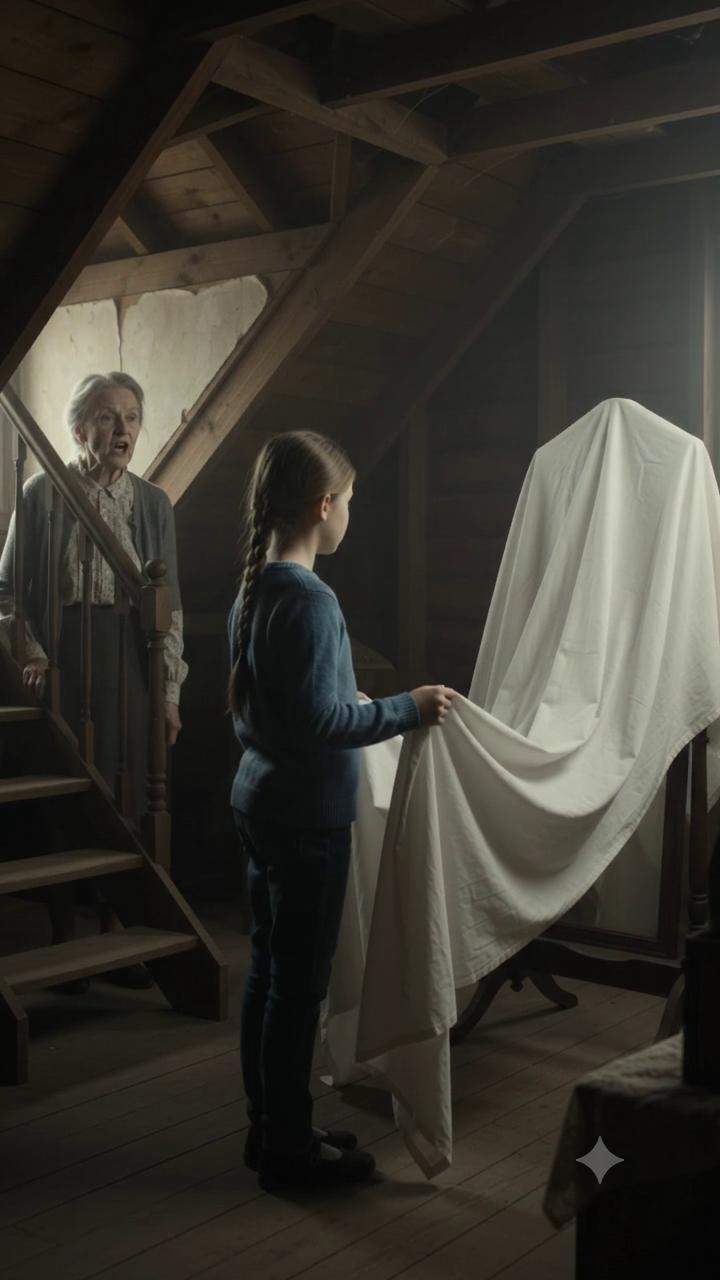
I remember the chill in the air, not from the late autumn evening outside, but from the frigid politeness that always settled over our family gatherings.
It was one of those obligatory Sunday dinners at my parents' opulent estate, a ritual I had long dreaded but never truly escaped.
The house itself, a grand Georgian mansion with sprawling lawns and a history etched into every stone, felt less like a home and more like a museum of what our family should have been.
From the moment I walked in, I could feel the familiar tension in my shoulders, the unspoken competition that had defined my relationship with my brother, Daniel, for as long as I could remember.
He was there, of course, lounging on one of the antique sofas, a practiced smirk playing on his lips as he held court with some distant relatives, regaling them with exaggerated tales of his latest (often ill-fated) business ventures.
Daniel, three years my senior, had always been the golden child, the one my parents fawned over, protected, and consistently bailed out.
He had charisma, yes, a superficial charm that masked an underlying sense of entitlement, and my parents, Eleanor and Richard, had always seemed utterly blind to it.
I, on the other hand, was the "responsible one," the "independent spirit," the daughter who could always figure things out for herself.
It was a label that sounded complimentary but felt like a convenient excuse for their neglect.
Every achievement I earned, every milestone I reached on my own, was met with a fleeting nod, a quick "that's nice, dear," before the conversation invariably swung back to Daniel's latest need or triumph.
I’d graduated college with honors, built a successful career in publishing from the ground up, and bought my own small apartment in the city, all without a single penny of their help.
Daniel, meanwhile, had flitted between three different universities, none of which he graduated from, and started (and spectacularly failed) two tech startups, each venture generously funded by my parents.
He was currently "consulting," which mostly involved expensive lunches and vague promises of future success, paid for, of course, by Mom and Dad.
Tonight, however, felt different; there was a peculiar buzz, a nervous energy that vibrated beneath the veneer of forced pleasantries.
My mother, Eleanor, kept adjusting her pearl necklace, her smile fixed and a little too wide, her eyes darting nervously between my father and Daniel.
My father, Richard, usually the picture of stoic control, was holding a neatly folded document, occasionally tapping it against his palm with a rhythmic, unsettling sound.
Dinner was a stilted affair, punctuated by Daniel’s loud laughter and my quiet observations, the food tasting like ash in my mouth.
After dessert, my father cleared his throat, his deep voice cutting through the polite chatter.
"Attention, everyone," he announced, his gaze sweeping over the assembled family members, lingering briefly on Daniel with a hint of pride, and then quickly skipping over me.
My heart pounded, a strange premonition twisting in my gut.
He unfolded the document, smoothing it meticulously on the mahogany table.
"Eleanor and I have decided it's time to formally outline our estate plans," he stated, his voice resonating with finality.
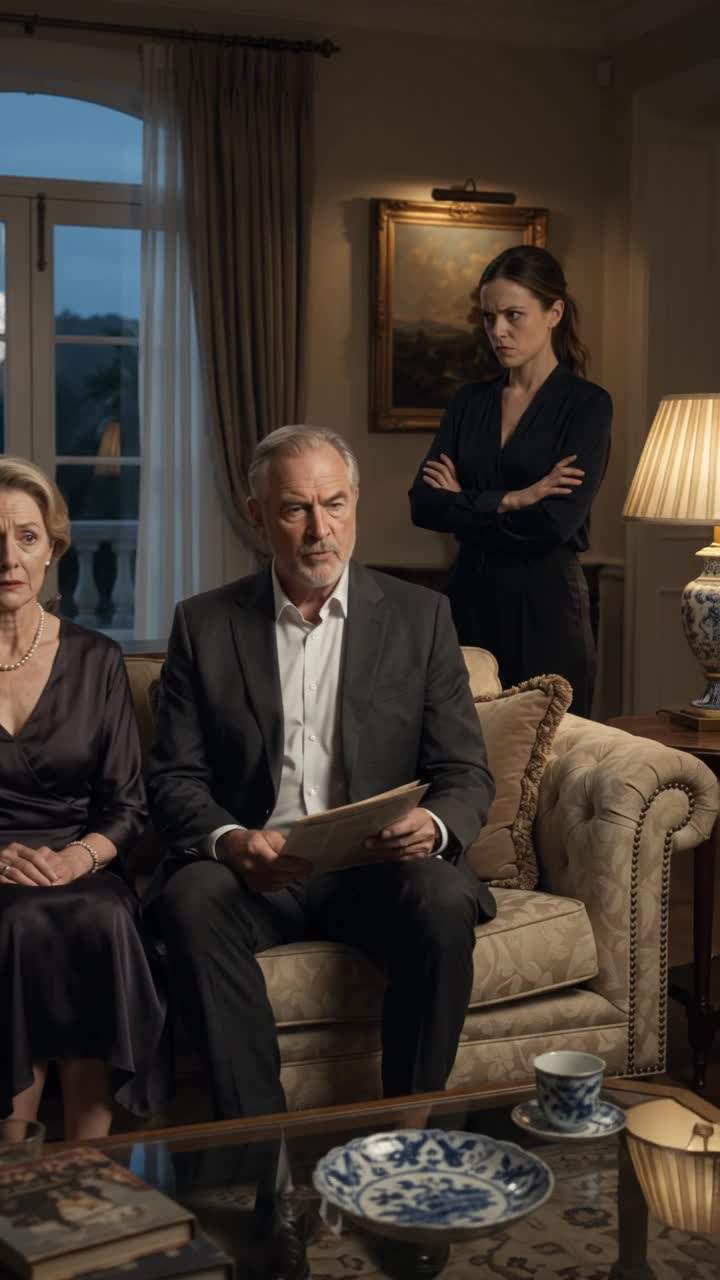
A ripple of murmurs went through the room, but my eyes were fixed on my parents, a desperate plea in them for them to just see me.
"After much consideration," my father continued, his expression unyielding, "we've decided that all our assets, the house, the investments, everything... it all goes to Daniel."
The words hung in the air, heavy and suffocating, like a death knell for any last vestiges of hope I had clung to.
Eleanor reached for my father's hand, her own trembling slightly as she offered a low, strained whisper.
"It's what's best for everyone, dear," she murmured, her eyes avoiding mine entirely.
A searing heat spread through my chest, quickly turning to ice.
My breath hitched, and a dizzying wave of disbelief washed over me, followed by a raw, guttural pain that threatened to tear me apart from the inside.
Advertisement
My world, already precariously balanced on years of subtle slights, now tipped over into an abyss.
I heard Daniel emit a small, satisfied cough, a smug smile barely concealed on his face, and that was it.
That was the last straw.
My vision blurred, but a single object on the ornate mantelpiece snapped into sharp, unforgiving focus: the porcelain Ming vase.
It was a family heirloom, passed down through generations, my grandmother's prized possession, a symbol of our lineage, our supposed unity, our "perfect" family.
I had always loved that vase, the delicate blue patterns, the history it held, the way it had silently witnessed countless family gatherings, including all the ones where I felt invisible.
Now, it felt like a mocking testament to the lies we all told ourselves.
Without a conscious thought, my arm shot out, a primal scream trapped in my throat.
My hand connected with the smooth, cool porcelain, and with a horrifying, cathartic crash, the vase shattered against the marble floor, its fragments scattering like shattered dreams.
The sound was deafening, silencing every voice in the room, stopping every breath.
For a moment, there was only the ringing silence, broken by my ragged gasps and the distant echoes of the shattered porcelain.
My parents looked utterly horrified, their faces drained of color, their perfect facade crumbling.
Daniel, his mouth agape, stared at the shards on the floor, then at me, his eyes blazing with fury.
But I felt nothing but a strange, terrifying calm as the storm of years of unspoken pain finally broke free.
I stared directly at my parents, my voice raw, broken, but undeniably resolute.
"Then consider me dead to you!" I yelled, the words tearing from my throat, laced with decades of bitterness and betrayal.
"I'm out! I'm done!"
The finality of my declaration hung in the air, an undeniable severing of ties.
Richard, my father, finally found his voice, a choked, angry sound.
"Chloe, what have you done?!" he sputtered, his face contorted in disbelief and rage, but it wasn't about me, it was about the vase, about his perfect image shattered.
Eleanor stared at me, her eyes wide with a mixture of fear and something akin to sorrow, but it was too little, too late.
I didn't wait for their condemnation, their explanations, or their empty promises.
I turned and walked away, my legs carrying me with a strength I hadn't known I possessed, leaving behind the wreckage of a vase, and the far greater wreckage of a family that had never truly been mine.
The front door slammed shut behind me, the sound reverberating through the silent house and, I hoped, through their hollow hearts.
The night air was cold against my hot cheeks, but for the first time in my life, I felt a strange, exhilarating sense of liberation.
The initial shock of my actions gave way to a profound, aching grief, a sorrow for the family I had always yearned for but never received.
The road ahead was uncertain, paved with emotional scars and the daunting task of rebuilding a life without the invisible weight of their expectations.
But as the days turned into weeks, and weeks into months, the initial pain slowly receded, replaced by a quiet strength.
I poured myself into my work, found solace in true friendships, and discovered a peace I had never known existed.
My parents tried to reach out a few times, their messages guarded, hinting at regret, but never offering the genuine apology I needed.
Daniel, I heard through the grapevine, was still struggling, the weight of the inherited empire perhaps heavier than his entitled shoulders could bear.
He eventually squandered a significant portion of it on another doomed venture, ironically proving my parents' judgment of his capabilities to be tragically flawed.
But it no longer mattered to me.
The vase was just porcelain, easily replaced, but the act of smashing it, of finally choosing myself, was the most profound, most liberating decision I had ever made.
I learned that true family wasn't about blood or inheritance, but about love, respect, and mutual support, none of which I had ever found in that grand, cold house.
And in breaking away, I finally found the courage to build my own legacy, a legacy not of fragile heirlooms, but of self-worth and genuine happiness.