The sound of the lawnmower was the first thing I heard every Saturday morning at exactly seven o'clock.
It was a low, aggressive drone that seemed to vibrate through the floorboards of our bedroom and settle deep inside my skull.
My husband, Mark, would always react the same way, bolting upright in bed with his jaw clenched so tight I feared his teeth might crack.
He would rip the curtains open and glare down at the property line where our lush Kentucky Bluegrass met the slightly yellower turf of Mr. Henderson.
Mr. Henderson was seventy-four years old, a widower with skin like weathered parchment and eyes that always seemed to be looking at something a mile away.
He was obsessed with the thin strip of grass that divided our driveways, a no-mans-land that had become the front line of a three-year war.
Mark was a man who valued order, boundaries, and the quiet dignity of a well-kept suburban life.
He had spent thousands of dollars on professional landscaping and a sophisticated irrigation system just to ensure our side of the line was perfect.
But every few days, Mr. Henderson would wheel out his ancient, sputtering mower and deliberately cross the invisible border by exactly six inches.
It sounds like a small thing, a trivial neighborhood squabble, but to Mark, it was an act of calculated aggression.
He saw it as a violation of his sovereignty, a physical manifestation of the disrespect he felt from the world at large.
I tried to tell him to let it go, reminding him that the old man was probably just lonely or perhaps a bit confused in his twilight years.
But Mark wouldnt hear it, convinced that Henderson was playing a long game of psychological warfare.
The tension between them had escalated from polite corrections to heated arguments, and eventually, to a cold, simmering silence.
Mark had even gone as far as to install motion-activated cameras along the perimeter, hoping to catch the old man in the act for a legal filing.
Everything came to a head on a sweltering Tuesday afternoon when the heat seemed to make everyone in the neighborhood a little more volatile.
I was in the kitchen, washing dishes and watching the hummingbirds at the feeder, when I heard the familiar roar of the mower.
It was out of schedule, far too early in the week, and the sound was coming from the middle of our front yard.
I saw Mark through the window, his face turning a dangerous shade of purple as he dropped his briefcase on the porch.
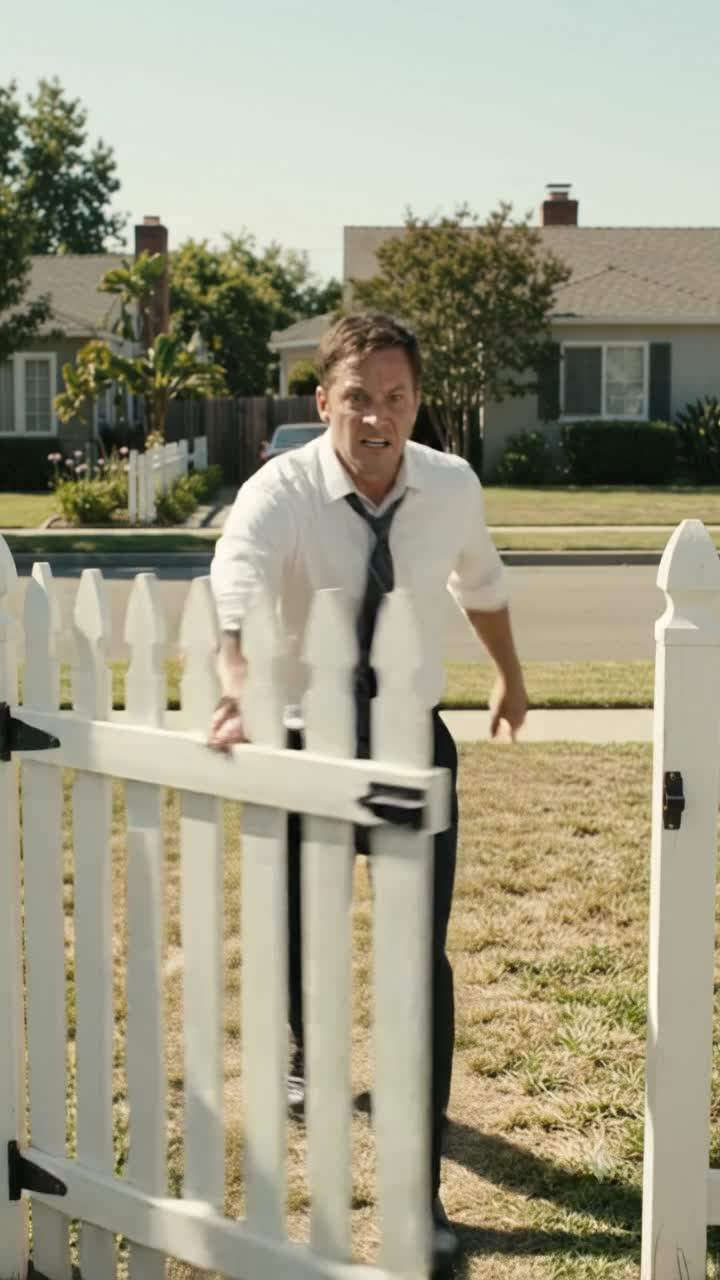
He didnt even take off his tie before he was charging down the steps, his boots thudding against the grass with every heavy stride.
I stood there, frozen with a soapy plate in my hand, sensing that this was the moment the dam was finally going to break.
Mark was screaming before he even reached the property line, his voice cracking with a mixture of rage and exhaustion.
He reached Mr. Henderson and grabbed the handle of the mower, forcing it to a grinding, mechanical halt.
I could hear him yelling about trespassing, about lawyers, and about the sheer audacity of the old man’s constant interference.
But Mr. Henderson didnt flinch, and he didnt yell back; instead, he stood there with a strange, mournful expression.
He looked down at the ground where a fresh patch of sod had been hacked away, not by a mower blade, but by a rusted spade leaning against his fence.
The old man pointed a trembling finger at a dark, rectangular shape protruding from the dirt beneath our prize-winning grass.
It was an old iron box, encrusted with years of filth and oxidation, looking like a coffin for a secret that had been buried far too long.
Mark froze, his hand still gripped tightly on the mower, his eyes darting from the box to the neighbor’s weathered face.
I dropped the plate into the sink and ran out the front door, my heart hammering against my ribs like a trapped bird.
As I reached them, the air felt heavy, charged with the kind of electricity that precedes a devastating storm.
Mr. Henderson looked at Mark with a pity that was far more cutting than any insult he could have hurled.
He spoke in a low, gravelly voice that carried clearly through the afternoon heat, silencing the birds in the nearby trees.
He told Mark that he had been waiting for the soil to settle, waiting for the rust to finally eat through the metal enough to catch the light.
He said he had promised Marks father twenty-five years ago that he would keep the secret until Mark was old enough to handle the truth.
But then Marks father had disappeared, and the property had changed hands, and Henderson had become the self-appointed guardian of the earth.
Mark laughed, a sharp, nervous sound, and demanded to know what kind of senile game the old man was playing now.
Mr. Henderson didn't answer with words; he simply knelt in the dirt and pried the lid of the box open with a sickening, metallic screech.
Inside, protected by layers of rotted oilcloth, were stacks of documents and a heavy, tarnished silver locket.
I saw the color drain from Marks face as he recognized the locket, the one his mother claimed she had lost in a move decades ago.
There were letters, too, tied together with a faded blue ribbon, the ink still legible despite the passage of a quarter-century.