My life before that day felt like a muted, sepia-toned photograph, devoid of vibrant colors or sharp edges.
I was Clara Davies, a name that carried no weight, no recognition, just another anonymous face in the bustling cityscape.
My existence revolved around a cramped apartment, a demanding but uninspiring administrative job, and the quiet dreams I rarely dared to voice.
So, when the ornate, cream-colored invitation arrived, bearing the Sterling family crest, I assumed it was a mistake.
Arthur Sterling, the patriarch who had passed away two weeks prior, was a name I recognized only from fleeting mentions in the society pages.
He was my mother’s distant cousin, a man of immense wealth and reclusive habits whom I had never actually met.
The invitation to the reading of his last will and testament felt like an absurd formality, a courtesy extended to the most remote branches of the family tree, with no expectation of attendance, let alone inheritance.
Still, a strange flicker of curiosity, a morbid fascination with a world so far removed from my own, compelled me to go.
The Sterling mansion was an architectural marvel, a Gothic Revival edifice nestled amidst sprawling, manicured gardens in the wealthiest part of town.
It was an intimidating presence, silent and imposing, whispering tales of old money and inherited power.
As I stepped inside, the hushed grandeur of the entrance hall, with its soaring ceilings and a sweeping staircase, made me feel even smaller, a misplaced speck in a portrait of opulence.
The air was thick with a palpable tension, a blend of performative grief and thinly veiled anticipation.
In the formal drawing room, several people were already gathered, their designer clothes and refined manners screaming “old money.”
There was James Sterling, Arthur’s nephew, a man in his late thirties with sharp eyes and an even sharper suit, his ambition practically radiating from him.
He was clearly expecting a significant portion of the estate.
And then there was Eleanor Sterling, the widow.
She was a vision in expensive black lace, her perfectly coiffed blonde hair contrasting sharply with her pale, composed face.
Eleanor was at least twenty years Arthur’s junior, a woman who had swept into his life just five years ago, marrying him after a whirlwind, surprisingly private courtship.
Gossip columns had whispered about her true intentions, about a charming socialite with a penchant for older, wealthier men, but Arthur had been smitten, or so it seemed.
Her grief seemed impeccably tailored, a serene, dignified sorrow that barely rippled the surface of her polished composure.
She greeted the attendees with a practiced smile, her eyes, however, betraying a flicker of triumphant satisfaction when they briefly met mine.
She clearly dismissed me as a non-entity, an inconvenient distant relation who would merely serve as a witness to her inevitable coronation.
I found a discreet chair in a corner, feeling utterly out of place, my simple black dress a stark contrast to their haute couture.
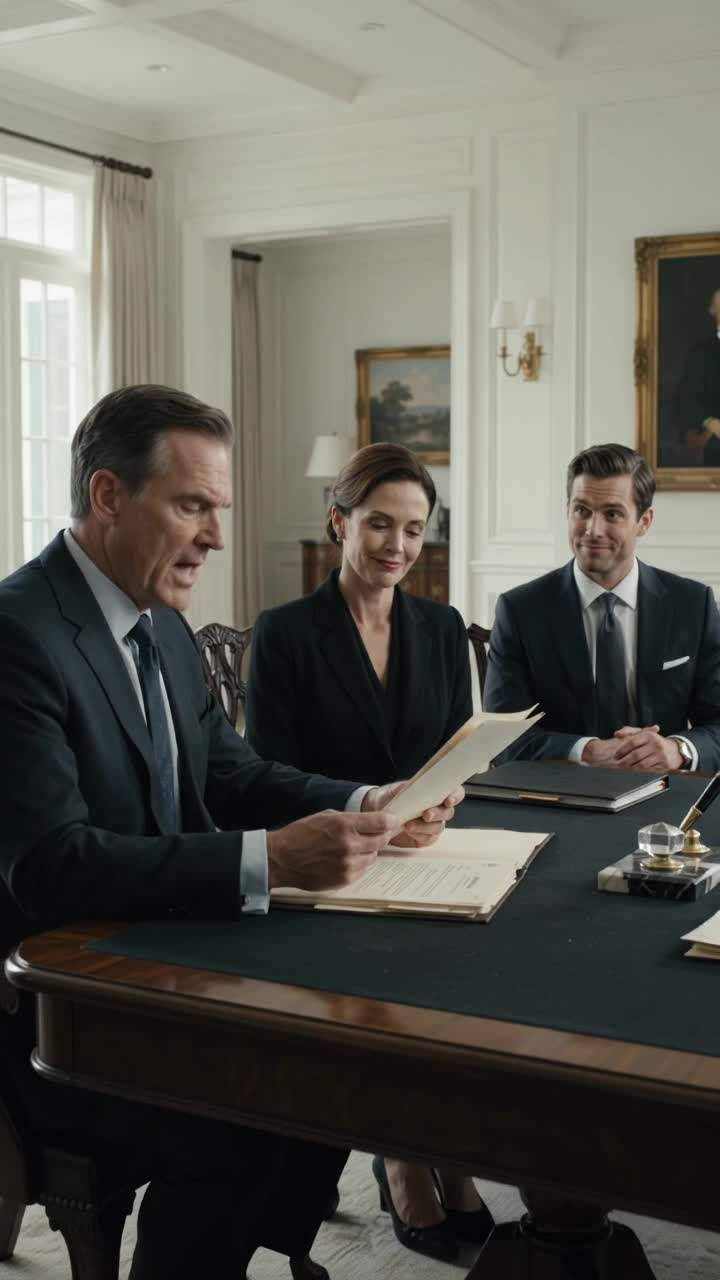
The room fell silent as Mr. Hayes, Arthur’s long-time attorney, a distinguished man with silver hair and an air of quiet authority, cleared his throat.
He sat at a magnificent mahogany table, a thick leather-bound document in front of him.
He began to read, his voice clear and resonant, detailing various minor bequests to charities and household staff.
My mind started to drift, confirming my suspicion that I was merely an observer to this high-stakes drama.
Then came the part everyone was waiting for.
Mr. Hayes’s voice shifted slightly, becoming more formal as he read the main clauses.
“And to my beloved wife, Eleanor, the bulk of my estate, including the Sterling Mansion, the shares in Sterling Industries, and all liquid assets, as per his last wishes.”
A collective sigh of release, or perhaps resignation, rippled through the room.
Eleanor’s lips curved into a subtle, almost imperceptible smile of triumph.
She shot a brief, smug glance towards James, who merely tightened his jaw, his expression a mask of disappointment.
I watched Eleanor, feeling a strange mix of envy and disdain for her calculated victory.
Then, Mr. Hayes paused, his gaze sweeping over the room, settling for a moment on Eleanor.
His composure remained unwavering, but something in the stillness of his demeanor sent a ripple of unease through the room.
“However,” he stated, his voice now noticeably firmer, “there is a more recent codicil.”
The word hung in the air, a discordant note in the symphony of expectation.
Eleanor’s smug expression faltered, her perfectly sculpted brows furrowing slightly.
A flicker of annoyance, then unease, crossed her features.
She shifted in her seat, her gaze snapping to Mr. Hayes, a silent challenge in her eyes.
“A codicil?” she asked, her voice tight, a hint of suspicion now lacing her tone.
“I wasn’t informed of any codicil.”
She looked around, as if appealing to the room, to common sense, to some unwritten rule that would declare this impossible.
Mr. Hayes remained unperturbed, his gaze steady as he reached for a thinner, separate envelope on the table.
“Indeed, Mrs. Sterling,” he affirmed, his voice betraying no emotion.
“This document, dated just three days before Mr. Sterling’s passing, was left with strict instructions for its immediate revelation should his primary will be read.”
He carefully opened the envelope, producing a single, crisply folded sheet of paper.
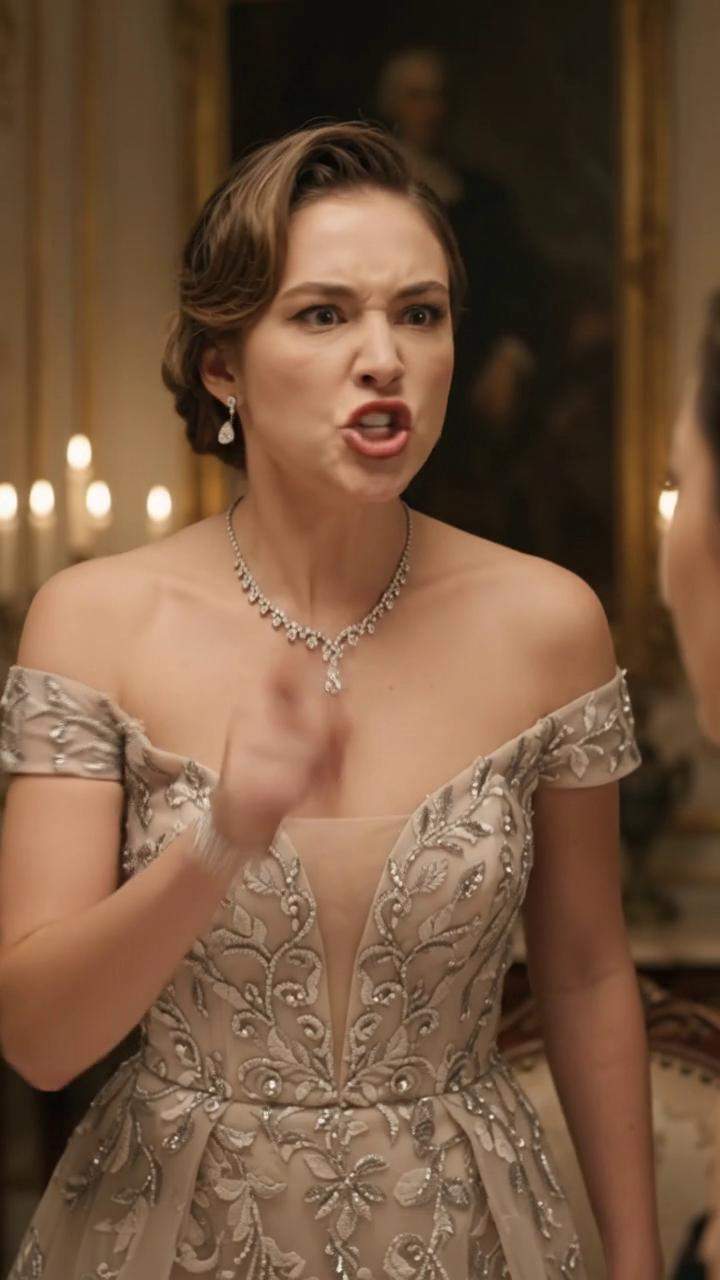
Eleanor’s composure was beginning to crack, a faint flush creeping up her neck.
Her hands, which had been resting elegantly in her lap, clenched into tight fists.
James, however, leaned forward, a spark of renewed interest, perhaps even hope, in his eyes.
My heart began to beat a little faster, a prickle of anticipation I couldn’t explain.
I had no stake in this, yet the sudden shift in atmosphere was undeniably gripping.
Mr. Hayes cleared his throat once more, his eyes scanning the page.
The silence in the room was absolute, so profound that I could hear the faint ticking of the grandfather clock in the hall.
He looked up, meeting Eleanor’s now-panicked gaze directly.
“It explicitly revokes all prior bequests to Eleanor Sterling due to documented evidence of fraudulent misrepresentation.”
The words hit Eleanor like a physical blow.
Her mouth fell open, her face draining of all color, transforming her from a poised widow into a mask of pure, unadulterated shock and fury.
James gasped audibly, a sound of stunned disbelief mixed with something akin to grim satisfaction.
I, too, felt a jolt, utterly bewildered by the sudden turn of events.
But Mr. Hayes wasn’t finished.
He raised his voice slightly, his gaze now sweeping the room once more, stopping on me.
Yes, on me.
“And leaves the entire estate… to Miss Clara Davies.”