The dust motes danced in the lone beam of sunlight slicing through the attic window, illuminating my task as I sorted through my mother’s life.
Eleanor had been gone for three months, and the grief still clung to me like the scent of old paper.
Each box I opened was a memory capsule, a tangible piece of the woman I thought I knew so well.
There were old photo albums filled with faded smiles, delicate porcelain figurines she’d cherished, and stacks of letters tied with silken ribbons.
I moved slowly, savoring the bittersweet melancholy, until I reached a heavy oak chest tucked away in a corner.
This chest was different; it held not trinkets, but official-looking documents, bound ledgers, and a thick, leather-bound journal I’d never seen before.
My father, John, had been meticulously organized, a trait my mother, for all her artistic flair, had never quite mastered, so I assumed these were his.
I pulled out a file marked “Trust Fund – Ethan,” my name in his precise handwriting, and a familiar pang of loss pierced me.
Dad had established the trust for me when I was born, a secure foundation for my future, something he’d always emphasized as paramount.
He passed away suddenly when I was twenty, leaving a void that even now, almost two decades later, felt raw.
My mother handled everything after his death, assuring me the trust was sound, carefully managed.
I trusted her implicitly, never questioning, never feeling the need to inquire about its specifics.
I was focused on building my own life, navigating my twenties and thirties, sometimes struggling, always knowing that safety net was there.
Now, holding this document, a wave of nostalgia washed over me, a connection to my father’s enduring love.
I opened the stiff manila folder, pulling out the top document – a quarterly statement from the fund, dated just last year.
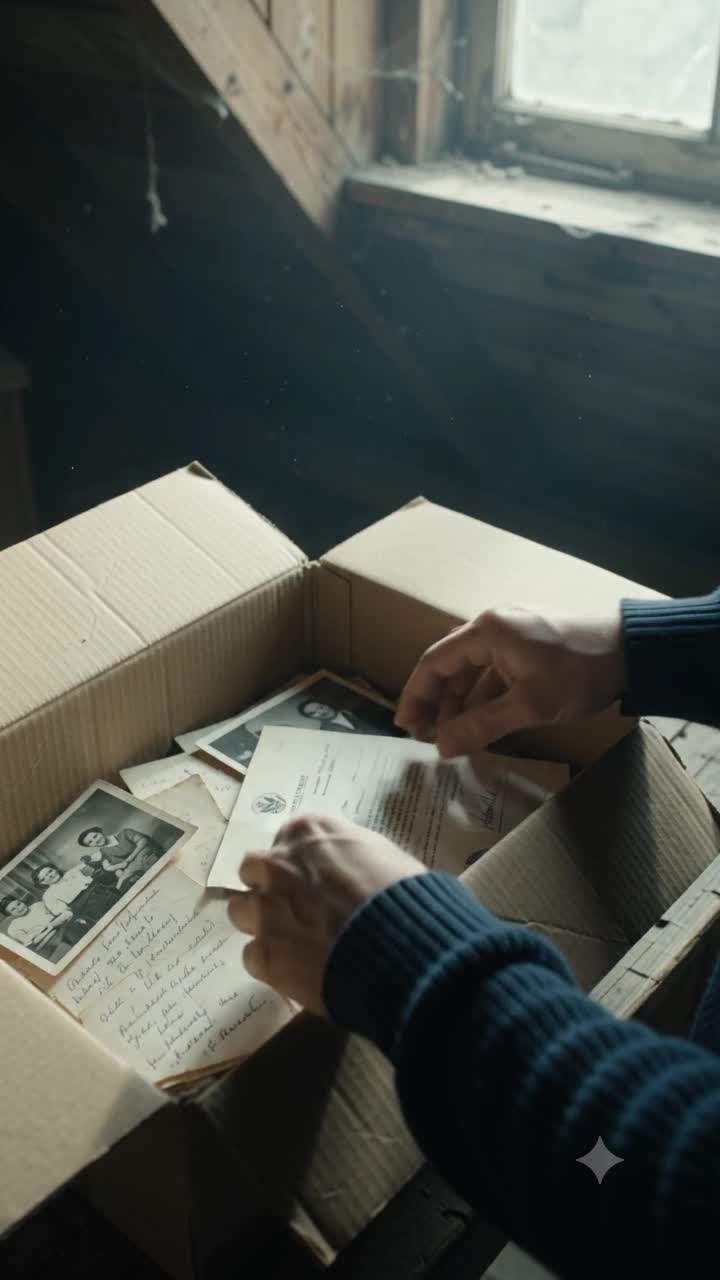
My eyes scanned the familiar headings: account holder, principal, interest.
Then, they snagged on a detail that made my breath catch.
A significant withdrawal.
Not unusual, perhaps, for investment management, but the signatory line… it listed my father, John Smith.
But my father had been dead for seventeen years.
My brow furrowed in confusion, a knot forming in my stomach.
This had to be a mistake, a clerical error, a quirk of some automated system.
I flipped to the previous statement, then the one before that.
More withdrawals.
All under my father’s name.
All dated years, sometimes over a decade, after his passing.
My heart began to pound a frantic rhythm against my ribs.
This wasn’t a mistake; it was a pattern.
A cold dread began to creep through my veins as I dug deeper into the file.
Underneath the recent statements, I found a series of older documents, bank transfers, and what looked like requests for fund disbursement.
Each one bore my father’s name, but when I looked closer, at the actual signatures, a sickening realization dawned.
The handwriting, while attempting to mimic my father’s neat script, had a distinctive flourish, a subtle slant that was unmistakably my mother’s.
My mother. Eleanor.
She had been signing my father’s name, posthumously, to withdraw money from my trust fund.
A sharp, visceral pain shot through me, sharper than any grief I’d felt in months.
It was a betrayal, cold and calculated, emanating from the very woman I believed loved me unconditionally.
I stumbled back, knocking against a stack of antique books, their spines cracking under the impact.
The document crinkled in my trembling hand, the numbers blurring through the sudden welling of tears in my eyes.
"Mom," I whispered, the word a ragged gasp, "what did you do?"
The image of her, always so graceful, so loving, shattered into a thousand pieces in my mind.
The silence of the attic became deafening, amplifying the thunder of my own pulse.
I spent the rest of the day and most of the night in that attic, poring over every financial document, every bank statement, every cryptic notation.
The evidence mounted, undeniable and crushing.
She hadn't just taken a little; she had systematically drained significant portions of the trust over many years.
It wasn't all gone, but it was a fraction of what my father had intended, what I had always believed was there.
The anger was a hot, bitter taste in my mouth, quickly followed by a profound, aching sorrow.