
The scent of mothballs and stale potpourri still clings to my clothes from yesterday.
It’s been months since Grandma passed, but her presence feels heavier than ever in that old house.
We were tasked with clearing out the mansion, a place filled with so many childhood memories.
Each dusty photograph and antique trinket felt like a ghost, whispering stories of a past I cherished.
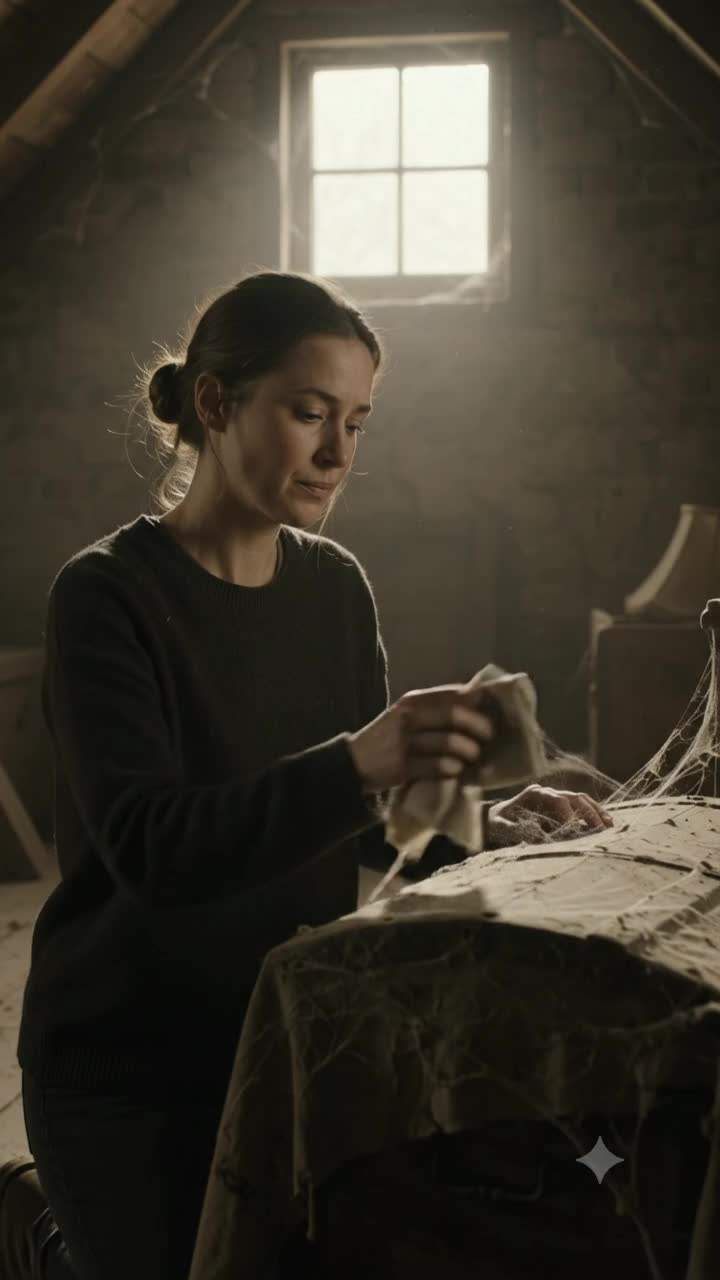
I started in the attic, a forgotten realm of trunks and draped furniture, untouched for decades.
Sunbeams pierced through a single grimy window, illuminating dancing motes of dust in the heavy air.
My fingers traced the rough grain of old floorboards, searching for a loose one I vaguely remembered.
Suddenly, a section gave way with a soft creak, revealing a shallow, secret compartment beneath.
Inside, nestled amongst yellowed lace and dried flowers, lay a small, leather-bound diary.
Its cover was smooth from years of handling, its pages swollen with time.
A chill ran down my spine; why would Grandma hide something like this?
I hesitated, my heart thumping against my ribs, a strange mix of fear and curiosity consuming me.
My hands trembled as I carefully opened the fragile book.
The first few entries were mundane, sweet musings about daily life, gardening, and recipes.
Then the tone shifted, subtly at first, then sharply, like a cold, steel blade.
The pages began to speak of "the Martins," a family name I recognized instantly: my mother's parents.
Grandma's neat handwriting grew tighter, filled with an undeniable bitterness and resentment.
She wrote about their rising textile business, their growing reputation, their "undeserved" prosperity.
A knot formed in my stomach as I read on, an unsettling dread seeping into my bones.
She detailed conversations, meetings, and schemes with chilling precision.
The words blurred for a moment, then snapped back into focus, forming a horrifying picture.
Grandma, the sweet, gentle woman everyone adored, had systematically orchestrated their downfall.
She bribed inspectors, manipulated suppliers, spread vicious rumors, and even tampered with their accounts.
She meticulously planned their financial ruin, relishing in their every setback.
Their textile business, once thriving, crumbled into bankruptcy and public disgrace.
My maternal grandparents, proud and hardworking, were left with nothing, their lives shattered.
My mother, a young girl then, was pulled from private school, her dreams of higher education dissolving.
She spoke of the shame, the poverty, the constant struggle that defined her childhood.
Grandma had watched it all unfold, from her comfortable distance, with cold, calculated satisfaction.
The motive, as scrawled in the diary's cruel confessions, was simple: revenge.
An old family slight, a forgotten quarrel over a piece of land decades ago, fueled her vindictive actions.
She destroyed an entire family, my mother's family, over a petty, ancient grudge.
And then, in a twist of truly sickening irony, she "helped" her own son—my father—rise.
She bought up the Martins' prime properties for pennies on the dollar, ensuring his success.
My father's inherited wealth, the very foundation of our comfortable lives, was built on this wreckage.
Every luxurious vacation, every expensive gift, every privilege I'd ever known, felt tainted.
The mansion itself, a symbol of our family's legacy, now screamed of stolen prosperity.
I felt a wave of nausea, the room spinning as the full weight of the betrayal crashed over me.
My own grandmother, a monster cloaked in cashmere and a warm smile.
The image of her, so loving and kind in my memories, shattered into a million sharp pieces.





