
After everything I’d been through, this house was supposed to be my new beginning.
It was a sprawling, majestic old place on the edge of town, built in the 1920s with a character you just don't find anymore.
Every brick, every ornate window, every creaking floorboard whispered of a different time, a grander life.
I spent weeks just wandering its empty halls, imagining dinner parties, quiet evenings by the fire, a future finally free from past heartbreaks.
This wasn't just a house; it was a sanctuary, a promise of peace.
The real estate agent, Mr. Henderson, a charming older gentleman with kind eyes, told me it had been in his family for generations.
He said it needed a loving hand, someone to bring it back to life, and I believed him.
His stories of his great-aunts and uncles living there added to its charm, making it feel even more personal, more inviting.
The sale was quick, almost too easy, like the house was meant for me.
For the first few months, I was blissfully happy, painting walls, restoring old furniture, making it truly mine.
But then, one blustery autumn evening, a draft caught my attention.
It wasn't coming from a window or a door; it felt like it was seeping through a solid wall in the master bedroom.
Curiosity gnawed at me, a tiny whisper in the back of my mind.
I tapped along the wall, feeling for a hollow spot, and there it was, just behind a heavy old tapestry I'd yet to take down.
A faint, almost invisible seam, hidden by decades of paint and wallpaper.
My heart hammered against my ribs as I carefully pried away a small section of the old wood paneling.
Behind it, a tiny, almost perfectly concealed door, no bigger than a child's height, stood waiting.
It was made of dark, heavy oak, bolted shut from the inside, or so it seemed at first glance.
But upon closer inspection, I found a tiny, rusted latch, expertly disguised as part of the molding.
With a deep breath and a surge of adrenaline, I unlatched it.
The door swung inward with a soft, mournful creak, revealing absolute darkness beyond.
I flicked on my phone's flashlight, its beam cutting through what smelled like stale air and forgotten dust.
It was a small room, barely larger than a closet, utterly barren save for one thing.
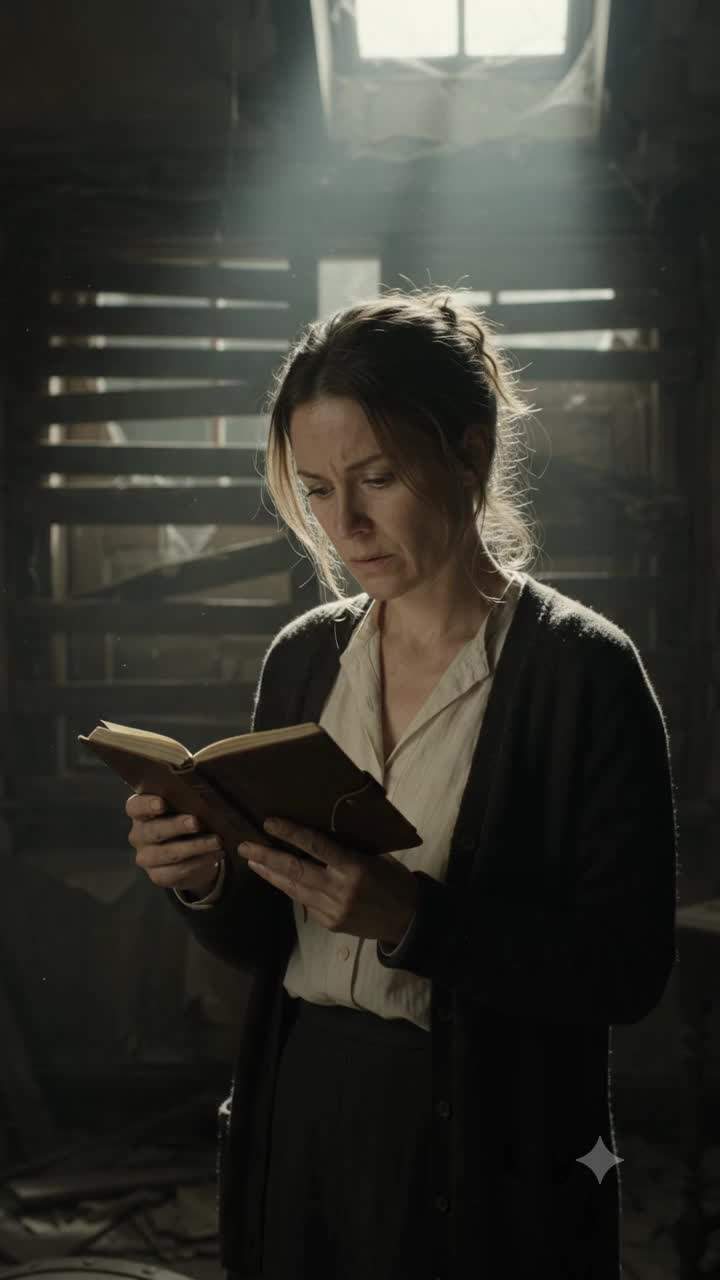
In the center of the dusty floor, under a single shaft of light filtering through a tiny, high-up window I’d never noticed from the outside, sat a wooden chest.
It was old, intricately carved, and appeared almost undisturbed for years.
My hands trembled as I knelt, my fingers tracing the cold metal clasp.
It wasn't locked.
I slowly lifted the lid, half expecting old coins or perhaps some antique jewelry.
Instead, I found a stack of yellowed letters, tied with a faded ribbon, and a small, leather-bound journal.
Beneath them, nestled amongst layers of ancient cloth, was a child's porcelain doll, its eyes wide and unblinking.
The letters were addressed to 'Clara.'
They were from a woman, her mother, pleading, begging, demanding to know where her daughter was.
The dates on the letters spanned several years, from the early 1930s to the late 1940s.
My blood ran cold as I opened the journal.
The handwriting was delicate, elegant, but the words were filled with a raw, agonizing despair.
It was Clara’s journal.
She wasn't gone; she was here.
She had been kept in this room, locked away, hidden from the world.
Her entries described a cruel existence, a desperate longing for sunlight, for freedom, for her mother.
She wrote of her "keeper," a stern, unforgiving figure, who brought her meager meals and never spoke her name.
My stomach twisted as I read the final entry, dated almost 70 years ago.





