My grandmother always told me that every old house has its stories.
I just never imagined the stories in Aunt Clara’s mansion would become my own nightmare.
After her passing, the mansion became mine, a place I always thought of with a mix of awe and gentle mystery.
Aunt Clara, my father’s eccentric sister, lived her entire life within its grand, echoing rooms.
She was a recluse, a keeper of quiet memories, always with a look in her eyes that hinted at unspoken burdens.
I spent weeks exploring, dusting off forgotten portraits, and marveling at the sheer volume of history contained within those walls.
It was on a particularly rainy afternoon, following a persistent draft from behind a bookshelf in the sprawling, seldom-used library, that everything began to unravel.
My fingers traced the ornate carvings, seeking the source of the chill.
Suddenly, a small, almost invisible seam appeared, giving way with a soft, ominous creak when I pressed against it.
Behind the shelf, a narrow, dark passage beckoned, smelling faintly of old paper and stale air.
My heart hammered against my ribs with a mix of childlike excitement and an adult premonition of dread.
I pushed through, flashlight in hand, into a small, hidden study I never knew existed.
Dust motes danced in the beam of my light, illuminating a single, heavy wooden desk, a worn armchair, and shelves filled with ancient books.
But it was a locked chest on the desk that truly caught my attention.
After some searching, I found a delicate, tarnished silver key hidden beneath a loose floorboard.
With trembling hands, I turned the key, and the lid lifted with a whispery groan.
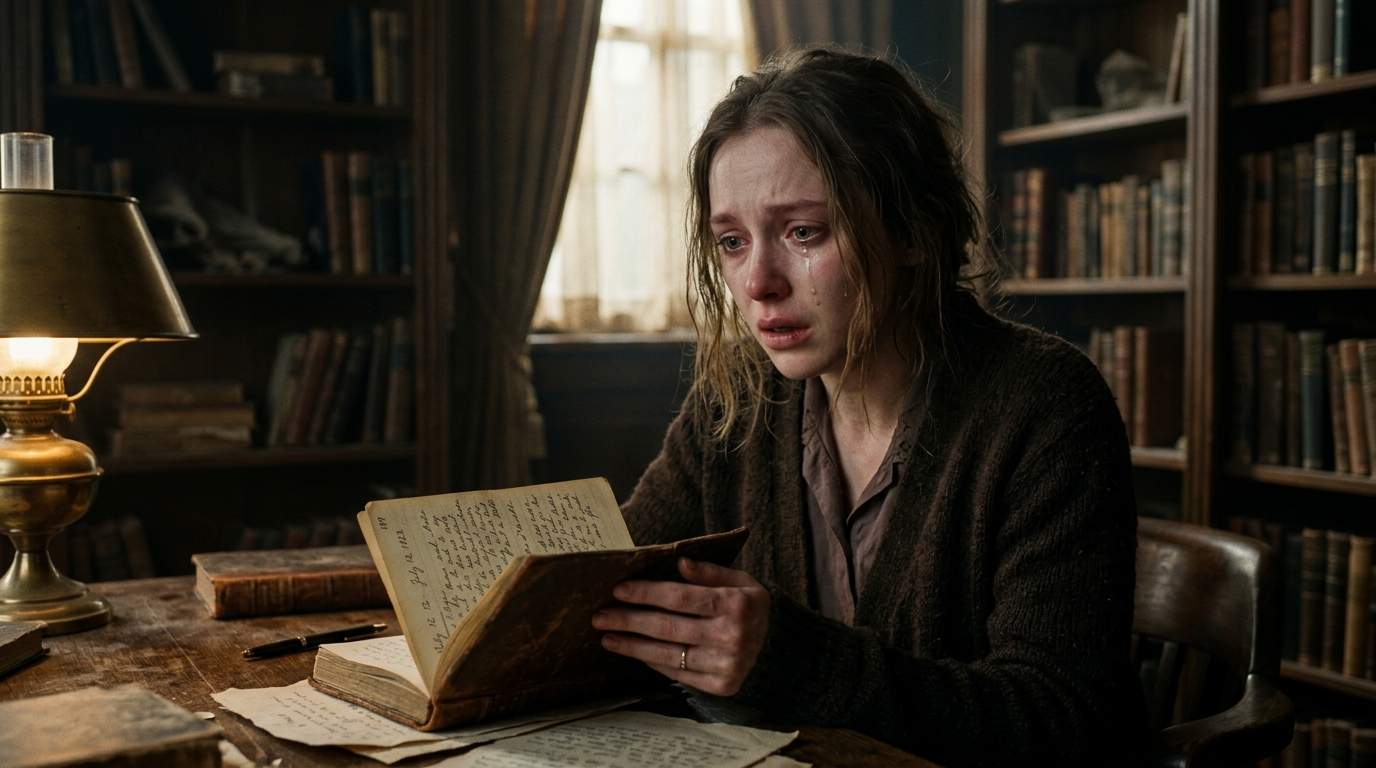
Inside, amongst yellowed letters and brittle newspaper clippings, lay a small, leather-bound diary.
It was Aunt Clara’s, but dated decades before I was born.
The first few entries were mundane, observations about the weather, garden plans, and visiting relatives.
Then, the tone shifted, growing darker, more frantic.
She wrote of "Papa’s despair," "the shame," and "the desperate need to protect the family name."
My grandfather, a revered figure in our community, a pillar of strength and integrity, was suddenly cast in a sinister light.
I devoured the pages, my breath catching in my throat with each horrifying revelation.
The diary meticulously detailed a scandalous affair between my grandfather and a young housemaid named Elara.
She had become pregnant, and in the rigid social norms of their era, it was an unthinkable disaster that threatened to ruin his political career and destroy my grandmother’s fragile health.
Aunt Clara, then a young woman devoted to her father, recounted clandestine meetings, desperate arguments, and finally, a terrible "accident."
Elara vanished one night, her family told she had run off.
But Aunt Clara’s words painted a chillingly different picture.