You think you know your family.
You think you know your own story.
I certainly did.
When Grandma Eleanor passed, leaving me her sprawling, archaic mansion, I pictured a treasure trove of happy memories.
Instead, I found a tomb of lies.
The old place always felt heavy with unspoken stories.
Grandma had always been so particular about certain rooms, certain locked cabinets.
As a child, I’d dismissed it as eccentricity.
Now, I understand.
I was going through the dusty old study, planning renovations.
My foot snagged on a loose floorboard near the hearth.
Curiosity, a potent and dangerous force, took hold.
Beneath the board, I found a small, almost invisible catch.
It was meticulously hidden.
With a click, a section of the ornate bookshelf swung inward.
My heart hammered against my ribs.
A hidden room.
It was small, cold, and utterly silent, as if time itself had forgotten it.
In the center sat a single, heavy wooden chest, its dark surface layered with decades of dust.
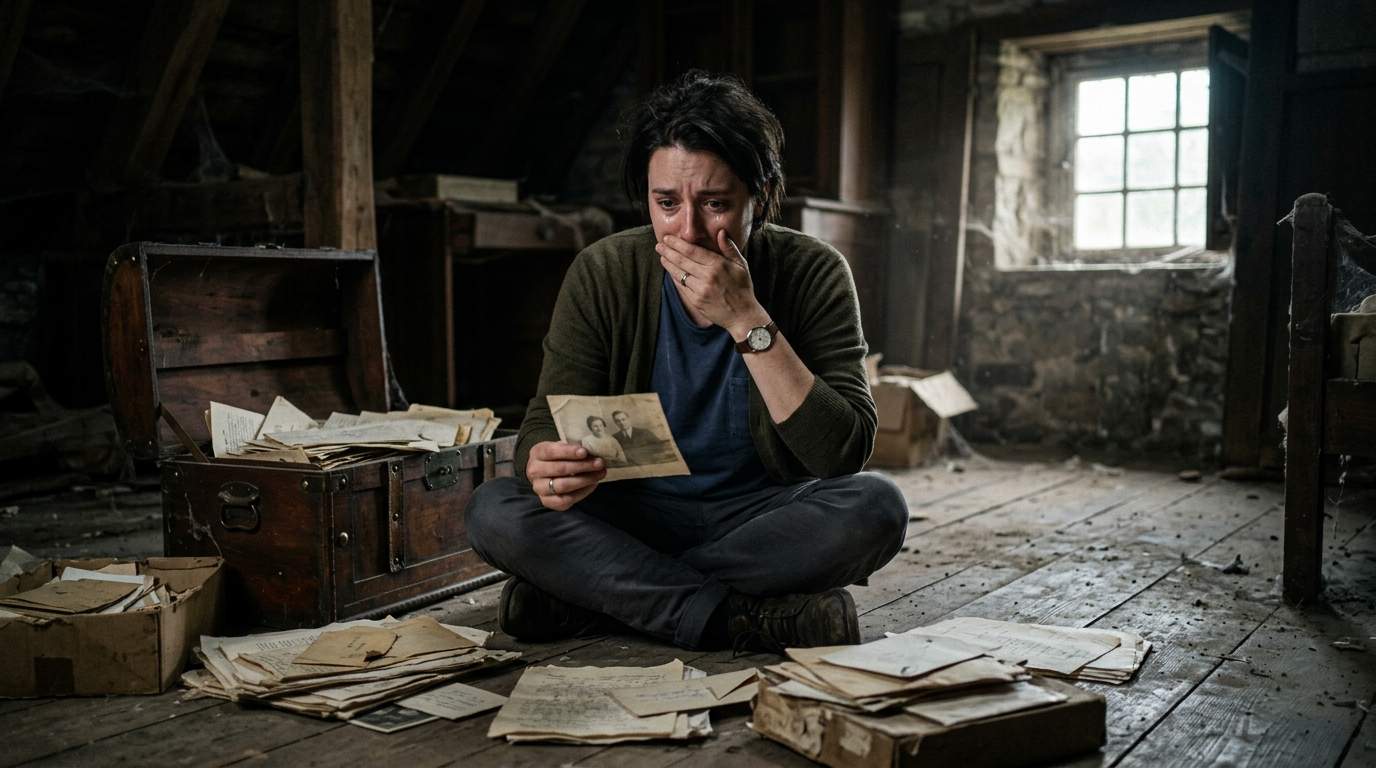
My hands trembled as I lifted the lid.
Inside, wrapped in brittle, yellowed linen, lay a collection of documents.
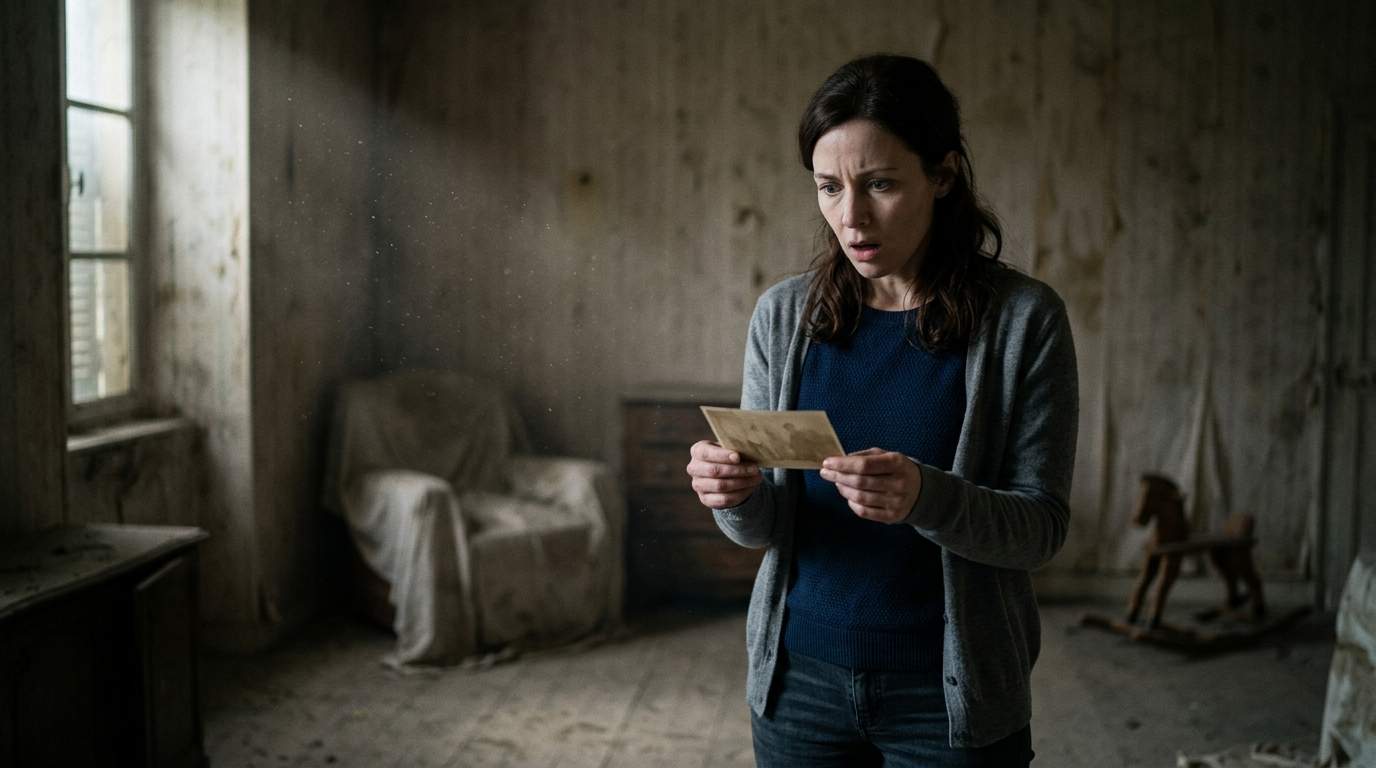
There were old letters, a leather-bound journal, and a faded, delicate photograph.
The air grew thick with unspoken history.
I picked up the journal first, its pages crackling as I opened it.
The entries were written in a graceful, looping script, dated over a century ago.
It was my great-great-grandfather’s hand, the revered patriarch, the founder of our family legacy.
But this wasn’t the story I knew.
This wasn’t the man we celebrated.
The journal spoke of a secret affair.
A child born out of wedlock.
A son, older than my supposed direct ancestor, the legitimate heir.
This child, the true firstborn, had been disinherited.
He was sent away, his existence erased from all family records.
The mansion, the vast fortune, the entire proud lineage we boasted about, was built on a lie.
My great-great-grandfather had fabricated a new history.
He’d banished his rightful heir.
He’d elevated a younger, legitimate son to usurp the birthright.
And my own direct ancestors, for generations, had lived this deception.
They had benefited from this cruel, calculated betrayal.
The letters confirmed every horrifying detail.
Desperate pleas from a mother, torn from her son.
Bitter accounts from the banished heir, struggling in poverty, knowing his birthright.
Then, I saw the photograph.
It showed a stern-faced man, undeniably my great-great-grandfather.
Beside him, two boys.
One, the ancestor I knew, stood stiffly.