
My Aunt Eleanor always said the old Hawthorne mansion had secrets.
She'd wink at me, a mischievous glint in her eyes, whenever I asked about the locked attic door or the boarded-up fireplace in the library.
Now, after her passing, the mansion is mine, and I’m finally understanding what she meant.
It’s been a week since I moved in, slowly sifting through generations of accumulated memories, dust, and echoes.
Every antique object, every faded photograph, tells a story, but none prepared me for this.
I was in the old study, trying to make sense of Aunt Eleanor’s chaotic filing system, when I noticed it.
A section of the mahogany paneling seemed slightly off, the grain mismatched just barely.
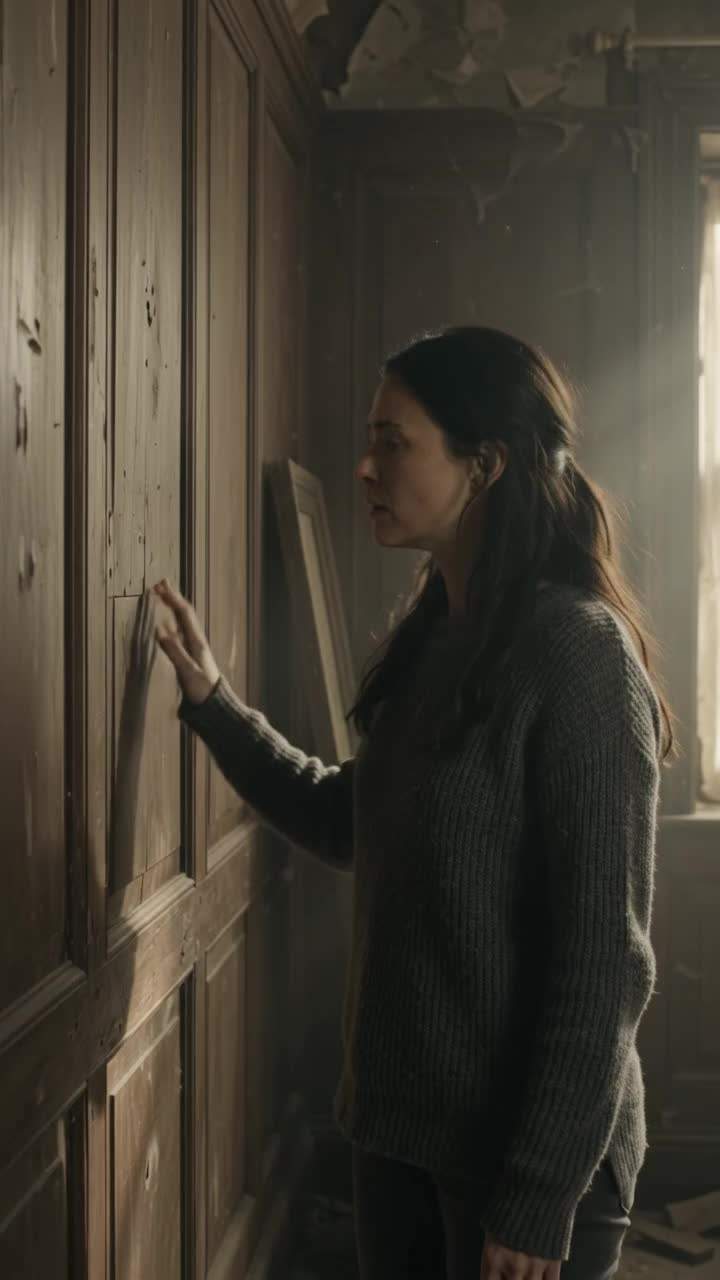
My fingers traced the faint outline of a hidden door, a secret passage I'd only ever dreamed about in childhood games.
My heart pounded as I pushed, felt a faint click, and a narrow opening appeared.
Inside, the air was still and thick with the scent of aged paper and forgotten time.
It wasn't a grand secret room, just a small, dusty alcove, perhaps a foot deep.
But nestled on a single, narrow shelf, was a worn leather-bound diary.
No lock, no fancy embellishments, just plain, dark leather that had seen decades of handling.
My hands trembled as I pulled it out, brushing away a fine layer of dust.
“Eleanor Hawthorne, 1948,” was written inside the front cover in elegant, looping script.
It was Aunt Eleanor's diary, from when she was barely twenty years old.
I sank to the floor, the cold wood seeping through my jeans, and opened it to a random page.
At first, it was just teenage musings about dances and local gossip, comforting in its normalcy.
Then, a later entry, dated October 1950, stopped my breath.
“They said he was gone. My baby boy. Died at birth, they told me. But I saw him. He cried. He was perfect.”
My vision blurred as I reread the words, an icy dread creeping into my veins.
Aunt Eleanor had a baby? My fiercely independent, childless aunt?
The family story was always that she’d never married, never even had a serious suitor.
I turned the pages frantically, seeking answers, my fingers smudged with ancient ink.
Entry after entry painted a devastating picture: a whirlwind romance with a visiting scholar, a hushed-up pregnancy, and a terrifying delivery in secret.
Then, the ultimate betrayal.
Her parents, my grandparents, had orchestrated the cover-up, convinced their reputation would be ruined.
They told her the baby was stillborn, that it was for the best, and moved her away to "recover."
But Aunt Eleanor’s diary told a different story, a desperate search she undertook in secret years later.
She never stopped looking, never stopped believing her son was alive.
And then I found it, a small, faded newspaper clipping tucked between yellowed pages.
It was an adoption announcement from the local paper, dated November 1950.
“Proudly welcoming John David Miller into their family.”





