
My life changed the day the lawyer’s call shattered my quiet afternoon.
A distant great-aunt, Evelyn, whom I barely remembered, had passed away.
She had left me Blackwood Manor, an estate whispered about in hushed tones during family gatherings.
I never truly expected to inherit anything, certainly not a historic mansion.
The news felt like a dream, a lottery win I never bought a ticket for.
I envisioned a fresh start, a grand project to restore history, a place to finally feel rooted.
Blackwood Manor stood majestic and imposing, draped in ivy, whispering stories of generations past.
Its dark wood and stained-glass windows promised grandeur, a life I had only read about.
The first few weeks were a whirlwind of excitement, cleaning, and discovering hidden nooks.
Every creak of the floorboards, every shadow, felt like a comforting embrace from history.
I loved the silence, the way the morning light streamed through the tall, arched windows.
One day, while dusting an old study, my hand brushed against a loose panel behind a large bookcase.
It wasn't just loose; it was a clever, almost invisible seam in the dark wood.
My heart pounded with a childish thrill of discovery.
Behind it lay a narrow, forgotten passageway, leading to a small, windowless room.
The air was heavy, thick with dust and the scent of aged paper and forgotten dreams.
A single, sturdy oak chest sat in the center, untouched for decades.
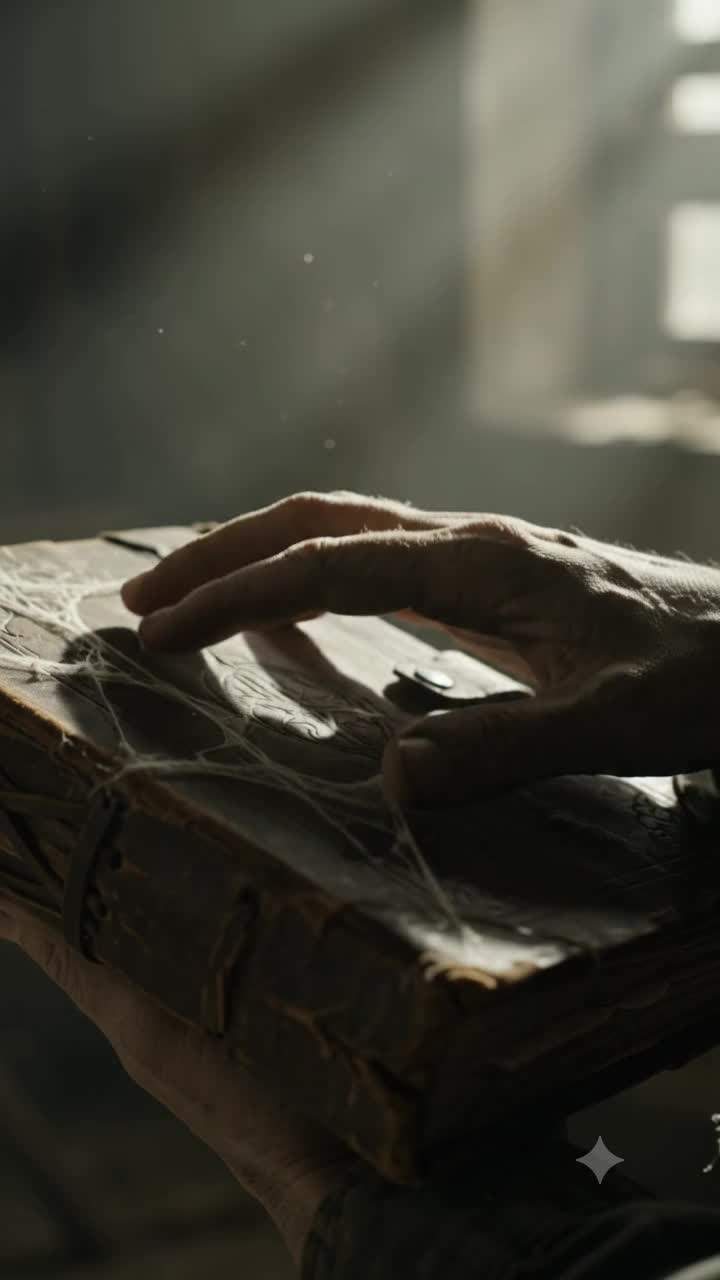
My hands trembled as I lifted the heavy lid, revealing stacks of yellowed documents and a thick leather-bound diary.
The diary belonged to a woman named Elara Vance, dated over sixty years ago.
Her elegant cursive filled the pages, speaking of a life of quiet elegance and profound sorrow.
I started reading, initially out of curiosity, then with growing unease.
Elara was not a distant relative; she was Evelyn’s younger sister, presumed to have died young.
The entries detailed a love affair, a forbidden one with a man outside their social circle.
Then came the shocking revelation: Elara was pregnant.
Her parents, my great-grandparents, were furious, demanding she give up the child.
Evelyn, my great-aunt, was portrayed as supportive, but then the tone of the diary shifted dramatically.
Elara wrote of Evelyn's manipulative words, convincing her that the child deserved a better life, a "proper" family.
There were heartbreaking entries about Elara’s despair, her forced confinement within the manor walls.
Then, a final, gut-wrenching entry: "Evelyn promised the child would go to good people, but I saw her with Mama and Papa, planning to tell everyone I was dead."
My breath hitched; the air in the tiny room felt suffocating.
They had faked Elara’s death, stealing her child and passing it off as Evelyn’s own.
And then, the name of the child, written in fading ink: David.
David, my own father.
The world tilted, and the dusty room spun around me.
My father wasn't Evelyn's son; he was the child of a young woman imprisoned and then erased.
Evelyn, the woman who supposedly loved me, who had left me this house, was a monstrous accomplice.
My great-grandparents, revered figures in our family history, were cruel architects of this lie.
I re-read the pages, searching for a different interpretation, a misunderstanding.
But the words were stark, painful, and clear.
The diary was followed by legal documents, meticulously hidden, confirming the coerced adoption.
These papers showed how my great-grandparents had manipulated legal channels, forging death certificates and birth records.
I sat there for hours, the old diary clutched in my hands, the weight of generations of lies pressing down on me.
My entire life, my identity, was built on a foundation of deceit.





