My life changed the day I inherited Blackwood Manor.
It wasn't just an old house; it was a labyrinth of shadows and whispers, a place my family rarely spoke of.
For years, it stood empty after Great Aunt Elara passed, a forgotten relic of our past.
I felt a strange pull to it, a need to connect with the history I never knew.
The first few weeks were a blur of dust sheets and creaking floorboards, trying to make the grand old place feel like home.
Every room held secrets, hinted at by the faded wallpaper and forgotten trinkets.
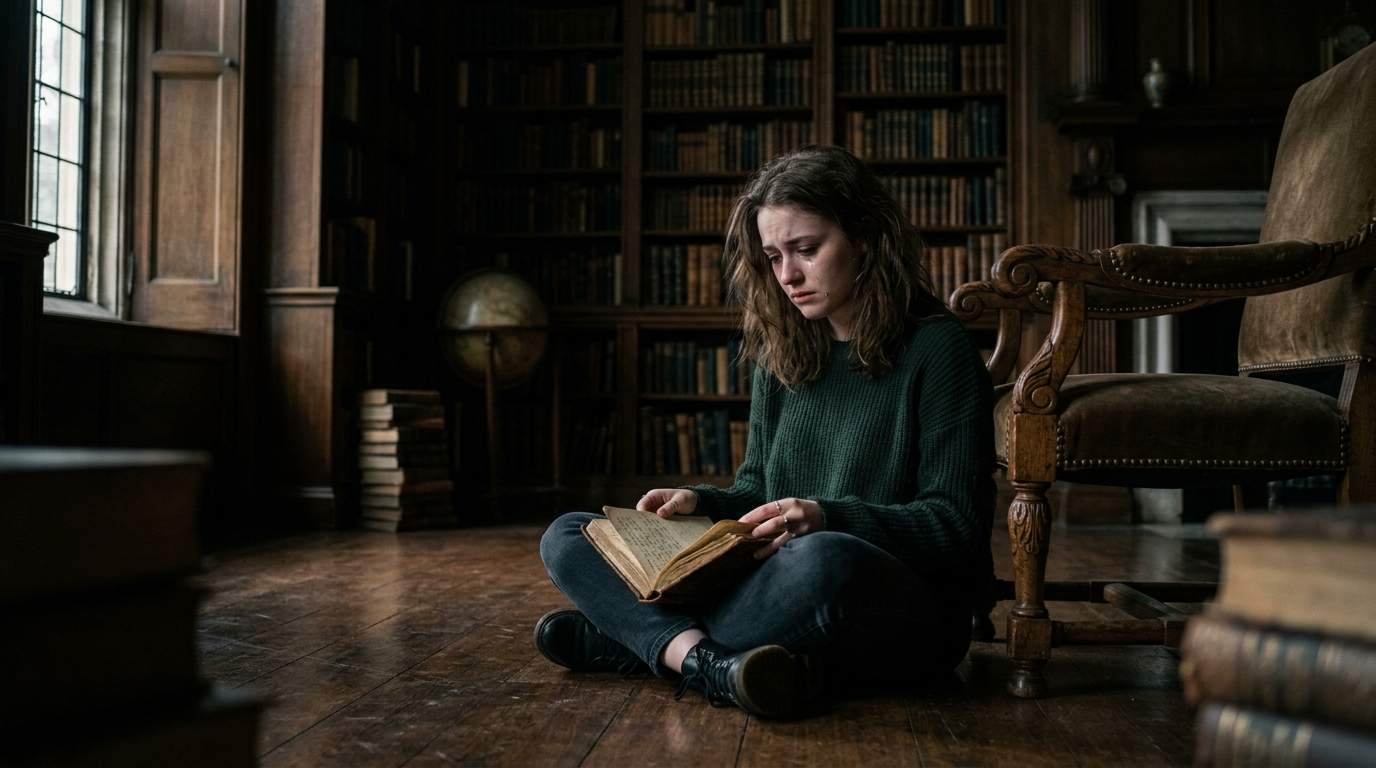
I started in the library, a vast space with shelves reaching to the heavens, filled with leather-bound books.
One afternoon, while organizing some ancient texts, my hand brushed against a loose panel behind a large, leather-bound collection of poetry.
It wasn't obvious, just a slight give, a barely perceptible creak.
My heart pounded with a mix of curiosity and an irrational sense of dread.
With a gentle push, a section of the bookshelf swung inward, revealing a small, dark recess.
Dust motes danced in the sliver of light that pierced the gloom.
Inside, nestled amongst cobwebs and forgotten memories, was a small, ornate wooden box.
My hands trembled as I pulled it out, the wood surprisingly smooth beneath the dust.
It wasn't locked; the latch simply gave way with a soft click.
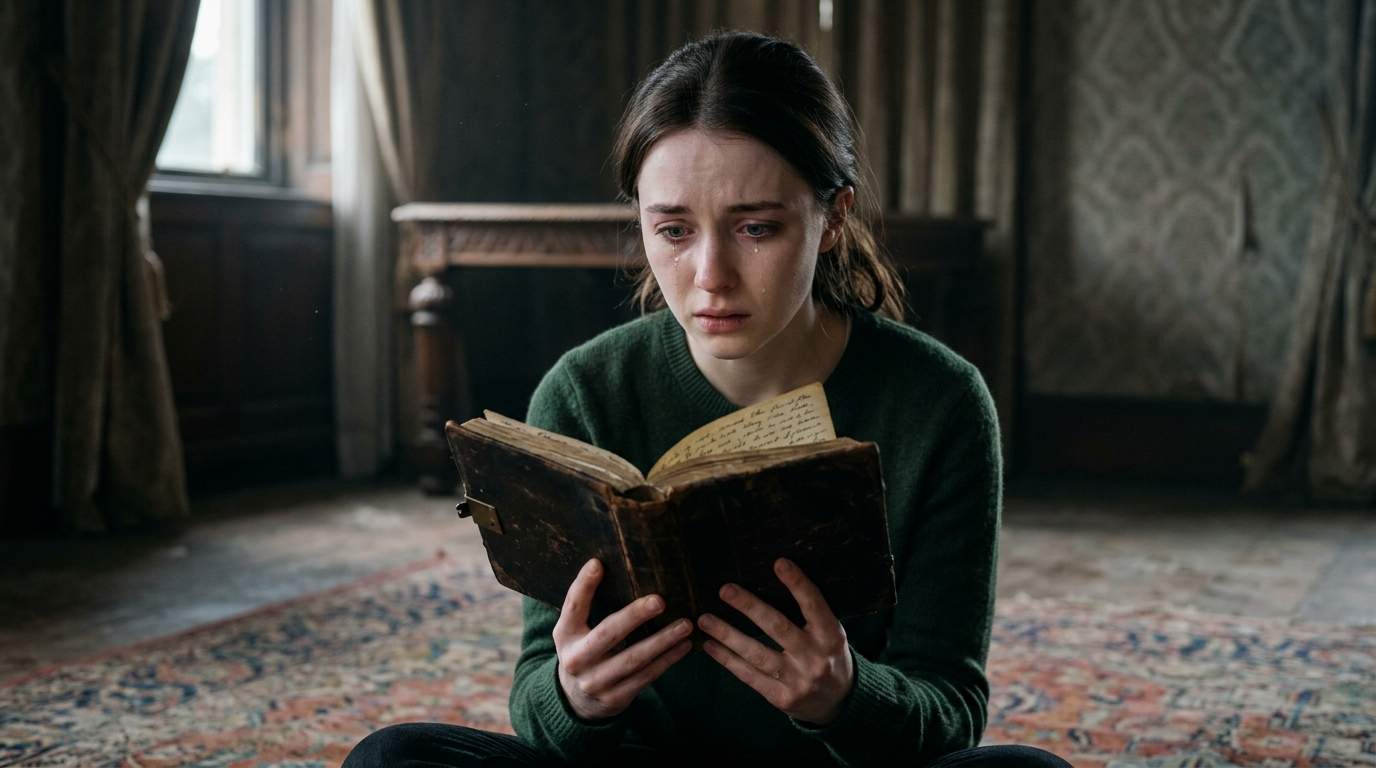
Inside, wrapped in yellowed silk, was a leather-bound diary.
The name "Amelia" was elegantly etched on the cover, a name I barely recognized from old family trees—Great Aunt Elara’s younger sister, who supposedly died young of a mysterious illness.
A chill ran down my spine; no one ever talked about Amelia.
I settled onto the dusty floor, sunlight streaming weakly through a high window, and opened the diary.
The first entries were mundane, typical observations of a young woman's life in the early 20th century.
Then, the tone shifted, growing darker, more desperate.
Amelia wrote of fear, of whispers in the night, of feeling trapped within these very walls.
She spoke of Elara, her older sister, becoming increasingly distant and cold.
My breath hitched when I read the date of an entry, just days before her supposed death.
"He knows," she had scrawled, the ink smudged as if she’d been crying, "He knows I saw him."
The next pages were chaotic, frantic accounts of being watched, of hushed arguments in the drawing room, of a terrifying realization.
She suspected she was being poisoned, slowly, methodically.
And then, the name.
My hands flew to my mouth, a silent scream caught in my throat.
She named him.
Not a stranger, not an outsider.
She named him, the pillar of our family, the one whose portrait still hung proudly in the main hall.