
The night was supposed to be a dream.
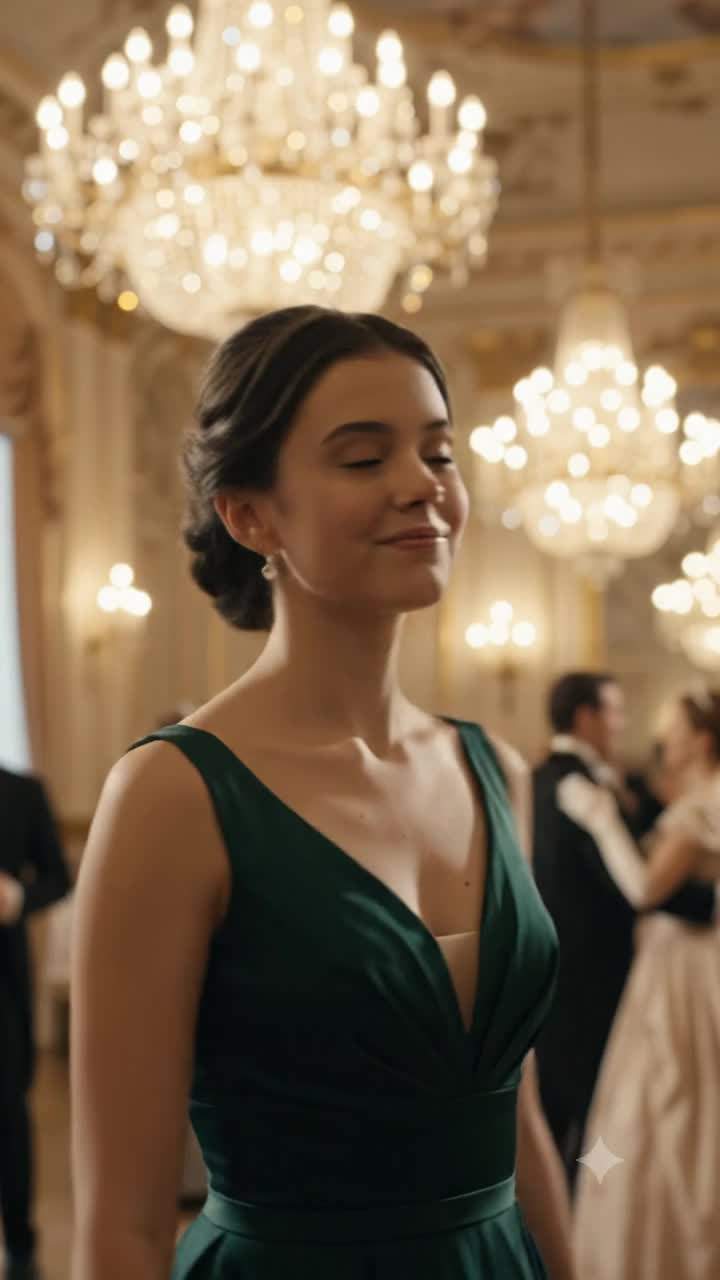
I still remember the soft glow of the chandeliers, the hushed elegance, the scent of expensive perfume mingling with fresh roses.
This was the annual Hawthorne Charity Ball, the pinnacle of our town’s social calendar, and my mother, Eleanor Vance, was its undisputed queen.
She floated through the grand ballroom, a vision in sapphire silk, greeting dignitaries and philanthropists with that effortlessly charming smile.
Everyone adored Eleanor; she was the embodiment of grace, generosity, and unwavering integrity.
She chaired countless committees, spearheaded every major fundraiser, and spoke passionately about helping the less fortunate.
I grew up believing she was almost superhuman, a beacon of moral strength.
Tonight, I was just her proud daughter, beaming from the sidelines, convinced I had won the parent lottery.
Around eleven, the speeches ended, and the band struck up a lively waltz.
My mother excused herself, a quick, polite nod to the mayor's wife, and headed towards the corridor leading to the private lounges.
I thought nothing of it; perhaps she needed a moment to herself, or a quick touch-up.
But then, I saw a flicker of something in her eyes, a brief, almost imperceptible tension that didn’t quite match her serene public persona.
It was a micro-expression, gone in an instant, but it caught my attention.
A few minutes later, feeling restless and needing a fresh air, I decided to take a short stroll myself.
My path inadvertently led me down the same opulent corridor my mother had taken.
The music from the ballroom became a muted hum here, replaced by the soft echo of my own footsteps on the polished marble.
As I approached the private lounges, I heard voices, low and urgent.
One was undeniably my mother’s.
I hesitated, feeling an instinctive prickle of unease.
It was unlike her to have a hushed, intense conversation in a place like this.
Curiosity, or perhaps a premonition, compelled me to slow my pace, pretending to admire a large landscape painting on the wall.
The door to one of the smaller lounges was ajar, a sliver of light illuminating part of the scene within.
I edged closer, my breath catching in my throat.
Inside, my mother wasn't alone.
She was with Mr. Davies, the stern-faced accountant for the Hawthorne Charity, a man known for his meticulous honesty.
His usual stoicism was replaced by a visible agitation.
My mother's back was mostly to me, but I could clearly see her hand.
And in her hand, she held a thick, manila envelope.
Mr. Davies was saying something, his voice strained.
Advertisement
"Eleanor, this can't continue. The discrepancies are too large, too obvious. We’re talking about hundreds of thousands here. If anyone looks closely at the donor records for the past five years..."
My heart hammered against my ribs, a cold, dread-filled drumbeat.
My mother cut him off, her voice low, laced with a steel I had never heard before.
"It won't come to that, Arthur. You just need to adjust the ledgers, as we discussed. A few more 'anonymous' donations, a slight reclassification of administrative overhead. No one questions the numbers when I present them."
My mind reeled, trying to make sense of the words.
Discrepancies? Hundreds of thousands? Adjust the ledgers?
Then, she turned slightly, just enough for me to see her face in the soft light.
The elegant mask was gone.
Her eyes, usually so warm and kind, were hard, calculating, utterly devoid of warmth.
It was a face I had never seen, a stranger's face inhabiting my mother's features.
She handed Mr. Davies the envelope.
"This is for your... trouble. And for your silence."
Arthur Davies hesitated, his gaze flicking to the envelope, then to her face.
His shoulders slumped in defeat, and he took the envelope, sliding it into his jacket.
He murmured something about "ruining everything."
My mother simply stared at him, an almost predatory gleam in her eyes.
"You've been well compensated, Arthur. Now, go back to the ball. And remember our arrangement."
I felt a dizzying lurch in my stomach.
It was like watching a perfectly crafted vase shatter in slow motion, piece by agonizing piece.
My mother, my hero, was systematically siphoning money from the very charity she championed.
She wasn't just embezzling; she was blackmailing, manipulating.
The "chilling secret" wasn't just a hidden flaw; it was a deep, festering corruption.
I backed away silently, my heart pounding so loudly I was sure they must hear it.
Each step felt like walking through quicksand, the air thick with betrayal.
The beautiful music from the ballroom now sounded like a cruel, mocking melody.
The scent of roses turned cloying, suffocating.
I found myself leaning against a cold marble pillar, struggling to breathe, to think.
My mother, the woman who taught me about integrity, about compassion, about giving back, was a thief.
And a cold, ruthless one at that.
The sheer audacity, the years of deception, the perfect performance she had given the world, and me.
It was a betrayal so profound it felt like a physical blow.
Every kind word, every proud glance she had ever given me, now felt tainted, a part of her elaborate lie.
What was I supposed to do?
Confront her?
Expose her?
Destroy her reputation, her life, our family's standing?
Destroy the very charity that would then suffer even more?
Or live with this monstrous secret, letting it corrode me from the inside out?
The Eleanor I knew, the Eleanor I loved, ceased to exist in that moment.
In her place was a stranger, a formidable and terrifying woman I had glimpsed through a half-open door.
Advertisement
My childhood, my innocence, my trust – they were all collateral damage in her chilling game.
The Grand Ball wasn't just a night of unexpected revelations; it was the night my world fractured beyond repair.
I walked out of that corridor, back into the glittering crowd, a ghost among the living, carrying a truth that felt heavier than the world itself.
My life, irrevocably changed, now a secret burden I could never truly share.





