
I’ve spent countless nights staring at the ceiling since that day.
Some moments just burn themselves into your soul, changing everything you thought you knew.
My grandmother, bless her heart, left me her colossal, crumbling mansion in the will.
It was more of a burden than a blessing, honestly, a monument to a bygone era.
But it was family history, every creaking floorboard whispering stories of generations past.
For weeks, I poured over old photographs, tried to decipher her scrawled recipes, and packed up decades of memories.
The house held a bittersweet nostalgia, a comforting scent of dust and lavender.
I had always loved visiting, running through its endless halls as a child.
Now, it felt different, heavy with a silence I hadn't noticed before.
One afternoon, while meticulously cleaning out her cluttered study, I found myself drawn to an antique writing desk.
It was an imposing piece, dark mahogany, with intricate carvings and a locked drawer I’d never seen opened.
Grandma had always been private, but this felt different, more deliberate.
A strange intuition, a prickle on my skin, urged me to find the key.
I searched through her trinket boxes, her hidden sewing kit, even under the loose rug by the fireplace.
Finally, tucked inside a forgotten teacup on a high shelf, glinted a tiny, ornate brass key.
My heart thumped a nervous rhythm against my ribs as I approached the desk again.
The key slid into the lock with a soft click that echoed in the silent room.
Inside, nestled beneath a stack of old letters, was a false bottom I almost missed.
My fingers fumbled, adrenaline coursing through me, as I pried it open.
What I found wasn't jewelry or cash, but a thick, yellowed envelope sealed with a broken wax crest.
The paper felt ancient, brittle, whispering of secrets held for too long.
Inside were faded photographs, legal documents, and a handwritten journal.
I recognized the delicate script immediately; it was my grandmother's.
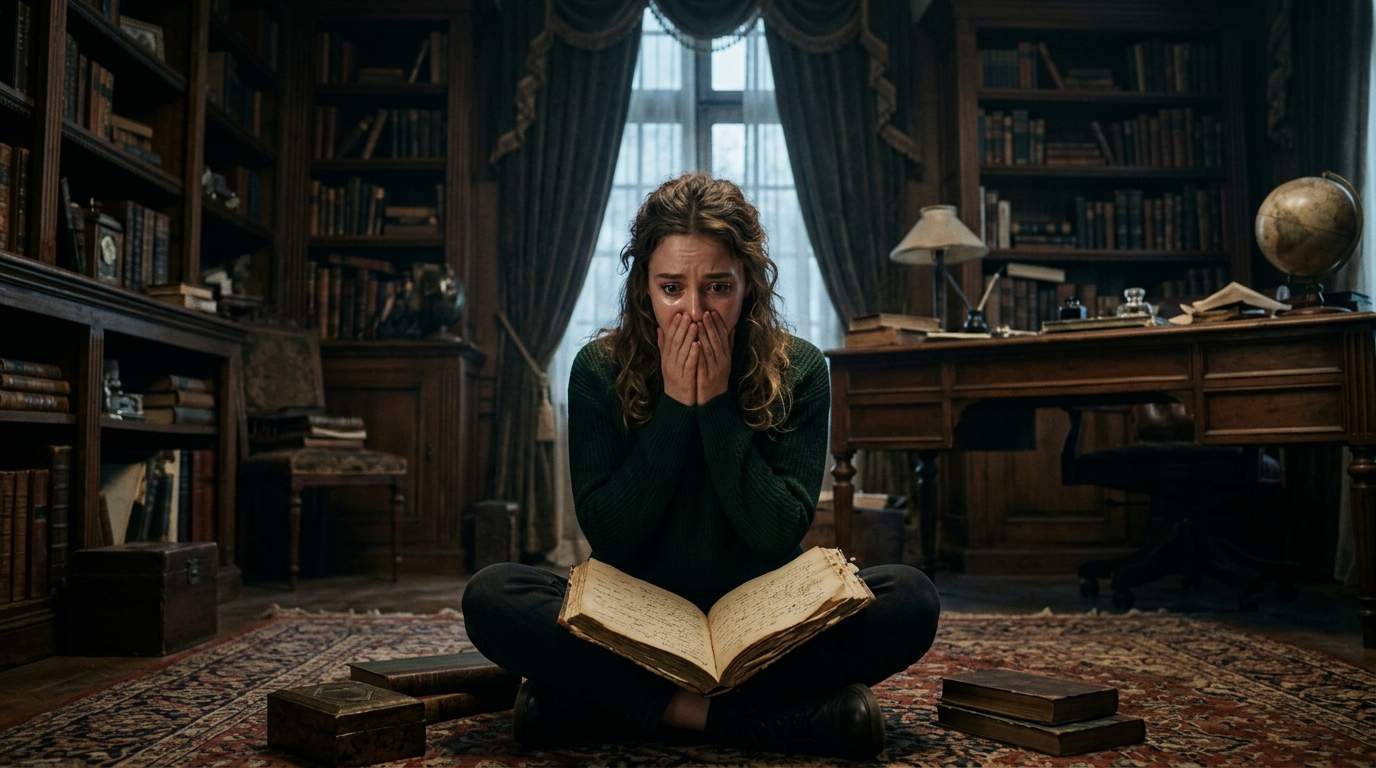
My hands trembled as I began to read, the words blurring, then sharpening into agonizing clarity.
This wasn't a family diary full of anecdotes; it was a confession.
A confession that tore through my idyllic memories like a wrecking ball.
My grandmother, the sweet, gentle woman I adored, had kept a monstrous secret her entire life.
She had a child, a son, born out of wedlock decades before she married my grandfather.
This child, a boy named Daniel, was the eldest, the rightful heir to this very mansion and a significant fortune.
Advertisement
But instead of embracing him, she had given him away, claimed he died, and then actively orchestrated his disinheritance.
The documents detailed a cruel, calculated deception, a fraudulent will that cut him out entirely.
My own father, her beloved son, had inherited everything that was rightfully Daniel's.
My entire life, our family's comfortable existence, the very roof over my head, was built on a lie.
It was stolen, bought with the heartbreak of a discarded child and a lifetime of deceit.
The photos showed a young boy with eyes so strikingly similar to my father’s that my breath caught in my throat.
He looked happy in some, then older, his face etched with a quiet sadness in others.
There was even a recent newspaper clipping about a local charity, and I saw his face.
Daniel was alive.
He was living in the same town, a quiet, unassuming man, completely unaware of the fortune, the legacy, that had been stripped from him.
A wave of nausea washed over me, cold and consuming.
The familiar walls of the mansion felt oppressive, suffocating, no longer comforting but menacing.
Every painting, every antique, every inherited piece of furniture suddenly felt tainted, rotten to its core.
I saw my father’s face in my mind, his easy smile, his pride in our family name.
How could he not know?
Or worse, did he know, and just chose to ignore it, to perpetuate the lie?
The betrayal wasn't just my grandmother's; it implicated every generation that had benefited.
My own identity felt fractured, my sense of self crumbling into dust.
I wasn’t just inheriting a house; I was inheriting a legacy of profound injustice.
The weight of this secret pressed down on me, heavy and suffocating.
My family, the one I thought I knew, was a stranger.
The unconditional love I felt was now laced with suspicion, doubt, and a bitter taste of complicity.
I had to tell them, didn't I?
But telling them meant ripping apart the very fabric of our lives, destroying their peace, their reputations, everything.
It meant shame, legal battles, and the permanent shattering of our family unit.
The quiet, comforting mansion had become a prison of truth, its walls holding not just memories, but a devastating, irreversible betrayal.
I sat there, the ancient papers scattered around me, feeling utterly lost and utterly alone.
My world, once solid and predictable, had dissolved into a nightmare of secrets and lies.
The family I cherished was now an illusion, built on the stolen future of an innocent boy.
And I, the inheritor, was now burdened with the impossible choice of upholding the lie or destroying everything.





