
The funeral was a blur of black suits and forced condolences, but the real storm gathered the moment Grandpa’s lawyer began reading the will.
My Uncle Robert, with his slicked-back hair and predatory grin, sat smugly, already counting his blessings.
Grandpa's old mansion, a place of fond childhood memories, suddenly felt cold and haunted, full of whispers I couldn't quite place.
The official will distributed everything neatly, leaving the sprawling estate and most of the fortune to Uncle Robert, with only a token sum for me and a few distant relatives.
It felt wrong, profoundly, sickeningly wrong, a betrayal of everything I thought I knew about my kind-hearted grandfather.
Later that week, unable to shake the gnawing unease, I drove back to the old mansion alone.
The dust motes danced in the afternoon light filtering through the stained-glass windows, making the air feel heavy with forgotten stories.
I walked through the silent rooms, touching familiar objects, trying to reconnect with the man I loved, searching for an explanation.
In his study, a place I’d spent countless hours listening to his stories, I felt a peculiar pull towards a specific, antique bookshelf.
It was a grand, dark mahogany piece, filled with weighty tomes on history and philosophy, volumes I remembered him poring over.
My fingers traced the spine of an old, leather-bound book—"Meditations" by Marcus Aurelius, a favorite of his.
Something about it felt off; it was slightly heavier, and didn't quite sit flush with its neighbors.
A flicker of intuition, a gut feeling I couldn’t ignore, urged me to examine it closer.
I pulled it from the shelf, and as I did, a small, barely perceptible mechanism clicked softly behind it.
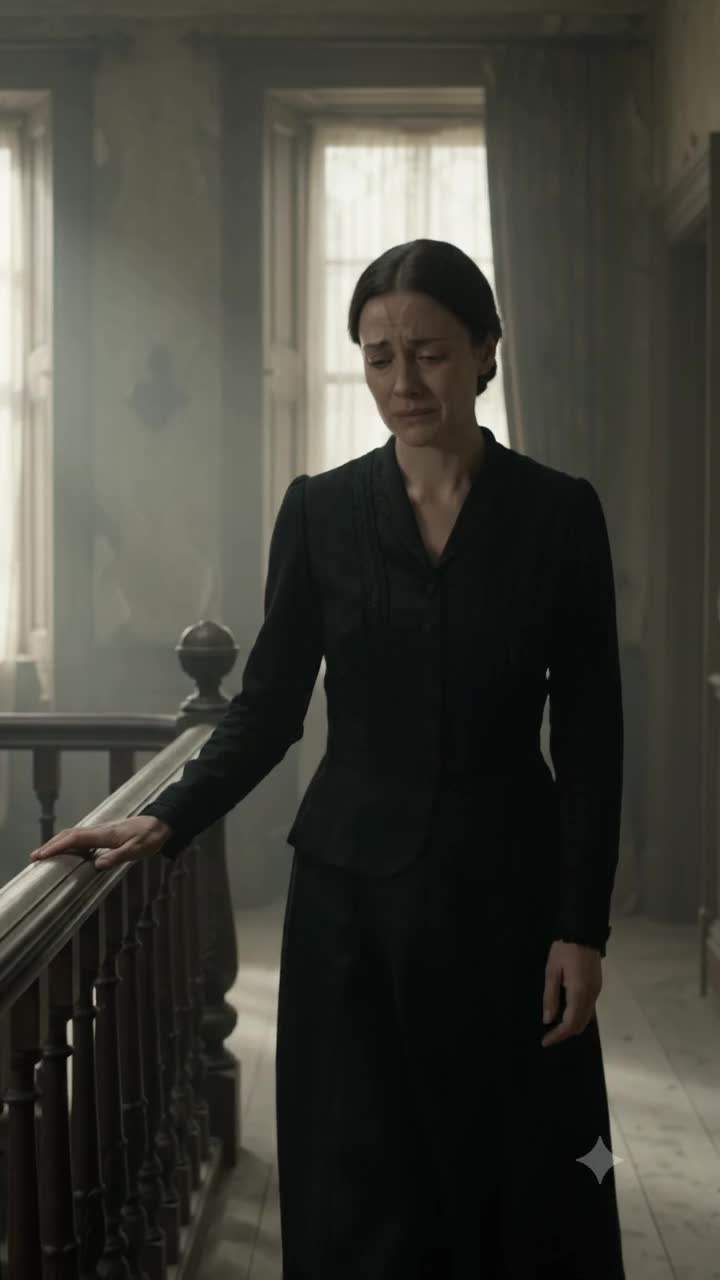
My heart leaped into my throat; a tiny, hidden compartment, ingeniously crafted, lay exposed.
Inside, nestled amongst yellowed letters and a faded photograph of a woman I didn’t recognize, was a thick, sealed envelope.
My name, scrawled in Grandpa’s unmistakable hand, was on the front.
My hands trembled as I tore it open, my breath catching in my throat as I saw the words "LAST WILL AND TESTAMENT" typed across the top.
This wasn't the will the lawyer read; this was something entirely different, something illicit, something secret.
The first few paragraphs confirmed my horrifying suspicion: this was Grandpa’s true last wishes, dated just weeks before his death, long after the "official" will.
He explicitly disinherited Uncle Robert, citing "unforgivable deception and manipulation" involving family assets decades ago.
My vision blurred as I read on, discovering that the mansion, the bulk of the estate, and a substantial trust fund were actually intended for me.
But the real shock came on the third page, a handwritten codicil attached with a rusted paperclip.
Grandpa had a secret, illegitimate daughter, a woman named Clara, who he had quietly supported for years.
He outlined a detailed plan for her inheritance, an entire life built on anonymous generosity, kept secret from everyone.
He spoke of a lifelong guilt, a silent burden he carried, and a profound love for this hidden child he couldn't publicly acknowledge.
Uncle Robert had somehow found out about Clara and had used the information to blackmail Grandpa, forcing him to sign the fraudulent will.
The official will was a monstrous fabrication, a cruel joke played on me, on Clara, and on Grandpa's memory.
The entire foundation of our family, the quiet dignity of my grandfather, shattered into a million pieces around me.
Advertisement
His "kindness" to Uncle Robert, always a point of confusion, was now exposed as a desperate attempt to protect a devastating secret.
My grandpa wasn’t just a victim of blackmail; he had built a life on a lie, a betrayal to my grandmother, a hidden child he never acknowledged to us.
The weight of this knowledge crashed down on me, heavy and suffocating.
Everything I thought I knew about my family, about loyalty, about love, was utterly twisted.
The mansion, once a sanctuary, now felt like a prison, its walls echoing with forgotten betrayals and unspoken truths.
The photograph of the unknown woman, Clara’s mother perhaps, stared up at me from the hidden compartment, her eyes holding their own untold story.
My heart ached with a pain far deeper than simple grief for my grandfather; it was the pain of profound disillusionment.
How could he have kept such a monstrous secret, and how could Uncle Robert be so truly, utterly evil?
The sheer scale of the deception, the calculated cruelty, left me reeling, my world irrevocably altered.
This wasn't just about money; it was about the desecration of a legacy, the shattering of a family’s trust.
My hands clenched the true will, its yellowed pages now feeling like a burden rather than a revelation.
What do I do with this truth, this terrible, beautiful, terrifying truth?
The choice felt impossible, laden with consequences I couldn't even begin to fathom.





