It began with an unassuming antique key, tucked away in my grandmother’s old jewelry box.
She had left it specifically to me after she passed, a tiny, ornate piece of brass I’d never seen before.
I loved my grandmother, Eleanor, more than words could say.
She was the epitome of grace, always baking cookies, her stories filling my childhood with warmth and wonder.
Her husband, my grandfather Silas Hawthorne, was a titan in our town, a man revered for his unwavering integrity and shrewd business sense.
Their Hawthorne Mansion, a sprawling gothic revival estate, became mine that year.
It was a place filled with dusty memories and the lingering scent of old books and dried flowers.
I spent weeks simply wandering its hallowed halls, tracing patterns on antique wallpaper.
Every creaking floorboard and whispering draft felt like a conversation with the past.
The house was a physical embodiment of our family legacy, a monument to their love and success.
One afternoon, I found myself in Grandpa Silas’s study, a room I’d always been told was off-limits as a child.
It was preserved exactly as he left it, his massive mahogany desk still littered with papers, a half-finished crossword puzzle on a side table.
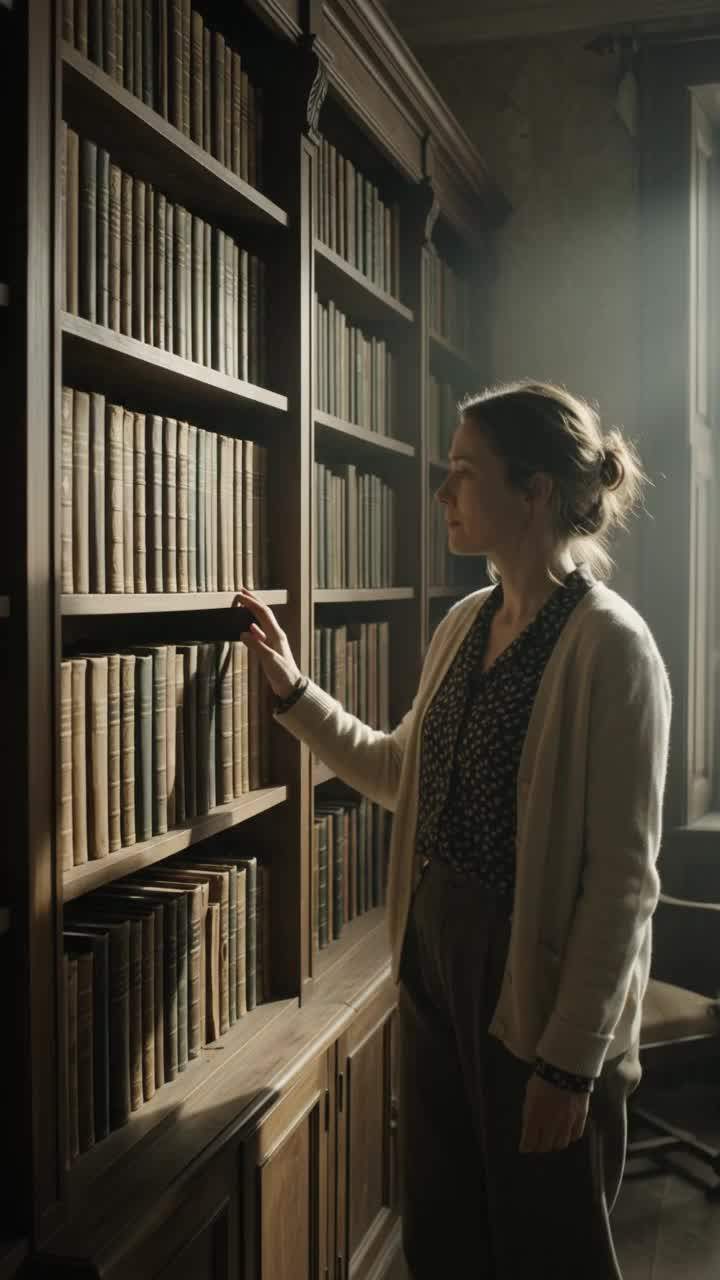
I ran my hand along the spines of the leather-bound books lining the tall shelves.
One book, a thick volume on local history, felt slightly loose, almost wobbly.
Curiosity piqued, I pulled it out, and the shelf behind it recessed with a soft click.
A section of the wall swung inward, revealing an opening, a dark, narrow passage.
My heart pounded with a mix of fear and exhilaration.
This was it; the key suddenly felt heavy in my pocket.
The hidden room was small, circular, and incredibly dusty, as if sealed for decades.
A single, iron-bound chest sat in the center.
My hands trembled as I used the antique key to unlock it.
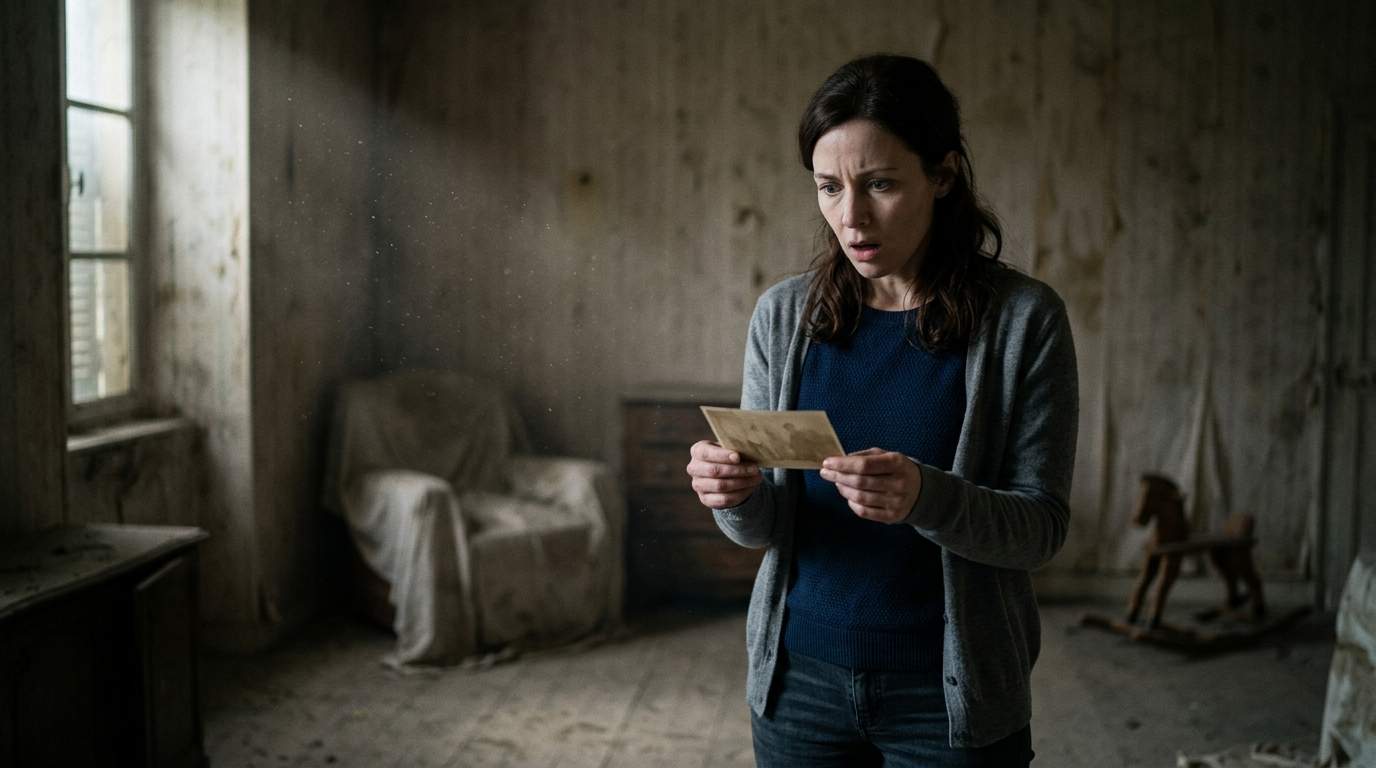
Inside, beneath layers of yellowed silk, I found a small leather-bound journal and a stack of old, brittle documents.
The journal belonged to my grandmother, Eleanor.
Her elegant handwriting filled its pages, but the words were stark, desperate, and terrifying.
It wasn't a diary of her days; it was a confession.
She detailed my grandfather Silas's ruthless land schemes, how he had systematically ruined the humble Miller family.
They owned a prime piece of land Silas coveted for his expanding timber business.
He orchestrated a complex legal fraud, stripping them of everything.
The journal described their despair, their eviction, and ultimately, the tragic deaths of Mr. and Mrs. Miller, who, stripped of their livelihood and dignity, took their own lives.
Advertisement
My grandmother, out of a twisted, desperate love for Silas, had meticulously helped him cover every trace.
She forged documents, bribed officials, and manipulated public opinion.
She wrote of her profound guilt, her sleepless nights, the weight of their secret pressing down on her for decades.
She lived a lie, building her life on the shattered dreams and spilled blood of others.
The accompanying documents confirmed everything.
Forged deeds, coded letters to lawyers, even a faded newspaper clipping reporting the Millers' mysterious "disappearance" from the town.
There was a small, tarnished silver locket with the initial "M" engraved on it, a final chilling relic.
My perfect, honorable grandfather was a monster, a predator who built his empire on human suffering.
And my sweet, gentle grandmother was his accomplice, a silent guardian of a horrific secret.
The very foundation of my identity, my family's noble narrative, crumbled around me.
The mansion, once a symbol of pride, now felt like a mausoleum of lies, its walls echoing with the ghosts of deceit.
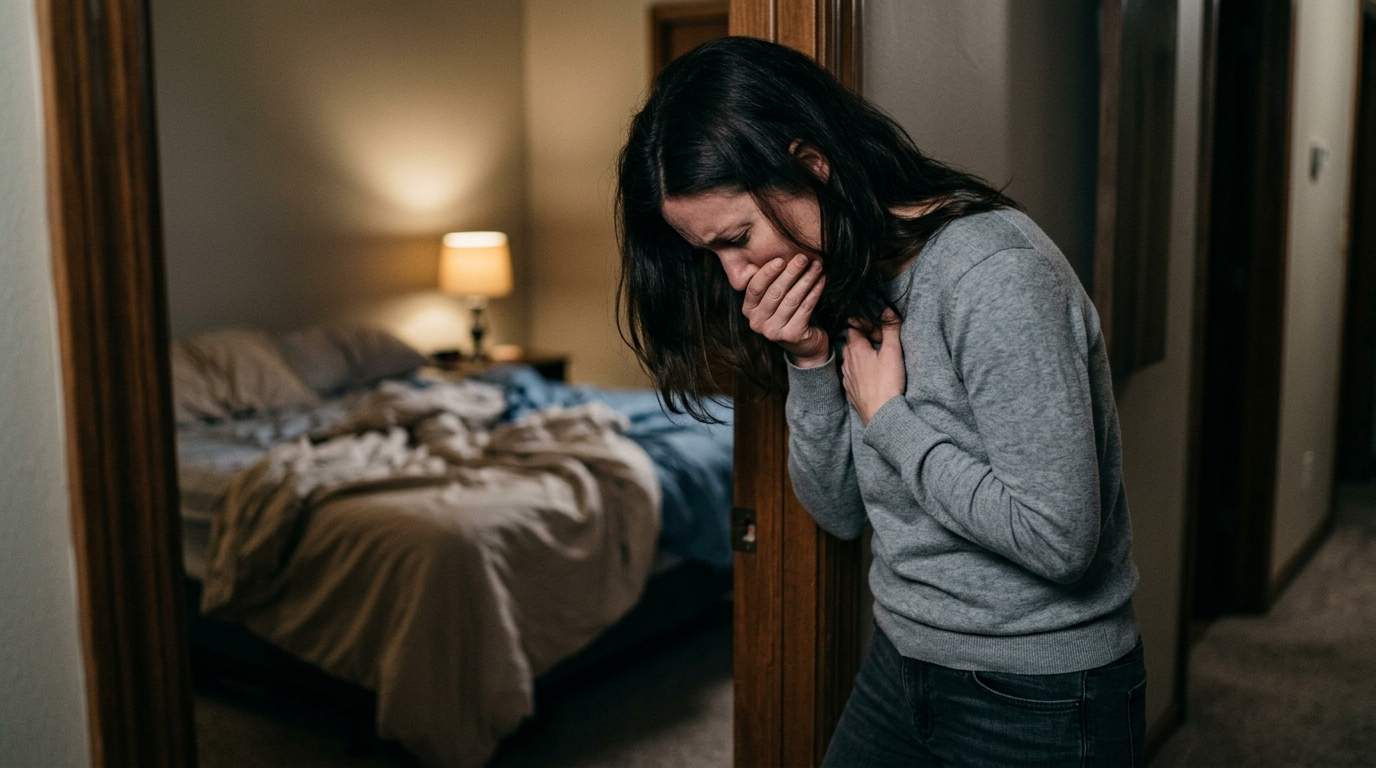
I called my father first, my voice shaking with a rage I’d never known.
"Dad, you won't believe what I found," I choked out, clutching the journal.
He listened, his silence on the other end a heavy, sickening admission.
"I knew," he finally said, his voice flat, "I didn't know all of it, but I suspected."
Suspected? He had lived in this house, under their shadow, and suspected?
The betrayal was a physical blow, worse than the secret itself.
My father explained how Grandma Eleanor, in her final years, had hinted at a burden, a darkness she carried.
He said he never pressed her, out of respect, out of fear.
Fear of what? Of shattering the perfect image, just as mine was shattered now?
My aunt, my father's sister, reacted with furious denial.
"Our parents were saints!" she shrieked over the phone, "You're delusional, Sarah!"
She accused me of fabricating evidence, of trying to destroy their legacy out of spite.
The family dinner we had planned became a screaming match, accusations flying like poisoned darts.
The rift was immediate, deep, and utterly irreversible.
My aunt refused to speak to me, disowning me from her side of the family.
My father, caught between a rock and a hard place, retreated into a sorrowful silence, unable to defend his parents yet unable to condemn them fully.
He begged me to keep it quiet, for the "family's honor."
Honor? What honor was left?
The weight of their deception was crushing, suffocating.
I looked at my reflection in a darkened window of the mansion, seeing a stranger.
Who was I, if my roots were poisoned?
The beautiful home I inherited now felt like a prison, trapping me with a truth too dark to bear alone.
Every portrait on the wall seemed to mock me, their painted smiles hiding decades of lies.
My beloved grandparents were strangers, their love story now a grotesque façade built upon a grave.
I held the locket, the small "M" burning into my palm.
The silence of the mansion was no longer comforting; it was deafening, filled with untold misery.
My family was broken, fractured by a truth that should have stayed buried.
And I, the inheritor, was left to pick up the pieces of a legacy stained with betrayal and blood.