Blackwood Manor was supposed to be my fresh start, a legacy of comfort and old-world charm.
It was my inheritance, a gift from my late father, after years of wanting to escape city life.
I’d always loved its sprawling gardens and the quiet mystery of its endless rooms.
But beneath the grandeur, I always sensed something unspoken, a whisper in the shadows.
I started renovating, peeling back layers of wallpaper and decades of history.
Every creaking floorboard, every stained-glass window, told a silent story.
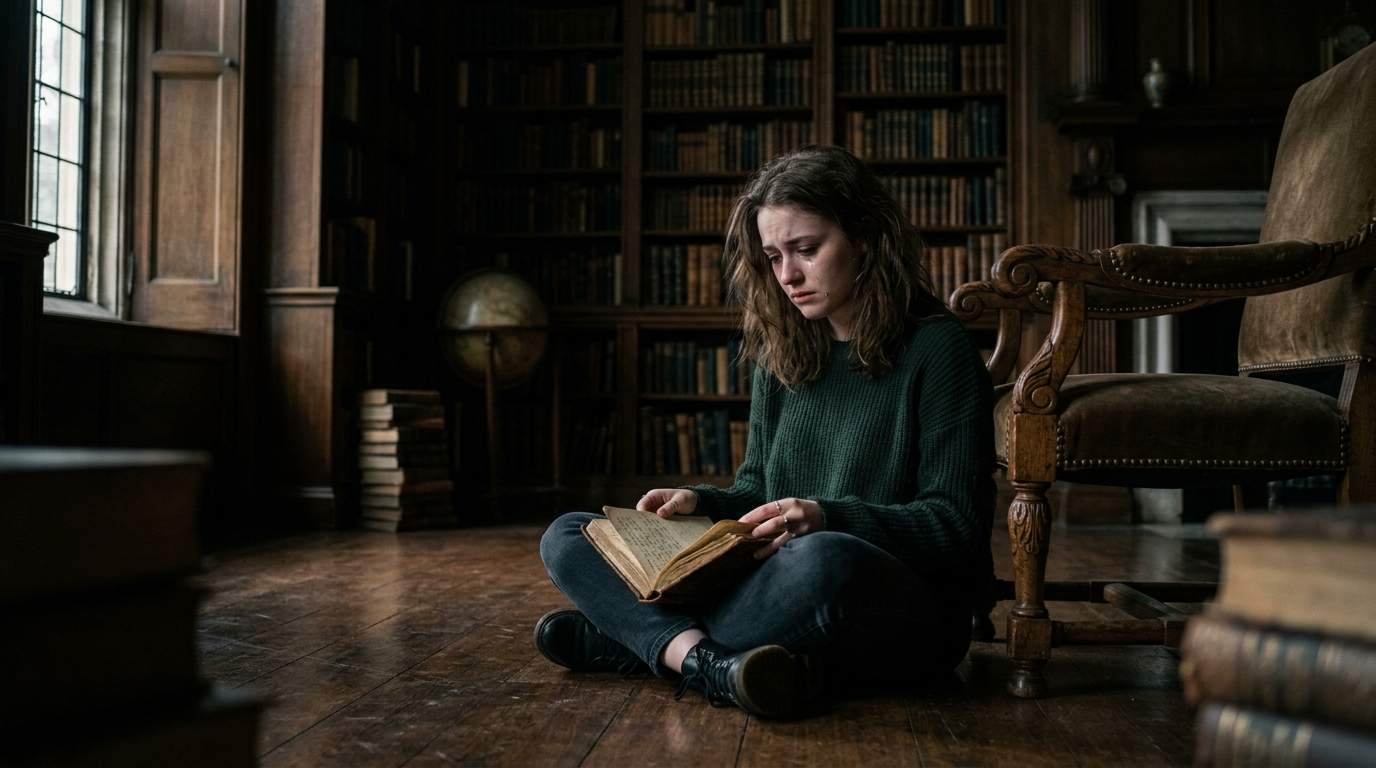
One rainy afternoon, I was in Dad's old study, dusting the towering bookshelves.
My hand brushed against a peculiar section, slightly recessed, almost imperceptible.
It was a seam, perfectly camouflaged, almost impossible to spot unless you knew it was there.
A faint click echoed in the silent room as a hidden door swung inward with a soft sigh.
My heart pounded; this was it, the secret I'd always dreamed of finding in this ancient house.
The air was thick and cold, smelling of damp earth and forgotten time, a scent that prickled my skin.
Inside, a small, windowless chamber waited, bathed in absolute, suffocating darkness.
I fumbled for my phone, its flashlight beam cutting a harsh swathe through the gloom.
Dust lay thick on everything, a blanket over decades of silence, undisturbed and heavy.
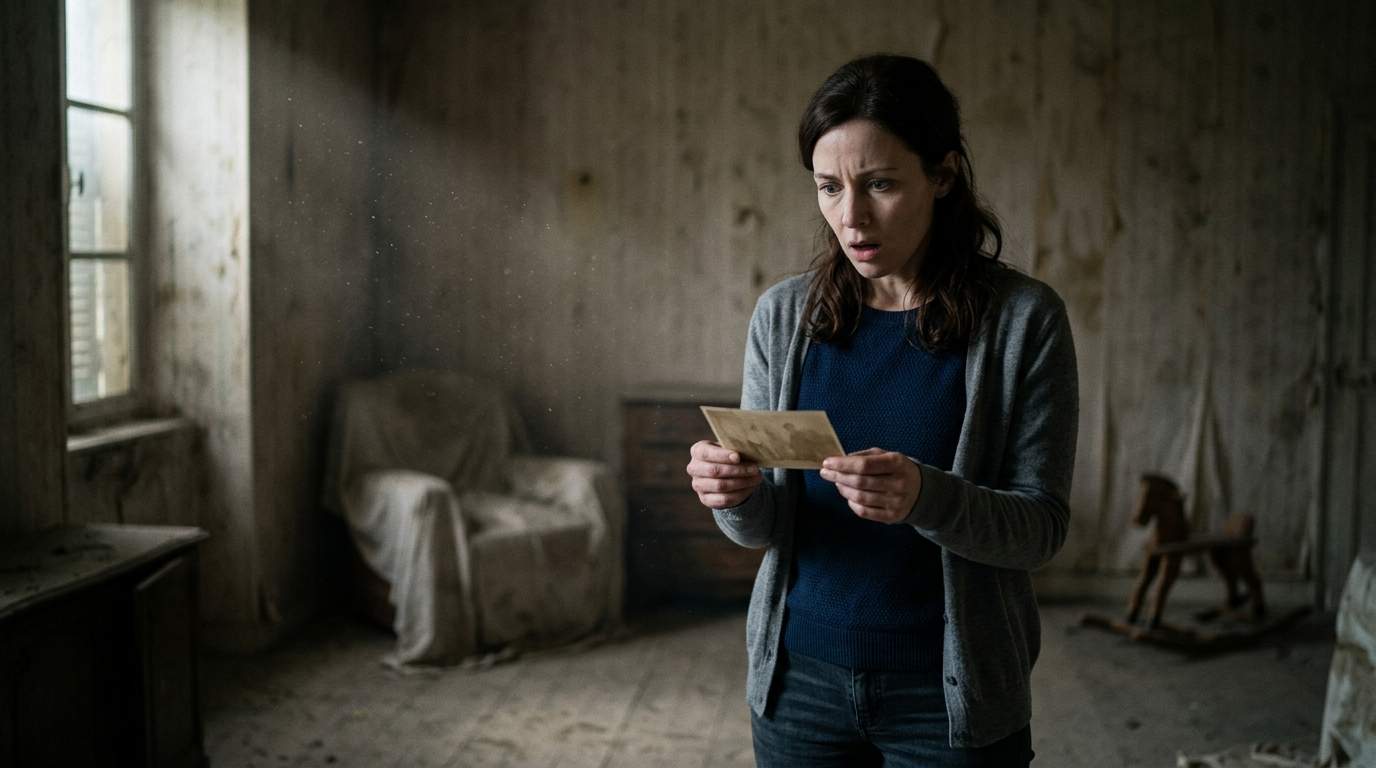
On a small, antique desk, barely visible, sat a single leather-bound journal.
It was unmistakably my father’s, his initials "R.M." embossed in faded gold on the cover.
My stomach clenched with a potent mix of excitement and sudden, unnameable dread.
I carefully picked it up, feeling the surprising weight of years, of untold stories, in my hands.
Back in the warmth of the study, I settled into his old, familiar armchair, journal clutched tight.
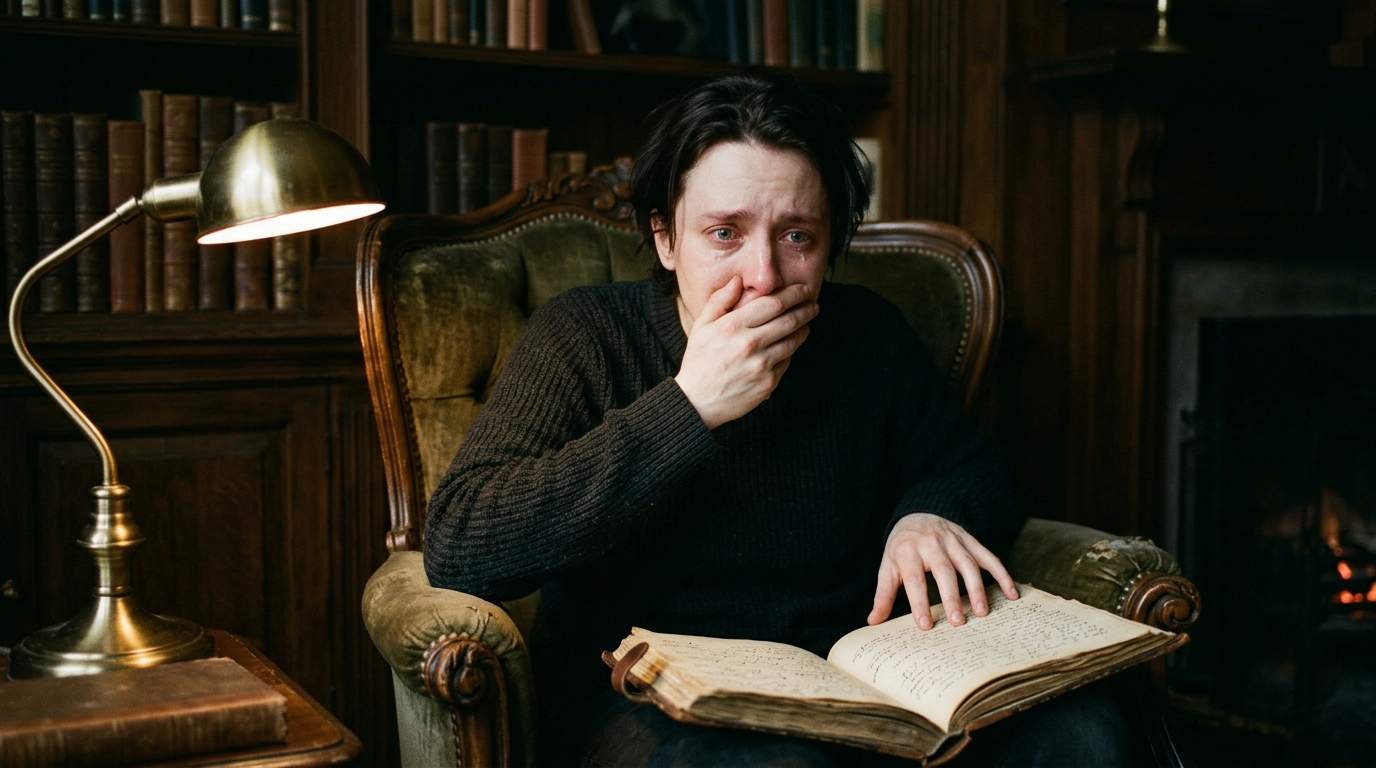
The first few pages were mundane, daily observations, weather reports, garden notes.
Then, the entries shifted, growing darker, filled with a palpable sense of fear and desperation.
He wrote about "the incident" in hushed, fragmented sentences, his elegant script becoming erratic.
A chill snaked up my spine as I read about a "terrible accident" involving Uncle Arthur.
Uncle Arthur, the one no one ever spoke about, the mysterious disappearance decades ago.
My family always said he just "left suddenly" for Europe, never to return, an eccentric wanderer.
But Dad's journal painted a horrifyingly different picture, far more sinister and permanent.
He described a frantic night, arguments about money, about the Blackwood Manor estate itself.
A struggle in the grand library, a desperate shove, a sickening thud echoing through the vast space.
Advertisement
Not an accident, not really, more like a desperate, violent act of self-preservation gone wrong.
My father hadn't committed the act himself, but he was there, a silent, terrified witness.
He wrote of seeing his own brother, my Uncle Robert, push Arthur with an enraged fury.
Arthur hit his head on the grand fireplace hearth, the impact brutal and final, and he didn’t get up.
The journal entries became a chilling, slow-motion confession, not of murder, but of a horrifying cover-up.
Dad wrote about the terror, the desperation to protect his brother, Robert, and the family name.
They buried Arthur's body themselves, late that night, in the manor grounds, under the old oak tree.
They fabricated the story of his sudden departure, meticulously maintaining the lie for decades.
Every family gathering, every holiday dinner, every comforting memory was built on this monstrous secret.
My entire childhood was a lie, a carefully constructed facade of normalcy and false happiness.
My father, the man I revered, was an accomplice to murder, a keeper of unspeakable darkness.
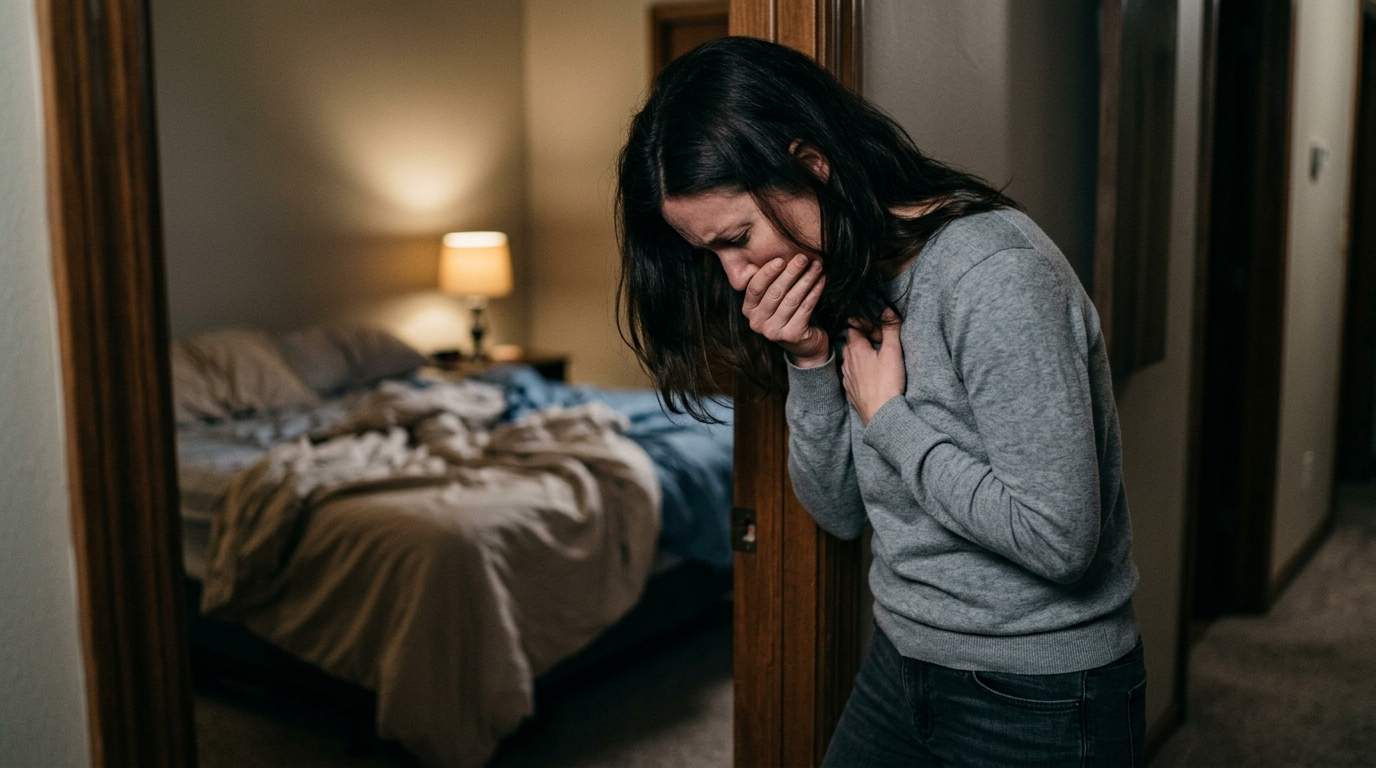
The weight of his words pressed down on me, suffocating my breath, stealing the air from my lungs.
My hands trembled violently, the journal shaking in my grasp, the leather suddenly slick with sweat.
I looked around the study, seeing it not as a sanctuary, but as a silent, opulent tomb.
The manor's walls, once comforting, now felt like a prison of secrets, trapping me within their stone.
Every memory I had of my father, of my Uncle Robert, was now irrevocably tainted, poisoned.
Their smiles, their advice, their shared laughter—all hollow, all sickeningly false.
I felt a profound, aching betrayal, a wound deeper and more agonizing than I could have imagined.
How could they live with this burden? How could they look me in the eye, knowing this truth?
The "legacy" of Blackwood Manor wasn't charm or history; it was blood, lies, and buried bodies.
My own identity felt fractured, built on a foundation of sand, ready to crumble into dust.
The truth was a venom, seeping into every corner of my being, corrupting everything it touched.
I thought I knew my family, but I was utterly, terribly, catastrophically wrong about them.
Now, the silence of the manor wasn't peaceful; it screamed with Arthur's unquiet ghost.
What was I supposed to do with this horrific, world-shattering knowledge?
Confront Uncle Robert, now an elderly, respected pillar of our community, lauded for his integrity?
Go to the police, expose my family, shatter everything they had carefully built and maintained?
My mind raced, trapped in a terrifying spiral of shock, grief, and incandescent, boiling rage.
The journal lay open on my lap, its damning words a permanent, gaping scar on my soul.
The weight of this secret felt heavier than the old manor itself, more crushing than its stone walls.
My future, my past, everything felt irrevocably changed, irreversibly tainted by those pages.
I had found the mansion's deepest secret, and it had utterly, completely destroyed me.