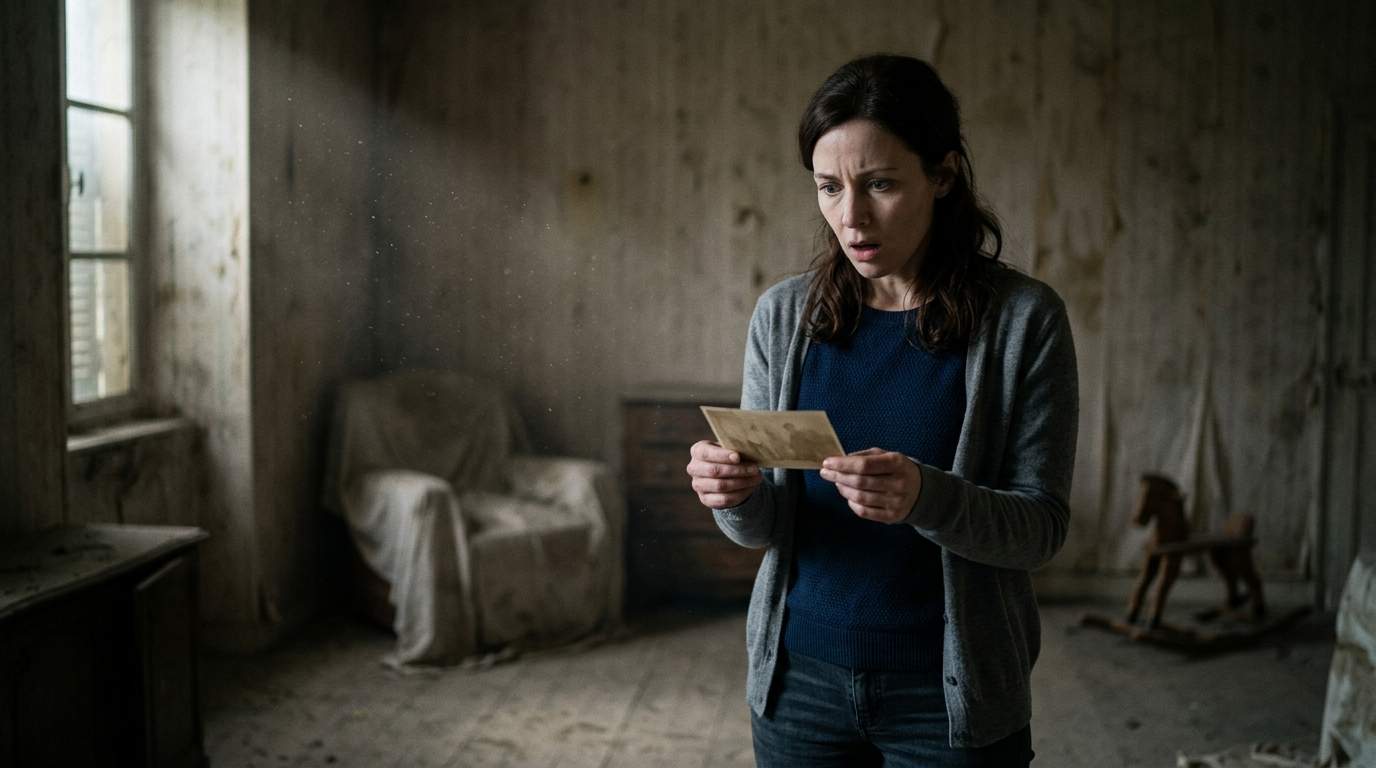
The musty scent of forgotten dreams still clings to the air in Oakhaven Manor, even after all these years.
My grandmother left it to me, a towering legacy of stone and secrets, after she passed.
I’d always viewed it as a symbol of our family’s impeccable reputation, a beacon of old money and an unblemished past in our quiet town.
This sprawling estate, with its whispering gardens and grand, silent rooms, was meant to be a comfort, a connection to my roots.
For weeks, I sifted through heirlooms and memories, each dust-covered relic telling a story, or so I thought.
My days were spent rediscovering forgotten nooks, admiring antique furniture, and tracing the faded patterns on ancient tapestries.
I was in Grandpa Elias’s old study, a room rarely used since his death decades ago, its atmosphere heavy with his lingering presence.
The air was thick with the scent of aged paper and polished wood, a scent that once felt comforting.
The mahogany bookshelves, filled with leather-bound tomes on law and philosophy, felt especially weighted with unspoken history.
Running my hand along a seemingly ordinary, unassuming panel behind a particularly large, antique globe, I felt a slight, almost imperceptible give.
My heart gave a hopeful leap – a thrilling secret passage, perhaps, like something out of the adventure books I devoured as a child.
This was the stuff of childhood fantasies, an echo of my youthful imagination playing hide-and-seek in these very halls.
It wasn't a passage leading to another room, however.
It was a small, incredibly cleverly disguised vault, almost invisible against the dark, intricately carved wood of the wall.
It took hours of careful prodding, a few scraped knuckles, and finally, a surge of adrenaline to discover the hidden latch mechanism.
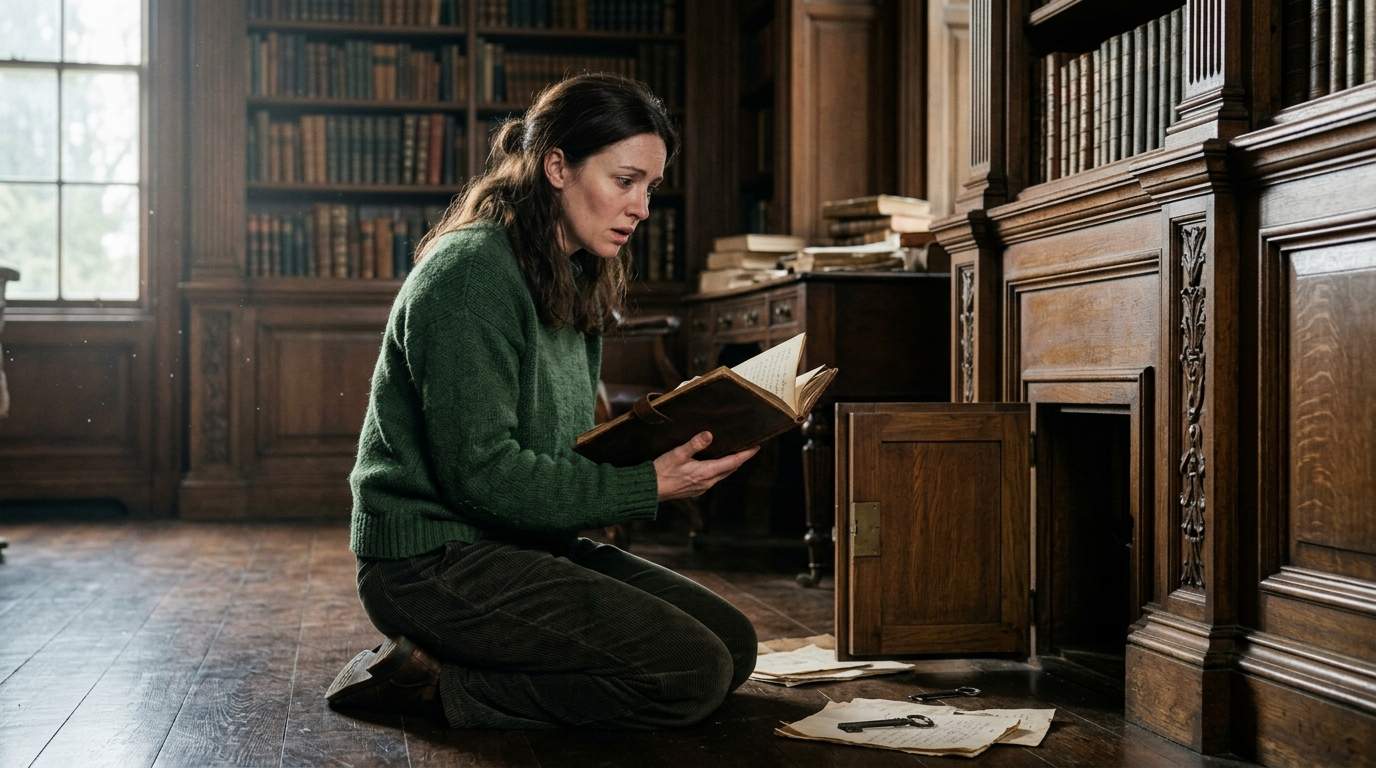
With a soft, almost reverent click, the heavy panel sprang inward, revealing a dark recess.
The air inside was still, ancient, carrying the faint, distinct smell of very old paper, dry wood, and something faintly metallic, like forgotten coins.
My anticipation was a palpable, almost suffocating thing, a mixture of excitement and trepidation.
Inside, nestled amongst yellowed, brittle silks and layers of dust, were stacks of meticulously bound documents, a tarnished silver locket with an unfamiliar engraving, and a thick, leather-bound journal.
The journal, with its faded gold lettering and Elias’s distinctive, elegant script on the first, slightly brittle page, immediately drew my attention.
I carefully pulled it out, my fingers trembling slightly with a mix of awe and a strange sense of foreboding.
The silence of the study pressed in around me as I opened the journal to its first entry.
As I read, the careful cursive words blurred and sharpened again, coalescing into a horrifying, sickening truth that punched the air from my lungs.
My grandfather, the esteemed Elias Hawthorne, revered philanthropist, community pillar, and the man I had idealized my entire life, wasn't the man I thought he was at all.
His early fortune, the very foundation of our family’s immense wealth and unblemished reputation, wasn't built on shrewd investments or tireless hard work alone, as the family legend claimed.
It was built on fraud, on the ruthless and calculated exploitation of a smaller, struggling textile mill owner named Arthur Finch.
Elias had systematically sabotaged Finch's business from the inside, stolen his innovative weaving patents through corporate espionage, and then, when Finch was on the brink of complete financial ruin, Elias swooped in.
He bought Finch out for mere pennies on the dollar, effectively ruining Finch and his entire family, leaving them destitute and voiceless.
The journal detailed the entire, cold-blooded scheme in Elias’s own precise, chilling hand, right down to forged documents, bribed officials, and silenced witnesses.
Advertisement
There were desperate letters from Arthur Finch himself, tucked into the journal’s pages, heartbreaking pleas for justice that went unanswered, each word a scream across decades.
Pictures of a once-happy Finch family, smiling broadly and dated just before their devastating downfall, were also there, their joy a stark, cruel contrast to the despair detailed in Elias's methodical, heartless entries.
My family’s legacy, the one I had always been so fiercely proud of, was not a beacon of achievement but a grotesque monument to theft, betrayal, and human suffering.
A cold, profound dread settled deep in my bones, chilling me to the core.
Every single heirloom, every grand room in this magnificent mansion, every comforting story I’d ever been told about the benevolent Elias Hawthorne now felt utterly tainted and corrupt.
The warmth of nostalgia was violently ripped away, replaced by a chilling realization that my entire understanding of who we were, where we came from, was a meticulously constructed, deeply cynical lie.
This wasn't just old family drama or a petty squabble over money; this was a calculated crime, a profound moral bankruptcy that had echoed silently through generations, shaping our lives in ways I couldn't yet fathom.
My chest tightened painfully, a searing knot of grief, fury, and utter disillusionment forming in my throat, choking back any sound.
How could my grandmother have lived in this house, benefitting from this horror?
How could anyone in my family have known this secret and kept it buried, allowing the lie to fester?
Had she known?
The possibility that she was complicit, or at least aware, was a fresh, agonizing wound, tearing at the fabric of my trust.
The overwhelming weight of this secret, this terrible, life-altering truth, pressed down on me, heavy and suffocating, threatening to crush me.
My world, once so stable, so predictable, now felt like a precarious house of cards, built on quicksand, ready to collapse with one wrong move, one whisper of the truth.
I looked from the incriminating journal to the silent, opulent room, then out at the manicured gardens bathed in indifferent sunlight, and knew with a bone-deep certainty that nothing would ever be the same.
The esteemed Hawthorne name, once a source of immense pride and comfort, now felt like a heavy curse, a scarlet letter woven invisibly into the very fabric of my being, staining everything it touched.