The old Victorian mansion on Elm Street had always been my sanctuary, a place filled with whispered secrets and forgotten dreams.
Every summer, I'd trace the ornate carvings in its banisters, imagining the lives lived within its grand, echoing halls.
But there was one room, at the very end of the long upstairs corridor, that remained perpetually locked, perpetually shrouded in an impenetrable mystery.
My mother, bless her heart, always called it "just storage," a gentle warning in her eyes that dared me not to inquire further.
Her smile was a masterpiece of composure, masking a fragility I only now understand.
She passed last spring, leaving behind a silence that felt heavier than the mansion's ancient stones.
Among her most cherished possessions, I found a small, tarnished silver key, intricately carved with a single, unfamiliar initial.
My heart pounded with a mix of dread and anticipation, recognizing the shape of the keyhole on that forbidden door.
I knew, with a chilling certainty, that this key was meant for the room she had guarded with her life.
Weeks turned into months as I stared at that key, fear battling a desperate need for answers.
Every creak of the floorboards seemed to whisper her name, beckoning me toward the truth.
The mansion, once a comfort, now felt like an enormous, silent accuser.
Finally, one stormy Tuesday afternoon, the rain lashing against the tall windows, I gripped the cold metal and ascended the grand staircase.
Each step echoed in the cavernous silence, amplifying my racing heartbeat.
The air grew heavy as I approached the forgotten door, its dark wood imposing and unwelcoming.
My hand trembled slightly as I inserted the key, feeling the tumblers click with a soft, finality.
A wave of dust-laden air, smelling faintly of old paper and forgotten lavender, rushed out to meet me.
The room, surprisingly small for such a grand house, was dimly lit by a single, grimy window overlooking the overgrown gardens.
It wasn’t "storage" at all; it was a shrine, a carefully preserved time capsule.
A single, antique wooden desk stood against one wall, covered in a delicate lace cloth.
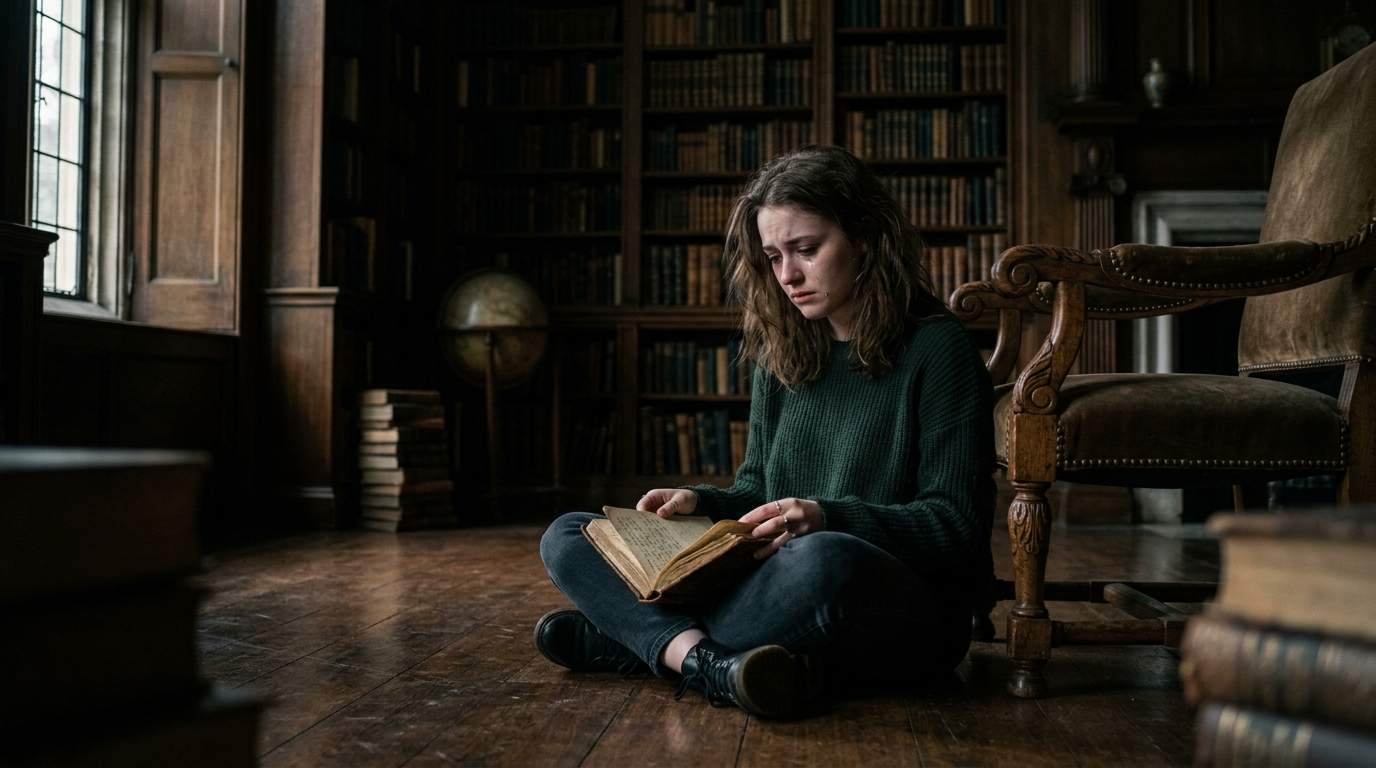
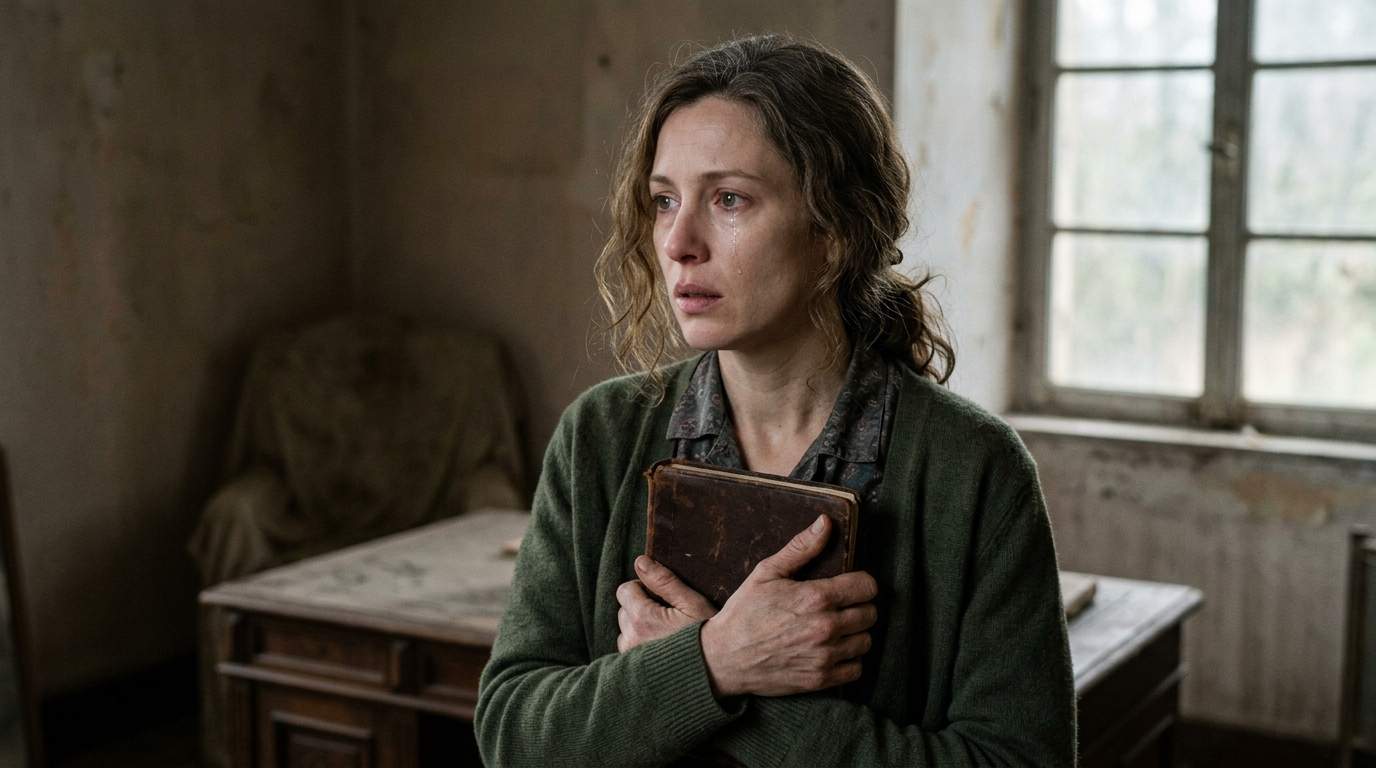
On the desk, nestled amongst dried flowers and faded photographs, lay a leather-bound diary.
Its pages were brittle with age, and the ink, though faded, was unmistakably my mother’s elegant script.
My fingers traced the embossed initials on its cover: "A.R.S." – not my mother’s maiden or married initials.
A cold knot formed in the pit of my stomach, a premonition of something deeply unsettling.
I opened the diary, my eyes scanning the very first entry, dated years before I was born.
The words were a jolt, a punch to my gut that stole my breath away.
"Today, I became Sarah Thompson," it began, "leaving everything behind, including my name and my son."
My world tilted, the mansion walls seeming to spin around me in a dizzying vortex of disbelief.
My mother, Sarah Thompson, had another name?
Advertisement
And a son?
A brother I never knew existed?
I flipped through the pages frantically, each word a hammer blow to the life I thought I knew.
The diary detailed a past life, a different husband, a child, and a desperate flight.
It spoke of a crime she witnessed, a dangerous man, and a complete, terrifying reinvention.
She had fled across states, changed her identity, and built a new life, a new family, with my father.
Everything about my childhood, my secure upbringing, my mother's quiet strength, was a carefully constructed facade.
My father, the man I adored, must have known.
He must have been complicit in this elaborate deception, this monumental lie.
The photographs on the desk suddenly made sense, showing a young woman, strikingly similar to my mother, holding a baby boy.
This boy, my unknown brother, would be decades older than me, living a life I knew nothing about.
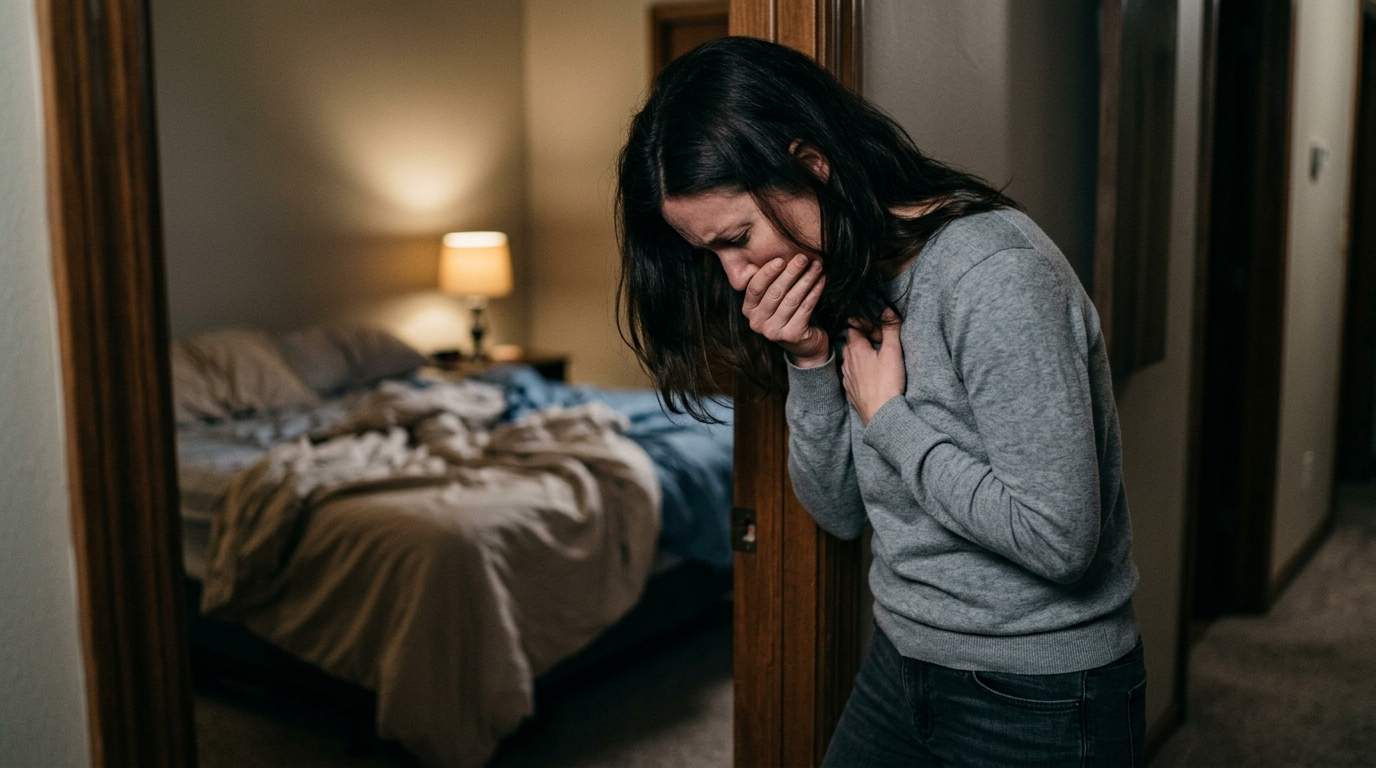
The pain was physical, a sharp, burning agony in my chest.
My mother wasn't just Sarah Thompson; she was someone else entirely, with an entire secret history.
And I, her daughter, was a product of that secret, a life founded on a complete and utter fabrication.
The love she showed me, the stories she told, suddenly felt tainted, hollow.
Was any of it real?
Was I real?
The faint scent of old rosewater clung to the air, a phantom reminder of her presence, now tinged with a bitter irony.
My eyes, burning with unshed tears, scanned the pages, absorbing every agonizing detail of her hidden life.
Her first name, Anna, was alien to me, belonging to a woman I had never known.
Her words painted a picture of a young, terrified mother, desperate to protect her child from an unseen threat.
She described a husband, Mark, who was involved in something dark, something unspeakable.
The son, Thomas, was mentioned with such heartbreaking tenderness, a stark contrast to the betrayal I felt.
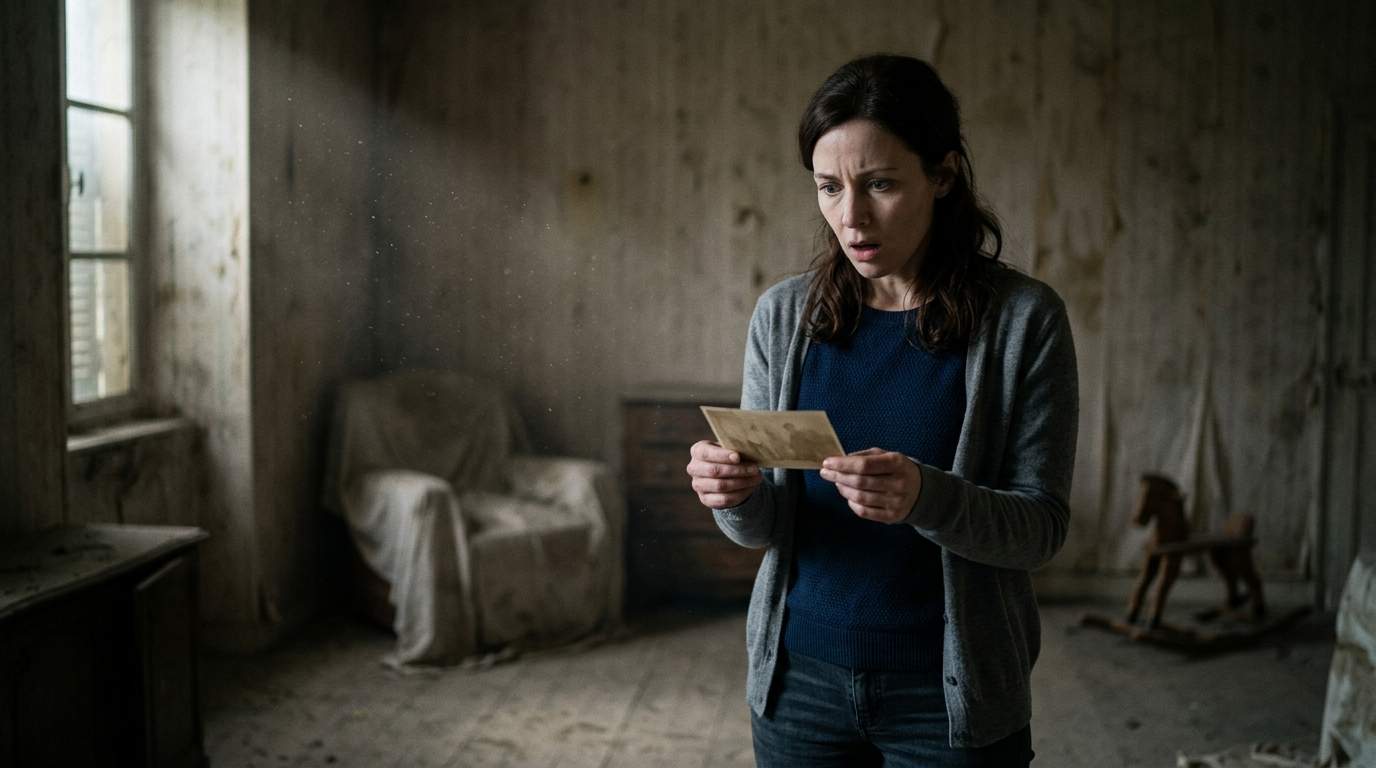
There were faded photographs tucked between the pages, snapshots of a life meticulously erased.
One photo showed a beaming young woman, undeniably my mother, cradling a fair-haired toddler.
Thomas had his mother's eyes, wide and curious, innocent to the turmoil that would tear his family apart.
Another entry spoke of a frantic escape, a midnight train, and the agonizing decision to leave Thomas with his grandmother.
"It was the only way," she had written, her despair palpable even decades later.
"To save him, I had to vanish; to vanish, I had to forget."
But she hadn't forgotten; she had simply buried it, deep within the walls of this mansion and the depths of her soul.
And my father, George Thompson, the steadfast, loving man who raised me, was part of this elaborate charade.
Did he know of Thomas?
Did he know that the woman he married, the mother of his child, had already been a mother?
A wave of nausea washed over me, the reality of the deception hitting me with brutal force.
Every family dinner, every holiday, every "I love you" now felt like a scene from a play.
The foundation of my entire existence, the solid ground beneath my feet, had crumbled into dust.
I remembered my mother's occasional wistful gazes out of windows, her moments of quiet melancholy.
I had always attributed them to the natural sorrows of life, never to a hidden tragedy of this magnitude.
Her love, once unconditional and pure, now felt conditional, built upon a denial of her true past.
What kind of person was I, then?
Advertisement
A half-truth?
A second chance for a woman who ran from her first?
The very identity I had always cherished, as Sarah and George Thompson's daughter, felt like a borrowed cloak.
The mansion, which had always symbolized stability and heritage, now loomed as a monument to artifice.
Its grand rooms echoed not with family laughter but with the ghostly whispers of secrets and regret.
I saw my childhood self, playing innocently in these halls, oblivious to the monumental lie that underpinned her world.
The innocence was gone, shattered irrevocably by the words in that diary.
My father’s memory, once a beacon of strength, was now clouded with doubt and a terrible sense of betrayal.
How could he have allowed this?
How could he have lived with this secret, protecting her while I lived in a fabricated reality?
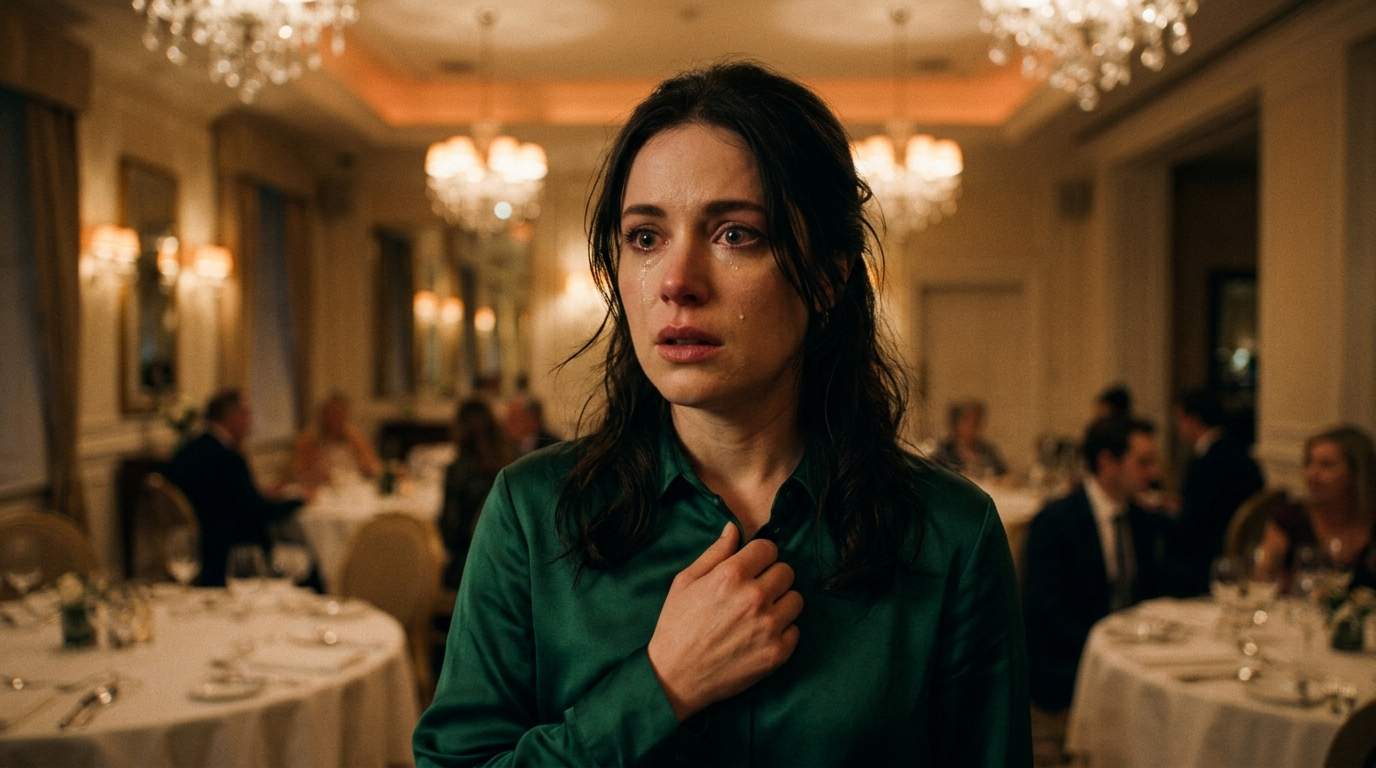
The pain was a sharp, physical ache, residing deep in my chest, making every breath an effort.
It wasn't just a story; it was my story, twisted and rewritten without my knowledge or consent.
I pictured Thomas, my half-brother, somewhere out in the world, living his own life, unaware of me.
Did he resent his mother for abandoning him?
Did he wonder about her fate?
The thought of him, a tangible link to her true past, made the betrayal even more profound.
He was her first, her original family, and I was the consequence of her desperate flight.
The diary didn't reveal the "dangerous man's" name, only alluded to his power and the mother's fear.
It left too many questions unanswered, too many gaping holes in the narrative.
Was this man still a threat?
Was my life, even now, potentially endangered by my mother's past?
The fear mingled with my grief and anger, creating a toxic cocktail of emotions.
My world, once predictable and safe, had become a shifting, treacherous landscape.
I felt an overwhelming urge to scream, to lash out at the injustice, at the sheer weight of it all.
But the mansion's silence swallowed every sound, every potential outburst.
I was alone with this shattering truth, utterly and completely isolated.
The light outside began to fade, casting long, dramatic shadows across the room.
The old mansion seemed to sigh around me, a silent witness to generations of concealed histories.
I traced the worn cover of the diary again, feeling the weight of its secrets in my hands.
This was not just a story of my mother; it was a story of survival, of sacrifice, and of profound, painful lies.
And now, it was my burden to carry, my truth to confront.
The girl who had walked into that room earlier that day was gone, replaced by a woman scarred by a reality she never asked for.
My life, as I knew it, was utterly and irrevocably destroyed.
The future stretched before me, a terrifying blank canvas, stripped of the comforting colors of my past.
I wondered what Thomas looked like now, if he carried any of my mother's defining traits.
Would he ever know?
Would he ever know about me?
The search for answers would consume me, I knew, becoming my new, painful purpose.
But the first step, the first terrifying step, was understanding what this meant for me.
Who was I, really, without the story I had always believed?
The mansion had given up its ghost, but its secrets had taken mine.