
I never wanted to go back to that old house.
My Uncle Silas’s death had been sudden, a heart attack in his sleep.
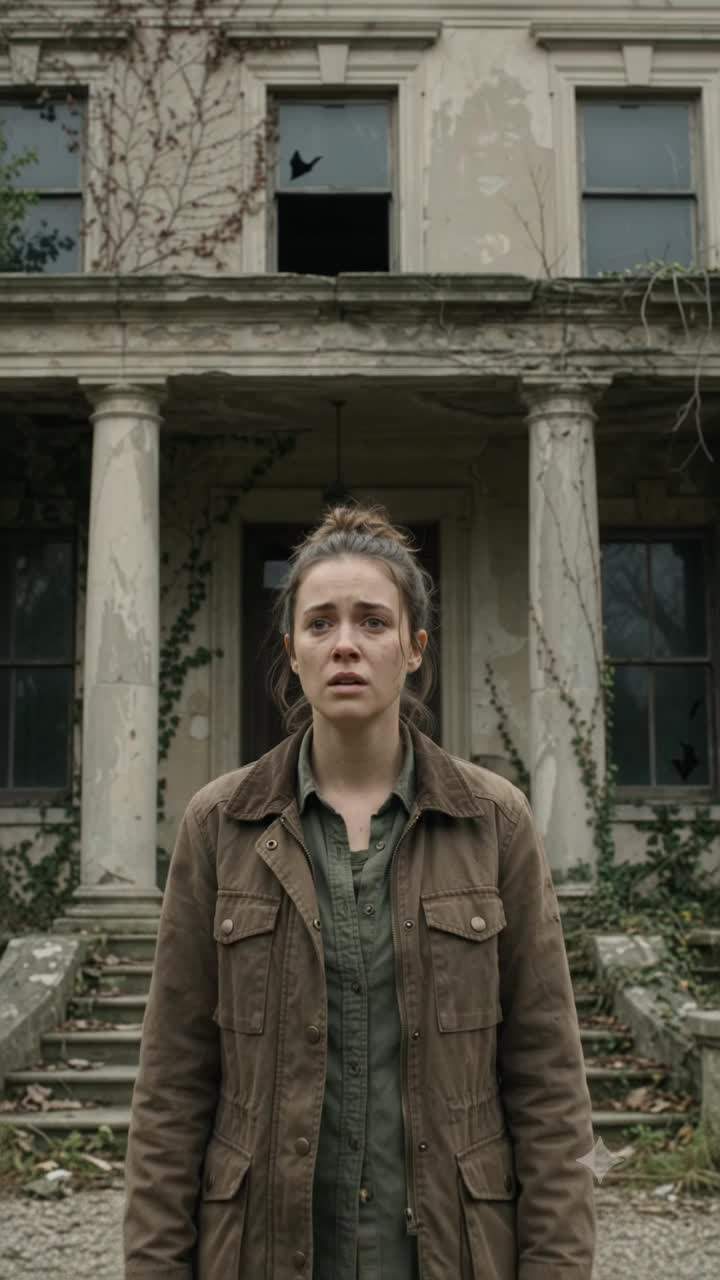
He was estranged, a reclusive figure I barely knew, yet his will named me sole heir to his sprawling, decaying mansion on the outskirts of town.
It felt less like an inheritance and more like a burden, a grim obligation.
My first steps inside felt heavy, like entering a forgotten tomb.
Dust motes danced in the slivers of sunlight piercing the grime-coated windows.
The air hung thick with the scent of age, mildew, and something else… something indescribable.
Weeks passed, a blur of lawyers, movers, and the endless, cavernous rooms.
Each antique held a silent story, each portrait seemed to watch me with judging eyes.
I was tasked with cataloging everything, deciding what to keep, what to sell.
It was during this tedious process, in the mansion’s vast, forgotten library, that I stumbled upon it.
Behind a towering shelf filled with leather-bound tomes on obscure histories, my hand brushed against a loose panel.
Not just loose, but almost imperceptible.
My heart quickened, a childish thrill mixed with a growing sense of dread.
I pressed harder, and with a soft click, a narrow, dark opening appeared.
It wasn't a crawl space; it was a secret doorway, leading to a hidden room I never knew existed.
My flashlight beam cut through the absolute darkness within.
The air was stagnant, heavy, as if no one had breathed it for decades.
It was a small room, sparsely furnished, but what lay on the dusty writing desk froze me.
A stack of yellowed journals, their covers brittle with age.
Next to them, a faded silver locket, its intricate engravings almost worn smooth.
And beneath the locket, a single, grainy photograph, curled at the edges.
My hands trembled as I reached for the first journal.
The handwriting was meticulous, looping, undeniably my uncle’s.
I began to read, slowly, hesitantly, each word a step deeper into a nightmare.
It started innocently enough, mundane entries about the weather, gardening, social calls.
Then, the tone shifted.
He wrote of a woman, a forbidden love, a passionate affair he’d kept hidden from everyone.
My aunt had been his wife, a respectable woman from a prominent family, but this woman… she was different.
Advertisement
His words painted a picture of a love so intense, so desperate, it felt tangible.
Then came the entries about a child.
A baby girl.
Born in secret, raised in secret, just a few miles from this very mansion, while my uncle maintained his public life with my aunt.
My breathing became shallow, each line a punch to my gut.
He chronicled her childhood, her laughter, her questions about her absent father.
My uncle’s guilt dripped from every page, his justifications for his secrecy turning to pleas for forgiveness.
I flipped frantically through the journals, searching for a name, a reason, a culmination.
Then I saw it, in the final journal, dated just a few months before his death.
A desperate entry, detailing his plan to finally acknowledge his daughter, to tell her the truth about her parentage and his hidden life.
And then the bombshell.
The girl, his secret daughter, wasn’t just a daughter.
She was my mother’s sister.
My aunt’s sister.
My grandmother’s secret child with my uncle.
The photograph in my hand suddenly made agonizing sense.
It wasn’t just a woman; it was my grandmother, decades younger, holding a newborn baby, her eyes filled with a love that spoke volumes.
My uncle was her father, my own grandmother's secret lover, and my mother’s father.
It meant my mother was my uncle’s daughter, not my grandfather’s.
Everything I thought I knew about my family, about my parents’ marriage, about my own existence, shattered into a million pieces.
The mansion wasn't just holding secrets; it was built on them, sustained by a web of deceit that spanned generations.
My entire life was a lie, a carefully constructed facade built on an affair, a secret child, and a betrayal so profound it echoed through time.
The weight of the truth pressed down on me, suffocating.
I looked at the locket again, then at the photograph, then back at my uncle’s frantic last entry.
He wanted to reveal the truth before he died.
He wanted to right his wrongs.
But now, he was gone, and the devastating burden of this secret had fallen squarely on my shoulders.
I was no longer just an heir; I was the keeper of a truth that could destroy everything.
My family, the people I loved, had been living a lie for decades.
And I had just discovered it, alone, in a dusty, hidden room.
What was I supposed to do?





