Moving into the Blackwood family mansion was supposed to be a dream come true.
Mark, my husband, had inherited it after his parents passed, a grand old place on the outskirts of town.
It was sprawling and majestic, full of history, but a strange chill always seemed to cling to the air.
I tried to embrace it, to make it our home, but an unsettling quiet permeated its many rooms.
Mark loved this house, he said it held all his childhood memories, but he rarely spoke about them in detail.
There were so many locked doors, so many places he just called "storage" or "off-limits."
I always respected his boundaries, understanding that grief and tradition ran deep in his family.
But a persistent draft in the library, near a massive, built-in bookshelf, started to bother me.
It was more than just a draft; it felt like air was being pulled from somewhere unseen.
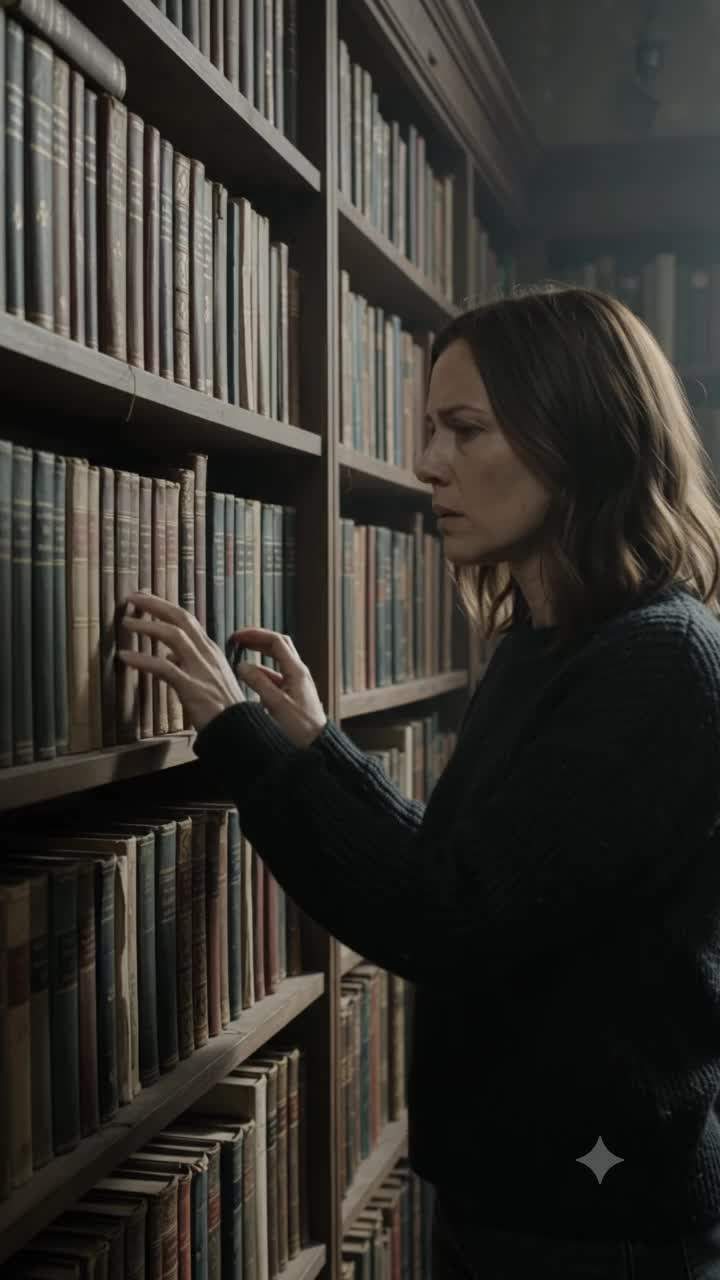
One afternoon, dusting the old leather-bound books, I noticed a subtle seam in the paneling behind the shelf.
It wasn't a natural seam for the wall; it was too precise, too deliberate.
My heart started to thump a little faster, a mix of curiosity and a nascent fear.
I traced the line with my finger, feeling a faint indentation, a tiny, almost invisible latch.
A whisper of an old story, perhaps of hidden passages, flickered through my mind.
Mark was away on a business trip, as he often was, leaving me alone with my thoughts and this grand, silent house.
Over the next few days, the urge to investigate became an obsession I couldn't ignore.
I researched old architectural plans for the mansion, painstakingly digging through city archives online.
Nothing showed a room behind that particular section of the library wall.
It was as if this space simply didn't exist on paper.
Armed with a flashlight and a growing sense of dread, I returned to the library.
My fingers fumbled with the tiny latch, a mechanism so old it barely responded to pressure.
Finally, with a soft click that echoed unnaturally loud in the silence, the panel shifted.
A crack appeared, revealing absolute darkness beyond.
A gust of stale, heavy air, thick with dust and the smell of old paper, wafted out.
My breath caught in my throat, a primal instinct screaming at me to stop.
But the sheer mystery of it pulled me forward like an invisible thread.
I pushed the panel further, revealing a narrow, hidden doorway.
The beam of my flashlight cut through the oppressive black, illuminating a small, forgotten room.
It was not a storage room, nor a dusty old pantry.
This was a chamber that had been deliberately sealed away, for decades perhaps.
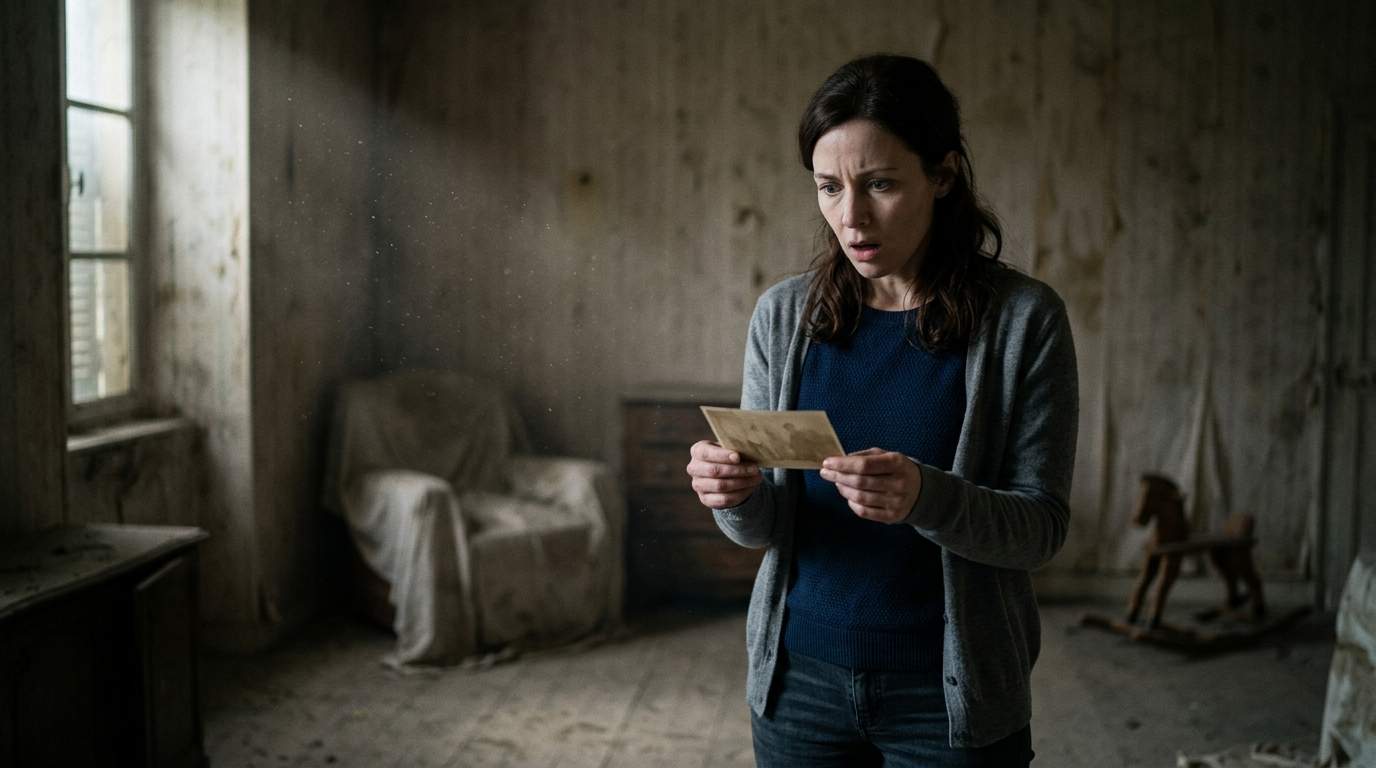
Inside, beneath a thick blanket of dust, were not boxes of forgotten heirlooms but scattered objects arranged almost like a shrine.
There were old, faded photographs, not of Mark’s known family, but of a different woman, a different child.
A small, wooden rocking horse sat silently in a corner, its paint chipped and worn.
Next to it, a child's worn blanket lay folded, as if recently placed there.
My flashlight beam danced across a stack of yellowed journals, their covers brittle with age.
I picked one up, my hands trembling uncontrollably.
The handwriting was delicate, elegant, yet filled with a palpable despair.
It was dated from fifty years ago, a time when Mark’s parents would have been young adults.
The words spoke of a forbidden love, a secret pregnancy, and a child hidden away from the world.
A child that was clearly not Mark.
My stomach dropped, a cold, hard knot tightening within me.
The journal described the agonizing decision to conceal the truth, to protect the family name.
It detailed the child's existence, growing up within these very walls, never seeing the outside.
Then, pages further, a different hand, a familiar, firm script.
It was Mark’s father’s handwriting.
He spoke of "the incident," a tragic accident, a fall from the mansion's highest tower.
He spoke of a "necessary silence," of burying the truth along with the child.
My mind reeled, trying to reconcile the loving, kind man I knew Mark’s father to be with these chilling words.
But the most gut-wrenching discovery lay beneath the journals.