My world had already shattered into a million tiny pieces.
How much more could one human heart possibly take before it simply ceased to beat?
I was living through an unimaginable nightmare, watching my beloved father slip away day by agonizing day.
Our childhood home was infinitely more than just bricks, mortar, and a roof over our heads.
It was the comforting scent of my mother’s baking, forever etched into the kitchen walls.
It held the joyful echoes of my dad’s booming laughter, ringing through the living room on holidays.
It offered the quiet, unwavering comfort of family, a sanctuary where every memory lived.
My father, a man of endless resilience and boundless kindness, was now a fragile shadow in a hospice bed.
His once vibrant eyes now held a distant, weary gaze, focusing on memories I couldn’t share.
My sister, Sarah, had always been the wild card, the adventurous spirit who kept us on our toes.
Despite her unpredictable nature, I trusted her implicitly, especially with Dad’s crucial affairs.
She had promised, with a solemn look in her eyes, that she’d handle absolutely everything.
My sole focus was on Dad’s last precious moments, every breath a prayer.
Every single visit to the sterile hospice room felt profoundly heavier than the one before.
I tried desperately to focus only on Dad, on the faint, fragile smile he managed to offer.
His hand felt impossibly small in mine, his skin papery and cold, a stark reminder of his decline.
Sarah was always bustling, always seemingly busy, always just on the verge of leaving.
She claimed she was dealing with the mountain of hospital bills, endlessly sorting out paperwork.
She assured me she was making sure Dad was as comfortable as he could possibly be.
I was too utterly exhausted, too consumed by a grief that felt like a physical weight, to question her frantic pace.
My mind was a fog of despair, my body aching from lack of sleep and constant worry.
The days bled into each other, each sunrise bringing a fresh wave of dread and anxiety.
I clung to every fleeting moment with Dad, trying to memorize the sound of his voice.
He would sometimes murmur about wanting to go home, a heartbreaking whisper that tore at my soul.
Sarah would simply pat my shoulder, offering vague reassurances about "doing her best."
The plain, stark, official-looking envelope arrived on a Tuesday afternoon.
It lay innocently on the worn doormat, an unassuming harbinger of utter destruction.
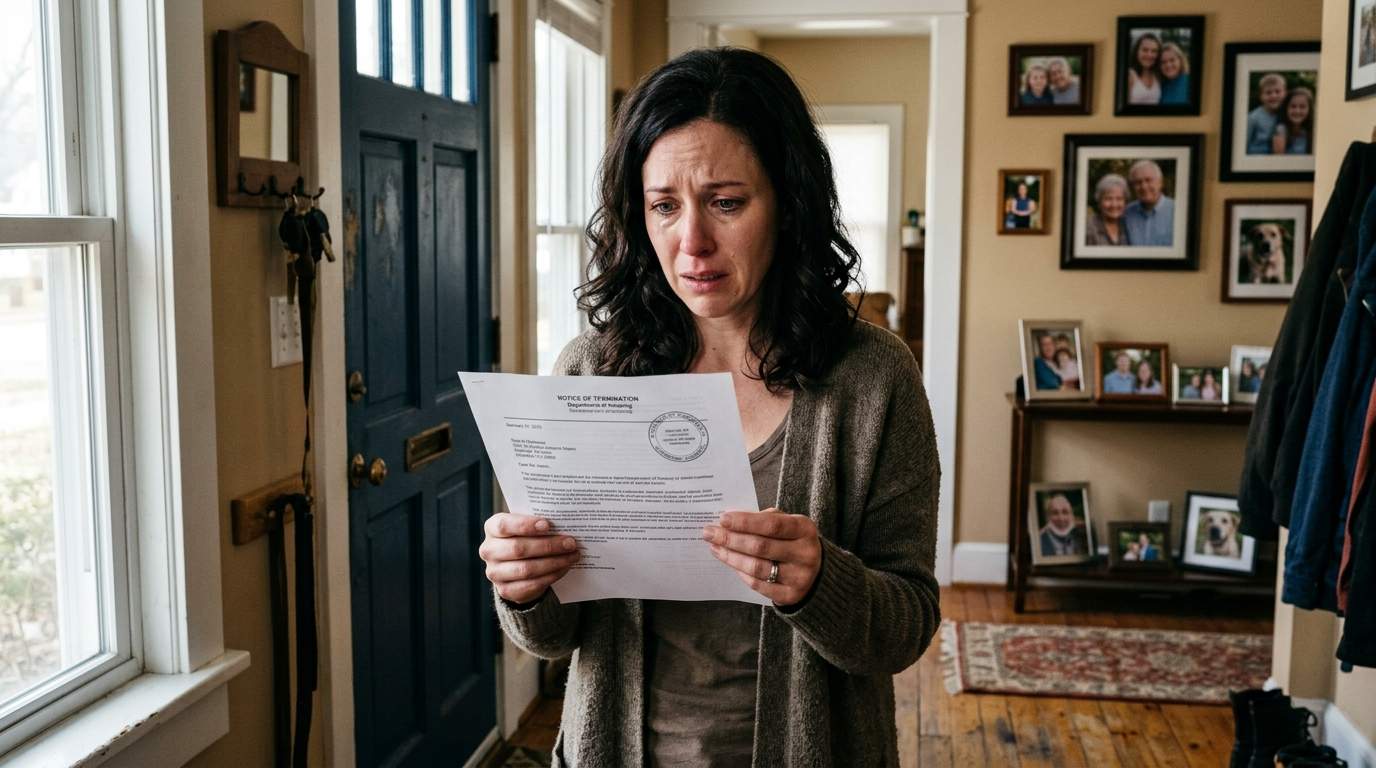
It was an eviction notice, cold and impersonal, addressed generically to "current occupants" of our family home.
My hands, already trembling from sleepless nights, shook so violently I could barely tear it open.
The brutal words on the document burned into my vision with searing intensity: the house had been sold.
Not just sold, but sold weeks ago, while I was holding Dad's hand, whispering my goodbyes.
Sarah’s name, starkly clear and undeniable, appeared repeatedly as the sole seller.
Her familiar signature, usually so careless, now looked like a cruel, mocking scrawl.
A sickening wave of nausea washed over me, threatening to drag me under.
How could this be happening?
Who would sell a house without telling the other owner, without any warning?
I remembered Dad had put the house in both our names years ago, a gesture of trust, of legacy.
My mind reeled, gasping desperately for some semblance of air, some solid ground.
I snatched up my phone, my fingers fumbling as I dialed Sarah’s number, my last hope.
A robotic voice informed me the number had been disconnected, a digital punch to the gut.
I jumped into my car, driving on autopilot through a haze of shock and disbelief.
I raced to her apartment, my heart pounding a frantic, desperate rhythm against my ribs.
I hammered on her door, the sound echoing hollowly in the silent hallway until my knuckles ached.