
My great-aunt Eleanor left me everything, including the sprawling, old mansion I'd only visited twice as a child.
It felt like a dream come true, a fresh start in a place steeped in family history.
The dust motes danced in the afternoon light filtering through the tall windows.
Every creaking floorboard echoed with whispers of generations past.
I spent weeks just exploring, marveling at the antique furniture and forgotten portraits.
There was a sense of something hidden, a feeling I couldn't quite shake.
The attic was the last place I dared to venture, piled high with trunks and forgotten relics.
Cobwebs hung like ghostly lace, and the air was thick with the smell of old paper and wood.
Tucked away behind a stack of yellowed newspapers, I found it.
A small, wooden chest, intricately carved, with a faded velvet lining.
Inside lay a leather-bound journal, its pages brittle with age.
The inscription on the front was in elegant, cursive handwriting: "Catherine Thorne, 1947."
Catherine Thorne was a name I recognized, a distant cousin who had supposedly vanished without a trace in the late 40s.
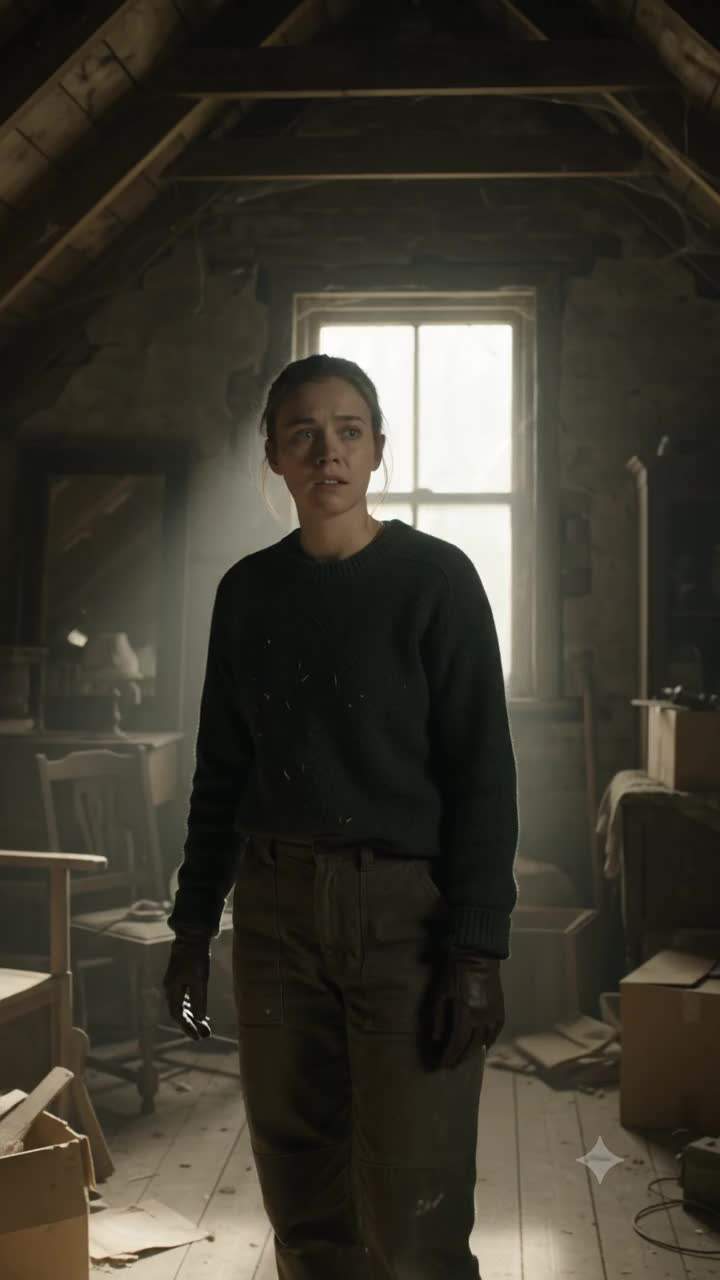
My family always spoke of her with hushed sadness, a tragic mystery no one ever solved.
I carefully opened the journal, the binding cracking softly.
The first few entries were mundane, detailing social gatherings and daily life in the mansion.
Then, the tone shifted.
Catherine wrote of fear, of whispers, of feeling watched.
She described a growing dread, a sense of being trapped.
My heart began to pound as I turned the fragile pages.
She mentioned arguments, heated accusations, and a deep, simmering resentment within the household.
Then came the entry that stole my breath, turning my blood to ice.
"He knows I saw him."
"He said he'd make sure I never spoke a word."
"The garden... the hidden place under the old oak tree."
My hands trembled so violently I almost dropped the journal.
The next few pages were smeared, difficult to decipher, as if written in haste or distress.
But one sentence stood out, stark and horrifying.
"He killed her, my own sister, and they all helped him bury her silence."
My vision blurred, the words blurring into an incomprehensible mess.
Sister? Killed?
My great-grandmother, a woman revered in our family as a saint, had a sister named Evelyn.
Evelyn was also said to have disappeared, believed to have run away to start a new life.
This journal claimed she was murdered.
And the murderer was "he."
As I frantically flipped through the remaining pages, the terrible truth became agonizingly clear.
"He" was my great-grandfather, a man whose portrait hung proudly in the living room.
And "they" who helped bury the silence were the rest of the family, including Great-Aunt Eleanor.





