
I thought I knew my family.
I really did.
Growing up, the Hawthorne Manor was a place of endless stories and whispers of generations past.
It stood on the hill, grand and imposing, a silent monument to our lineage, to a name I was always so proud to carry.
When my grandmother passed and left me the estate, it felt like inheriting a piece of history, a profound connection to my roots.
I spent weeks just wandering its dusty halls, marveling at the antique furniture, tracing the intricate patterns on the wallpapers that had seen a century of life unfold.
But there was always this undercurrent, this faint chill that had nothing to do with the drafts.
A feeling of something hidden, something unsettled.
Everyone said it was just the age of the house, the settling of old wood and stone.
I told myself it was my imagination, fueled by too many gothic novels.
One rainy afternoon, I was in the library, trying to organize the ancient, leather-bound books.
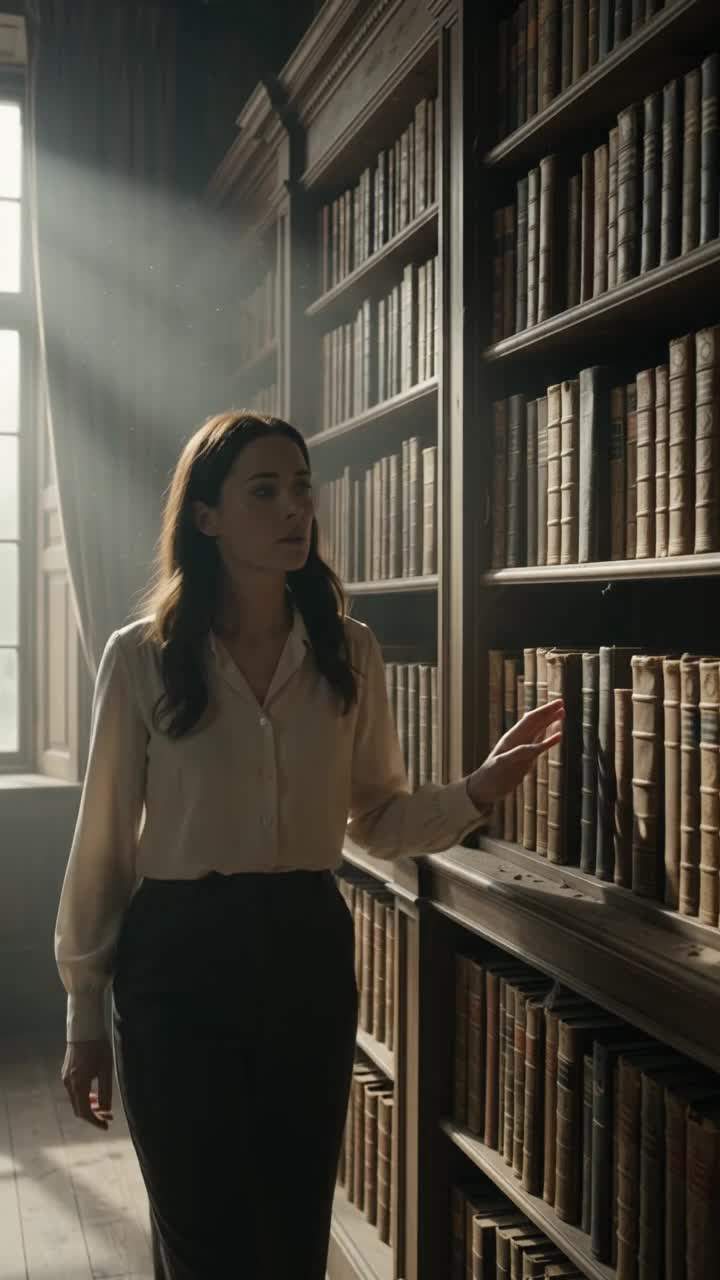
My hand brushed against a loose panel behind a towering bookshelf, a section dedicated to obscure historical texts.
It gave way slightly, unexpectedly.
My heart pounded, a strange mix of fear and exhilarating curiosity.
I pushed harder, and a small, narrow opening appeared, revealing a dark recess.
It smelled of damp earth and something else, something cloyingly sweet, like decay and old perfume.
My flashlight beam cut through the blackness, revealing not a hidden passage or treasure, but a small, cramped room.
And there, on a decaying wooden crate, was a tattered, child-sized dress.
A porcelain doll with one missing eye stared blankly from a corner.
And then, I saw the journal.
It was bound in faded velvet, meticulously kept in a small, waterproof box.
I pulled it out, my hands trembling, the dust motes dancing in the beam of my light.
The first entry was dated 1903.
It belonged to my great-great-aunt, Eleanor, a woman whose portrait hung regally in the main parlor, revered for her philanthropic work and unwavering piety.
But the words inside were not those of a saint.
They were confessions, chilling and raw, detailing a betrayal so profound it made my stomach clench.
Eleanor had a younger sister, Lydia, who was deemed "fragile" and "unfit for society" after a scandalously public affair with a stable hand.
Lydia became pregnant.
To protect the family name, Eleanor, with the help of our equally esteemed great-great-grandfather, confined Lydia to this very room.
They brought her food, occasionally, and spoke of her as if she were a ghost haunting the house.
Her child, a little girl, was born here, in the dark, in secret.
Her name was Iris.





