
My grandmother’s will was surprisingly simple.
She left me the old Hawthorne Manor.
The manor was more than just a house; it was a sprawling, shadowed monument to our family’s legacy.
It felt less like a gift and more like a heavy crown.
For years, Grandma always spoke of the family’s proud past within those walls.
She told stories of resilience, hard work, and unshakeable honor.
I had always believed her, completely.
Moving into the manor after her passing was bittersweet.
Every creaky floorboard, every faded tapestry, held a memory of her.
The air was thick with history, a comforting, familiar scent of old books and dust.
But beneath the comfort, there was an unspoken tension, a silence that felt too deep.
I spent my first few weeks just trying to organize, to make sense of the endless rooms.
Each day felt like an archeological dig through generations of clutter.
I found antique furniture, forgotten photo albums, and countless trivial trinkets.
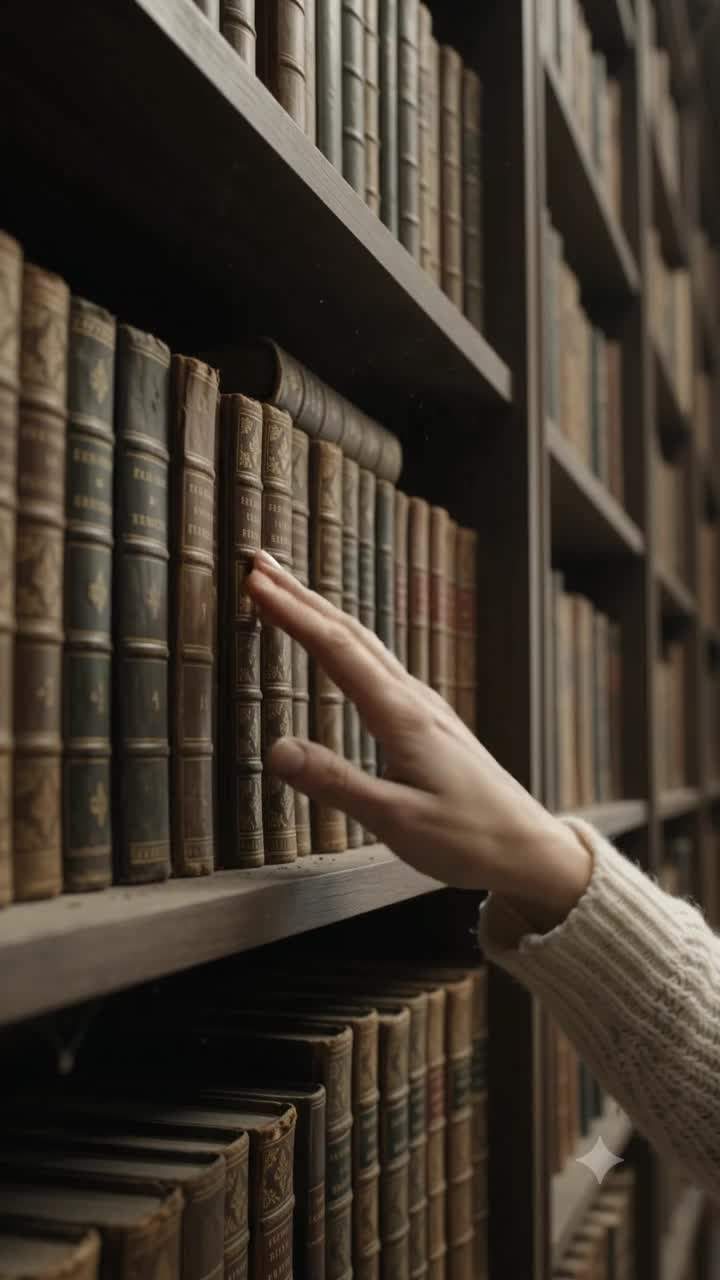
Then I got to the library.
It was her favorite room, a sanctuary filled with thousands of leather-bound books.
I began systematically cleaning, dusting every shelf, every volume.
One afternoon, my fingers brushed against a section of wall behind a massive, built-in bookshelf.
It felt loose.
A small section of decorative paneling shifted slightly under my touch.
My heart gave a little jolt.
Curiosity, sharp and immediate, replaced the mundane task of cleaning.
I pushed harder, and with a soft click, a narrow, almost invisible door swung inward.
It wasn't a large space, just a tiny hidden room, cloaked in perpetual twilight.
The air inside was stale, heavy, untouched for decades.
A single, small wooden chest sat squarely in the center of the dusty floor.
My breath caught in my throat.
I remember thinking it was probably just old love letters or childhood keepsakes.
The chest was surprisingly heavy when I lifted it.
It wasn't locked.
As I slowly lifted the lid, a strange, metallic scent wafted out, mingled with the smell of aging paper.
Inside, nestled amongst layers of yellowed silk, were not love letters, but a collection of documents.
Old deeds.
Handwritten ledgers.
A faded photograph of a man I didn’t recognize, standing next to my great-grandfather.
And then, a stack of brittle, thin journals, their covers embossed with a single, cryptic symbol.
I pulled one out, my hands trembling slightly.
The first entry was dated 1928.
The handwriting was meticulous, looping, and undeniably familiar.
It was my great-grandfather's.
I started reading, my eyes scanning the unfamiliar words, feeling a cold dread slowly creep up my spine.
He wrote about a business venture, secret partnerships, and a rapid acquisition of land.





