My great-aunt Eleanor left me everything, including the sprawling, decaying mansion on the edge of town.
It was a place filled with shadows and whispers, a grand relic from a bygone era.
I spent weeks just wandering its echoing halls, feeling a strange mix of awe and melancholy.
Every dusty portrait seemed to hold a story, every creaking floorboard hummed with memory.
I loved the sense of history, the idea of connecting with generations I never knew.
But there was always a feeling, a persistent hum beneath the surface, that something was profoundly off.
The house felt like it was holding its breath, guarding a secret too heavy to bear.
One rainy afternoon, while cataloging books in the vast, seldom-used library, I noticed it.
A section of the mahogany paneling seemed slightly off-kilter, a hairline crack running along its edge.
Curiosity, a trait my mother always warned me about, tugged at me relentlessly.
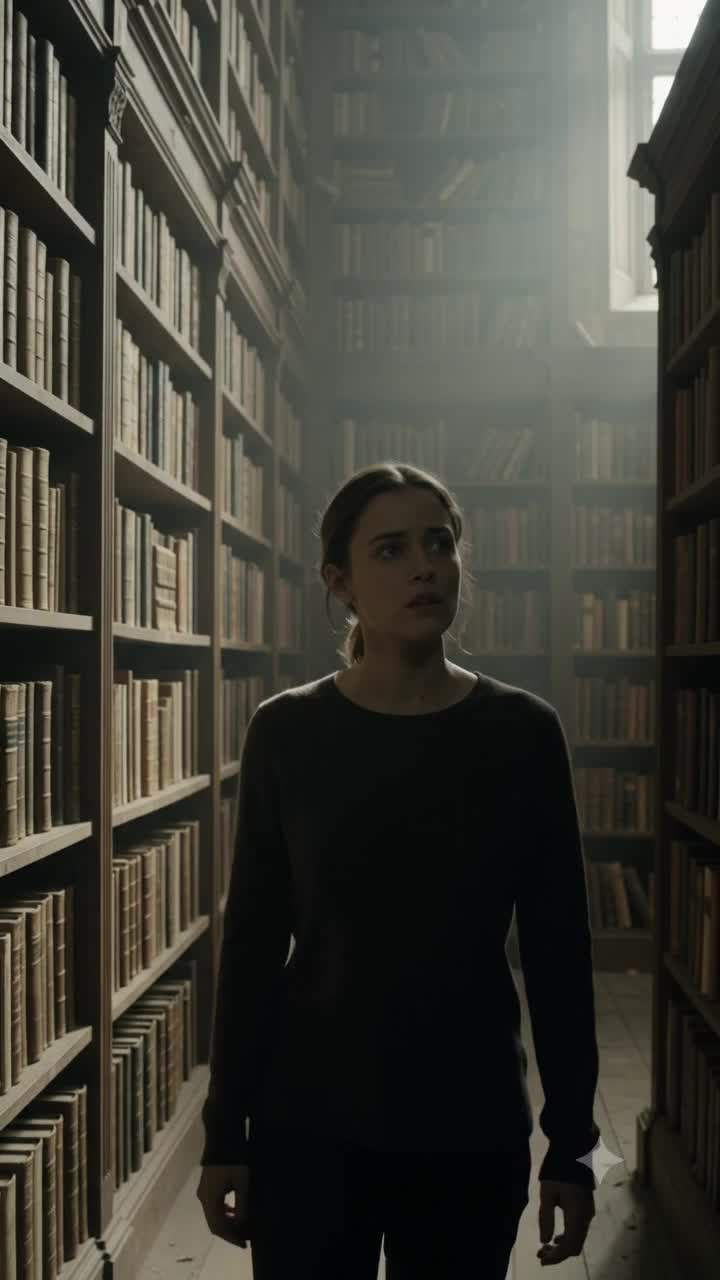
I pressed, I prodded, my fingers tracing the ornate carvings, searching for a hidden mechanism.
Finally, with a soft click, a small section of the wall slid inward, revealing a dark void.
My heart hammered against my ribs, a frantic drumbeat in the sudden silence of the room.
Inside, the air was stale and heavy, thick with the scent of old paper and forgotten things.
My flashlight beam cut through the darkness, revealing a small, hidden chamber, barely big enough for one person to stand.
On a tiny, built-in shelf sat a single, leather-bound book, its cover faded and brittle with age.
It was a diary, its pages yellowed and delicate, tied with a thin, fraying ribbon.
My hands trembled as I reached for it, a strange premonition washing over me.
This wasn't just an old book; it felt like a key to something profound and possibly terrible.
Back in the dim light of the library, I untied the ribbon, my breath catching in my throat.
The ink was faded, the handwriting elegant yet spidery, a relic from another time.
The first few entries were mundane, observations about the weather and household affairs, written by my great-great-grandfather, Arthur Vance.
Then, the tone shifted, growing darker, more agitated, filled with a desperate anxiety.
He wrote of business dealings, of a partner named Elias Thorne, and growing financial pressures.
My eyes scanned the pages, skipping ahead, searching for the reason for this sudden shift in mood.
And then I found it, a passage so stark, so brutally honest, it ripped the air from my lungs.
Arthur described a heated argument, a desperate struggle, a single, horrifying blow.
He confessed to murdering Elias Thorne in cold blood, right here in this very mansion.
My vision blurred, the words on the page swimming before my disbelieving eyes.