
My grandmother's passing was a quiet, gentle end to a life lived simply.
Or so I thought.
When the lawyer called about the family estate, my life was still just… normal.
The old Blackwood mansion, untouched for decades, was mine.
It stood on a hill, overlooking the town, a silent, beautiful giant.
I remember the thrill mixed with a touch of melancholy as I stepped inside for the first time as its owner.
Dust motes danced in the slivers of sunlight that pierced the grimy windows.
Every creaking floorboard told a story I thought I knew.
I spent weeks just wandering, absorbing the history, feeling her presence.
There were so many locked doors, so many forgotten corners.
One afternoon, I was running my hand along an ornate bookshelf in the study.
It was a beautiful piece, carved from dark, heavy wood.
My fingers brushed against a section that felt… off.
A faint click echoed in the silence of the old room.
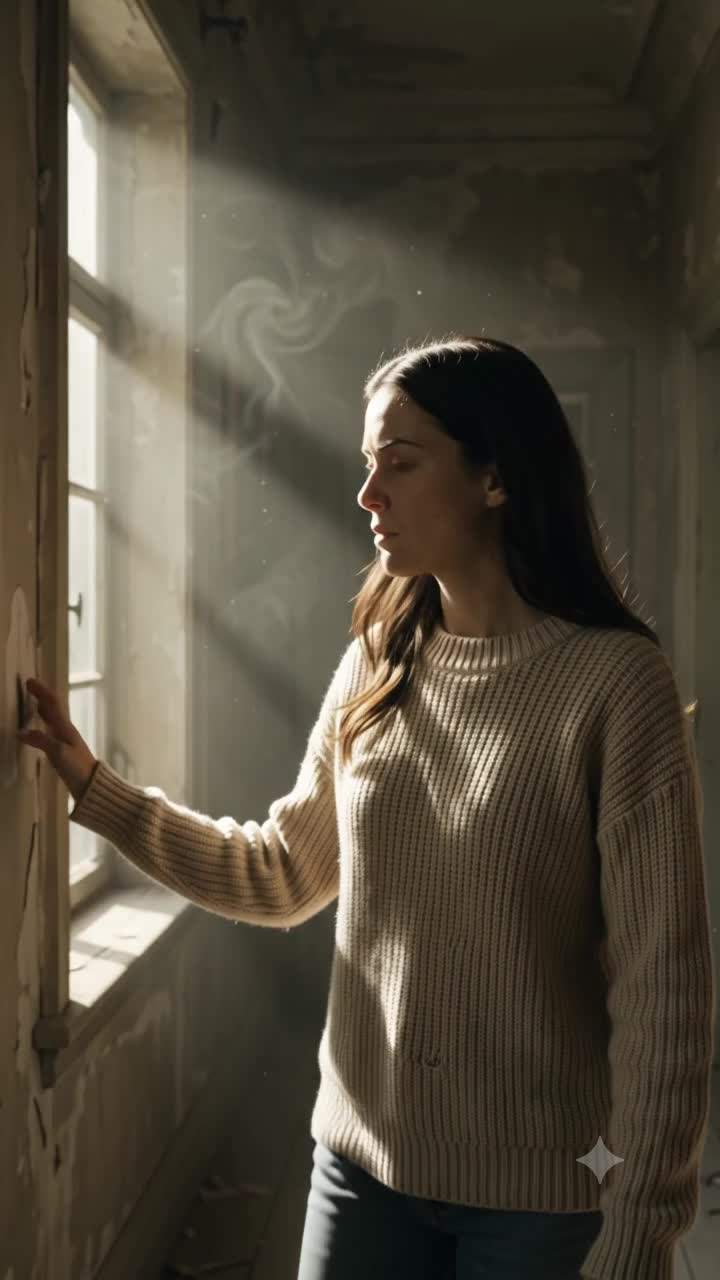
My heart hammered against my ribs.
A small, almost invisible seam appeared, and a section of the shelf swung inward.
It wasn't a hidden compartment; it was a door.
A door to a room I never knew existed.
Darkness pooled inside, thick and heavy.
A strange, acrid smell wafted out, like old paper and forgotten secrets.
I hesitated, my hand trembling as I reached for the light switch just inside the frame.
The single bare bulb flickered on, illuminating a small, dusty space.
It was a tiny room, barely bigger than a closet.
In the center stood a single, weathered wooden trunk.
My breath caught in my throat.
Why would my grandmother, of all people, have a secret room?
And what was so important it needed to be hidden like this?
My hands were shaking as I unlatped the rusted locks.
Inside, layers of yellowed newspaper and moth-eaten fabric protected a treasure trove of the past.
There were old photographs, not of our family, but strangers.
Then I found a stack of letters, tied with a faded ribbon.
The handwriting was unmistakably my grandmother’s.
I pulled one out, unfolding the brittle paper carefully.
The words blurred before my eyes as I began to read.
It was a confession.
Not just any confession, but one detailing a life I couldn't comprehend.
A life filled with deceit, a hidden identity, and a terrible, terrible crime.
My grandmother, the sweet, gentle woman who baked me cookies and told me bedtime stories, was not who I thought she was.
The letters spoke of a stolen identity, a child taken, a past erased with cold precision.
It wasn't just a secret; it was a fabrication.
Our entire family history, the narrative I’d grown up with, was built on a lie.





