The Ghost In The Machine
The morning started with the kind of silence that feels heavy, like the air right before a thunderstorm.
- 1、The Ghost In The Machine
- 2、The Footage That Changed Everything
- 3、A Rhythmic Nightmare
- 4、The Motivation Of The Shadows
- 5、The Closet Behind The Bed
- 6、The Final Revelation
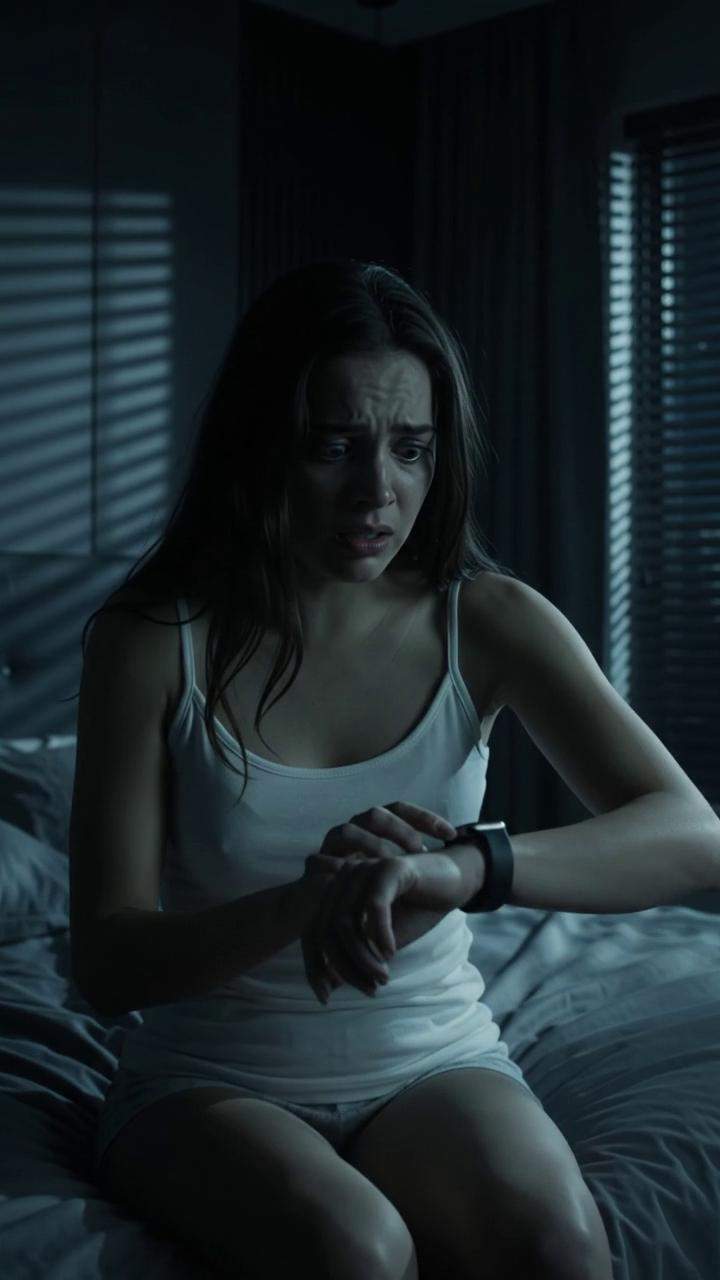
I reached for my phone on the nightstand, my joints aching as if I had spent the night running a marathon.
The screen flickered to life, displaying a bright green checkmark from my fitness tracker.
"Goal Achieved: 3.2 Miles Walked," the notification read, timestamped between 2:00 AM and 5:00 AM.
I stared at the ceiling of my modern, minimalist bedroom, trying to remember if I had ever had a history of sleepwalking.
I never had, not even as a child, and certainly not since I moved into this glass-and-steel fortress following the "accident" that took my husband, Elias.
Elias had been a man of secrets, a high-level developer for biometric security systems, and his death had left me with a massive inheritance and a lingering sense of being watched.
I shook the thought away, blaming the phantom pains in my legs on the stress of the upcoming probate hearing for his estate.
I sat up, the silk sheets sliding off my skin, and noticed a faint smudge of dirt on the white carpet near the foot of the bed.
My heart began a slow, rhythmic thud against my ribs as I opened the security app linked to the cameras Elias had installed himself.
The Footage That Changed Everything
I scrolled the timeline back to 2:15 AM, expecting to see my own reflection wandering aimlessly through the kitchen.
The video feed flickered into the eerie, high-definition green of night vision.
The living room was still, the shadows of the designer furniture stretching long and distorted across the floor.
At 2:22 AM, the heavy mahogany door of the hallway closet—a closet I never used—swung open without a sound.
A figure emerged, tall and impossibly thin, wearing a matte black tactical mask and a suit that looked expensive even in the grainy footage.
He didn't move like a thief; he moved like he owned the square footage of my life.
He walked directly to the sofa where I had fallen asleep while reading legal briefs.
My breath hitched in my throat as I watched him lean over my sleeping form, his gloved hands sliding beneath my neck and knees.
He lifted me with a terrifying, effortless grace, cradling me against his chest as if I were a sleeping child.
Then, he began to walk.
A Rhythmic Nightmare
For the next three hours, the footage showed this man pacing the perimeter of the penthouse.
He didn't look for jewelry, he didn't touch my laptop, and he didn't look at the expensive art on the walls.
He just walked, his head bowed toward mine, his lips moving in a constant, silent stream of words.
Every few minutes, he would stop in front of the floor-to-ceiling windows overlooking the city and just stand there, swaying slightly.
The smartwatch was registering every step he took while holding me, attributing his movement to my biometric signature.
I realized then that this wasn't a random home invasion; it was a calibrated psychological assault.
As I watched the playback, I saw him pause in front of the camera and tilt his head, as if he knew I would be watching this exact moment later.
He reached into his pocket and pulled out a small, silver key—the key to Elias’s private vault at the bank, the one the lawyers said was missing.
He pressed the key into the palm of my sleeping hand, closed my fingers over it, and then took it back seconds later.
This was a message, a demonstration of absolute control over my body and my reality.
The Motivation Of The Shadows
I began to piece together the fragments of the last few months, the "forgetfulness" I had been experiencing and the sudden gaps in my memory.
My brother-in-law, Marcus, had been pushing me to sign over the management of Elias’s tech firm, claiming I was too "emotionally unstable" to handle the pressure.
He had been the one to recommend the new sleep medication I had been taking for my insomnia.
The realization hit me like a physical blow: the medication wasn't helping me sleep; it was a sedative designed to keep me under while they staged these night-time incursions.
They weren't just gaslighting me; they were using my own biometric data to build a legal case that I was suffering from severe parasomnia and dissociative fugue states.
If Marcus could prove I was "walking miles" in my sleep and interacting with hallucinations, he could have me declared incompetent.
The inheritance, the patents, and the control of the most advanced surveillance software in the world would fall directly into his hands.
But the figure on the screen wasn't Marcus; the stature was all wrong, the movements too fluid and precise.
This was someone Elias had hired—or someone who had replaced him.