The Weight of the Silence
Elias Thorne felt the familiar squeeze of the deep as he descended into the black heart of the European lake.
- 1、The Weight of the Silence
- 2、The Flame in the Flood
- 3、The Watchers in the Wall
- 4、The Sealing of the Fate
The water here was a freezing forty degrees, a temperature that sapped the will and numbed the senses within minutes.
He was a man who lived for the silence of the abyss, finding peace where others found only the crushing weight of the unknown.
For months, he had studied the local legends of a "Silent Monastery" that had allegedly been swallowed by the earth during a Great Flood in the 1300s.
Most historians dismissed the tales as folklore designed to keep children away from the treacherous shoreline.
But Elias had found a map tucked inside a hollowed-out family Bible, a map that bore his own surname in the margins.
The debt he carried wasn't financial; it was a psychological burden left by a father who had disappeared in these very waters thirty years ago.
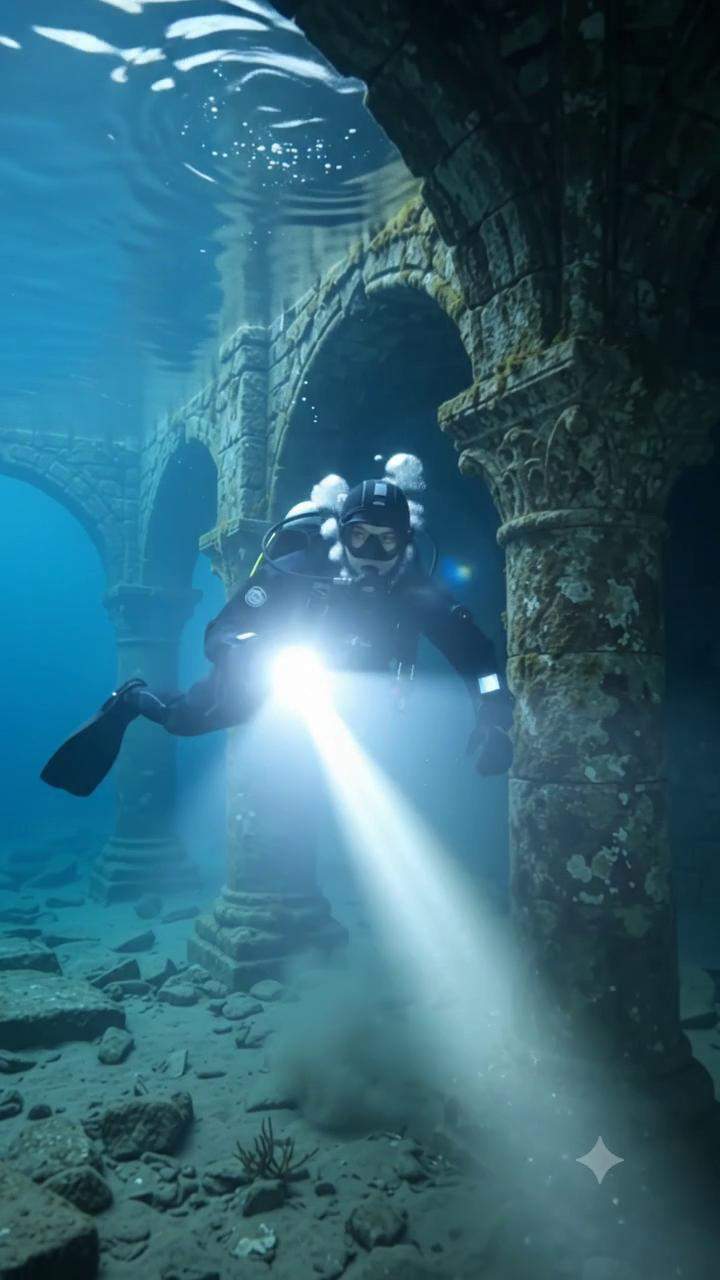
As his flashlight beam cut through the murk, he spotted the jagged edge of a stone archway protruding from the silt.
This was the entrance to the Saint-Lazarus Crypt, a place that had been scrubbed from every official record of the Church.
He checked his oxygen gauge, noted the three hours of air remaining, and kicked his fins to propel himself into the mouth of the beast.
The Flame in the Flood
The interior of the crypt was surprisingly clear, as if the stone walls possessed a natural filtration system that kept the silt at bay.
The architecture was hauntingly beautiful, featuring ribbed vaults and intricate carvings that spoke of a high-culture erased by time.
Elias swam past rows of stone sarcophagi, his heart hammering against his ribs in a rhythmic thud.
Then, he rounded a corner toward the central altar and stopped dead in the water.
A row of twelve thick, white wax candles stood atop the moss-covered stone.
They were not floating, and they were not extinguished.
Tiny, vibrant flames danced on the wicks, casting a warm, amber glow across the flooded chamber.
Elias blinked, certain that his brain was finally succumbing to nitrogen narcosis.
He reached out a gloved hand, expecting the light to be a trick of bioluminescence or a reflection from his own gear.
The water around the flames was boiling, sending tiny bubbles of steam rising toward the ceiling.
These were real fires, burning without oxygen, fueled by a chemistry that defied every law of nature Elias understood.
He realized then that this wasn't a tomb; it was a laboratory for something far more ancient than the church that built it.
The Watchers in the Wall
As the shock of the candles began to settle, a new, more primal terror took hold.
Elias turned his flashlight toward the perimeter of the room to orient himself.
The walls were lined with life-sized statues of saints, their hands folded in eternal prayer.
He remembered seeing them when he first entered; they had been facing the entrance, their eyes downcast in humility.
Now, as his beam washed over them, he saw that their positions had changed.
The heavy granite heads had turned nearly forty-five degrees.
Every single one of the twelve statues was now staring directly at him, their blank stone eyes locked onto his position.
There was no sound of machinery, no grinding of stone on stone, only the hiss of his own breathing.
The realization hit him like a physical blow: the statues weren't moving because of a mechanism.